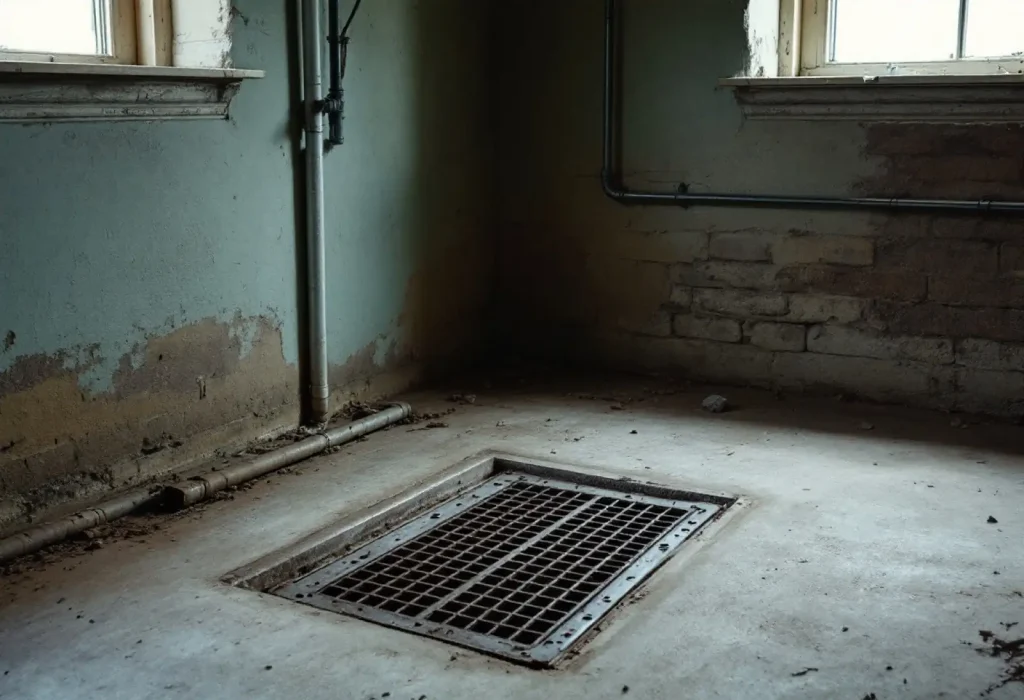
The short answer
The answer to does asbestos smell is no: the New Jersey Department of Health fact sheet lists asbestos as odorless, with a vapor pressure of about 0 mm Hg, so a sniff can neither confirm nor rule it out. Any odor in an old basement comes from something else. Only a sample read by polarized light microscopy shows whether a material holds more than 1 percent asbestos.
Why is asbestos odorless when naphthalene, at 0.05 mm Hg, can be smelled?
A smell is molecules in the air reaching the nose. The New Jersey Department of Health asbestos fact sheet defines vapor pressure as the force exerted by a vapor in equilibrium with its solid or liquid, and notes that the higher the vapor pressure, the higher the concentration in air. Asbestos lists 0 mm Hg, odorless, insoluble in water and noncombustible. The sheet describes a group of six fibrous silicate minerals, the asbestiform varieties named in the definition in 40 CFR 61.141: rock, not a chemical that evaporates.
Compare naphthalene, the mothball compound. The NJDOH naphthalene fact sheet lists a vapor pressure of 0.05 mm Hg and an odor threshold of 0.038 ppm, which is why a closet of mothballs is obvious from the doorway. Hydrogen sulfide, at 14,000 mm Hg per the NJDOH hydrogen sulfide fact sheet, is a gas that the nose finds at 0.008 to 0.1 ppm. The chart below puts the published thresholds on one scale.
The fibers are also below what eyes can resolve. NIOSH Method 7400, the phase contrast light microscope method used for air samples, counts only fibers longer than 5 micrometres and states that fibers under about 0.25 micrometres in diameter are not detected at all. A material that a microscope cannot always see and that releases no vapor has nothing for a nose to work with.
Nine odors blamed on asbestos, and what is really making each one
Related searches such as "asbestos has a strong musty smell" and "does asbestos smell sweet" show the belief that an odor gives it away. The table pairs each reported odor with its real source and the check that settles it. Thresholds are the New Jersey Department of Health values; the RFCI Recommended Work Practices (January 2018) and NIOSH report HETA 91-118-2213 cover the floor adhesive rows.
| What people report | Real source | Odor threshold (NJDOH) | What actually answers it |
|---|---|---|---|
| Musty, earthy, "moldy" | Microbial VOCs released by growing mold (EPA Mold Course, Chapter 1) | Not published by EPA | Find the moisture and the growth. EPA says a moldy odor suggests mold is growing and should be investigated. |
| Mothballs, tar camphor | Naphthalene: used to make mothballs, found in coal tar (NJDOH naphthalene fact sheet) | 0.038 ppm | Look for stored mothballs or coal tar products. A tar smell says nothing about asbestos in a tar based adhesive. |
| Petroleum or solvent over old black floor glue | Asphaltic cutback adhesive or a solvent mastic remover (RFCI Recommended Work Practices (January 2018); NIOSH report HETA 91-118-2213) | Varies by solvent | PLM on the adhesive layer for asbestos. VOC air sampling before and after work for the odor, as NIOSH recommends. |
| Sweet chemical | Toluene, a common solvent with a sweet, strong odor (NJDOH toluene fact sheet) | 2.5 ppm | VOC sampling, then ventilation with outside air. |
| Rotten eggs near a floor drain | Hydrogen sulfide in sewer gas entering through a dry floor drain trap or blocked roof vent (Wisconsin Department of Health Services) | 0.008 to 0.1 ppm | Pour water into the floor drain and check the roof vent, the two steps Wisconsin DHS lists. |
| Sharp, stinging | Ammonia, also a sewer gas component (NJDOH ammonia fact sheet; Wisconsin Department of Health Services) | 5 ppm | Same route as sewer gas; a plumber if the leak is behind a wall. |
| Musky, stale animal | House mice in large or long term infestations (UC IPM Pest Notes: House Mouse (Publication 7483)) | Not published | Look for droppings, fresh gnaw marks and tracks, the signs UC IPM lists. |
| Pungent, newer material | Formaldehyde from composite wood resins, glues, finishes, building materials and insulation (EPA's formaldehyde facts page; NJDOH formaldehyde fact sheet) | 0.05 to 1 ppm | Identify recent plywood, particleboard, MDF, glue or finish work. |
| Nothing at all | Asbestos: odorless, vapor pressure about 0 mm Hg (New Jersey Department of Health asbestos fact sheet) | Odorless | A sample read by polarized light microscopy; more than 1 percent is ACM under 40 CFR 61.141. |
Two rows matter most in practice. A musty smell is the mold row, which the EPA Mold Course, Chapter 1 ties to microbial VOCs, and the room-by-room tracing method is on the musty basement smell page. What a mold odor itself means, and when it justifies testing, is covered on the mold smell page.
Is "asbestos has a strong musty smell" true, and what about a sweet smell?
No on both. The New Jersey Department of Health asbestos fact sheet lists no odor of any kind. A musty note comes from what the EPA Mold Course, Chapter 1 calls mVOCs, compounds molds produce that are volatile and quickly released into the air. Old pipe lagging, tile and ceiling board in a damp basement can smell musty because mold is growing on or near them, not because of the fiber inside.
The flooring industry treats that smell as a moisture signal. The RFCI Recommended Work Practices (January 2018) tell installers that where there is a strong musty odor, the source should be found and corrected before any floor is removed, and that if there is a mold issue there is or has been an excessive moisture issue. A sweet smell points to a solvent instead: the NJDOH toluene fact sheet describes toluene as having a sweet, strong odor, detectable at 2.5 ppm.
Does asbestos smell when wet, as during a wet removal?
Water changes nothing about the odor: the New Jersey Department of Health asbestos fact sheet lists asbestos as insoluble in water, so wetting releases no vapor. Wetting is a dust control. Federal NESHAP rules in 40 CFR 61.141 define adequately wet as mixed or penetrated with liquid enough to prevent the release of particulates, and say that visible emissions mean the material was not wetted enough.
Any smell on a wet job comes from the materials around the fiber or the products used on them: the mold row if damp material has grown mold, which the EPA Mold Course, Chapter 1 ties to mVOCs, and the solvent row if a mastic remover was used. A wet sheet of old flooring that smells of nothing can still test above 1 percent, per the PLM route in 40 CFR 61.141.
Does asbestos smell when burning, or does it melt first?
According to the New Jersey Department of Health asbestos fact sheet, asbestos itself does not burn; the sheet lists a flash point of noncombustible and a melting point of 1,112 F (600 C). The smoke smell from a heated or burning old product comes from what the fiber was bound into. The RFCI Recommended Work Practices (January 2018) describe the asbestos in older flooring as encapsulated in the matrix of the product, vinyl or asphalt, and those binders are the part that burns. What a fire does to asbestos materials is covered on the will asbestos burn page.

Why did the house smell of solvent after the black mastic was removed?
Because the asbestos removal and the odor are two different things, and a NIOSH case shows how. In NIOSH report HETA 91-118-2213 (May 1992), a Pennsylvania elementary school with about 150 students had asbestos floor tile removed in November 1990, then an organic solvent, reportedly mostly terpenes, applied to strip the black mastic. Staff and students complained of a strong odor on return; after a second stage in late December 1990 the odor was reported to be worse and to permeate most of the building.
NIOSH took 12 area air samples on 21 and 22 February 1991. Individual compounds, including toluene and xylene, were well below occupational limits, while total VOCs in 2 of the 12 areas were in the 3 to 25 mg/m3 range that NIOSH says may irritate occupants. NIOSH reports the measured VOCs did not match the mastic remover’s pattern and appeared to come from other renovation products. Solvent that soaked into floor joints and was then sealed with caulk may also have been trapped there.
The RFCI Recommended Work Practices (January 2018) add a detail homeowners rarely hear: solvent adhesive removers that comply with OSHA requirements (a flash point above 140 F) may leave a solvent residue in the subfloor. A lingering chemical smell after a clean air clearance is a VOC question, not a sign that the abatement failed. The asbestos side of black adhesive, including why PLM can miss it, is on the black mastic asbestos page.
For contractors: the NIOSH recommendations that prevent the complaint
- Work when the building is unoccupied; otherwise contain and clean the work area (NIOSH HETA 91-118-2213, recommendation 1).
- Write a VOC prevention plan into the contract: find floor joints and other sinks for liquid, ventilate while VOC products are in use, and cover porous surfaces with sealed plastic (recommendation 2).
- Remediate with outside air and keep the HVAC system off so its porous lining is not contaminated (recommendation 3).
- NIOSH found the evidence for ion and ozone generators insufficient to recommend them for VOC reduction.
- Measure VOCs before, during and after the work, by an independent consultant, after cleanup has ceased.
If a nose cannot find it, what does: a label, a 1 percent PLM result or a fiber count?
EPA's homeowner asbestos page (updated 25 June 2026) says you generally cannot tell whether a material contains asbestos simply by looking at it, unless it is labeled, and that a trained and accredited professional should take samples. Taking samples yourself is not recommended, and undamaged material is best left alone. Appearance clues, and their limits, are on the what asbestos looks like page.
For a bulk material, the federal yardstick is 40 CFR 61.141: friable asbestos material and both categories of nonfriable ACM are defined as more than 1 percent asbestos by polarized light microscopy, with point counting required to confirm results under 10 percent from other PLM methods. That is what an inspection delivers, and the scope of a visit is set out on the asbestos inspection page.
For air, according to NIOSH Method 7400, the method has a working range of 0.04 to 0.5 fiber/cc for a 1,000 L sample and, per NIOSH, does not tell asbestos from other fibers; electron microscopy (Method 7402) identifies them. OSHA’s limit is 0.1 f/cc over 8 hours with a 1 f/cc 30 minute excursion, per the New Jersey Department of Health asbestos fact sheet. No smell exists at any of those levels.
Mail-in kits replace the inspector’s sampling step but not the lab, and their trade-offs are on the asbestos testing kit page.
Questions people actually ask
Can you identify asbestos by smell?
No. The New Jersey Department of Health lists asbestos with an odor threshold of odorless and a vapor pressure of about 0 mm Hg, so no vapor reaches the nose. EPA adds that you generally cannot identify it by sight either, unless the product is labeled. Identification takes a sample read by polarized light microscopy, the method named in 40 CFR 61.141.
How do you know if asbestos is in the air?
Only by an air sample. NIOSH Method 7400 draws air through a filter and counts fibers longer than 5 micrometres by phase contrast microscopy, with a working range of 0.04 to 0.5 fiber/cc. It counts all fibers, so electron microscopy under Method 7402 is used to confirm which are asbestos. Smell, dust colour and haze tell you nothing.
What are the first signs of asbestos in a house?
Not a smell. EPA’s homeowner page says you generally cannot tell whether a material contains asbestos by looking at it unless it is labeled, so the signs are paperwork and age. The New Jersey Department of Health notes asbestos has not been manufactured in the United States since 2002, so the age of the product matters more than anything you can smell, feel or see.
Is it safe to sniff or scrape a suspect material to check it?
No. EPA says taking samples yourself is not recommended and that undamaged material should be left alone. The RFCI work practices open with a warning not to sand, dry sweep, dry scrape, drill or saw old flooring, felt or cutback adhesive, because these may contain asbestos fibers. A sniff test needs your face at the material, which is the opposite of that advice.
Does asbestos look like dust?
Loose fibers can, but individual fibers are often too fine to see: NIOSH Method 7400 states that fibers under about 0.25 micrometres in diameter are not detected even by phase contrast microscopy. Grey dust in an old basement could be anything from plaster to soot, which is why EPA routes the question to a lab sample rather than to appearance.
Out of scope: this page covers odor, identification and testing. Health effects of exposure are outside it; EPA’s asbestos pages and CDC’s ATSDR are the federal references for those questions. Related standards pages are indexed on the standards hub.
Sources
- New Jersey Department of Health asbestos fact sheet, Right to Know Hazardous Substance Fact Sheet 0164, revision December 2009: odor threshold, vapor pressure, solubility, melting point, exposure limits. Retrieved 12 November 2026.
- NJDOH naphthalene fact sheet (fact sheet 1322, revision March 2012), NJDOH hydrogen sulfide fact sheet (1017, revision May 2012), NJDOH ammonia fact sheet (0084, revision February 2016), NJDOH formaldehyde fact sheet (0946, revision April 2016) and NJDOH toluene fact sheet (1866, revision April 2016), New Jersey Department of Health. Odor thresholds, odor descriptions and vapor pressures. Retrieved 12 November 2026.
- EPA's homeowner asbestos page, United States Environmental Protection Agency, last updated 25 June 2026. Retrieved 12 November 2026.
- EPA Mold Course, Chapter 1, Lesson 6, Moldy Smell, United States Environmental Protection Agency, last updated 18 February 2026. Retrieved 12 November 2026.
- EPA's formaldehyde facts page, United States Environmental Protection Agency, last updated 30 March 2026. Retrieved 12 November 2026.
- 40 CFR 61.141, asbestos NESHAP definitions (asbestos, adequately wet, friable asbestos material, Category I and II nonfriable ACM), via the Legal Information Institute, Cornell Law School. Retrieved 12 November 2026.
- NIOSH Method 7400, Asbestos and Other Fibers by PCM, Issue 2, 15 August 1994, National Institute for Occupational Safety and Health. Retrieved 12 November 2026.
- NIOSH report HETA 91-118-2213, Health Hazard Evaluation Report, Cocalico School District, Denver, Pennsylvania, May 1992, National Institute for Occupational Safety and Health. Retrieved 12 November 2026.
- RFCI Recommended Work Practices (January 2018), Resilient Floor Covering Institute: opening warning, mold and mildew note, adhesive remover note. Retrieved 12 November 2026.
- Wisconsin Department of Health Services, Air: Sewer Gas, last revised 18 April 2023. Retrieved 12 November 2026.
- UC IPM Pest Notes: House Mouse (Publication 7483), University of California Agriculture and Natural Resources, N.M. Quinn and M. Frye, updated July 2025. Retrieved 12 November 2026.
- The log scale chart plots the published thresholds exactly as printed; no value on this page was estimated. Our methodology sets out the standing rules.
Odor thresholds vary greatly between people, and the New Jersey fact sheets warn not to rely on odor alone to judge a hazardous exposure. Confirm any suspect material with an accredited inspector and your state asbestos program before disturbing it.