The short answer
A water damage insurance claim is decided by cause before amount. Standard homeowners and renters forms generally pay for water that escapes suddenly and accidentally, generally exclude gradual leaks and surface flooding, and treat sewer backup as an optional endorsement, so the first questions on any file are what happened, when, and whether the evidence shows it.
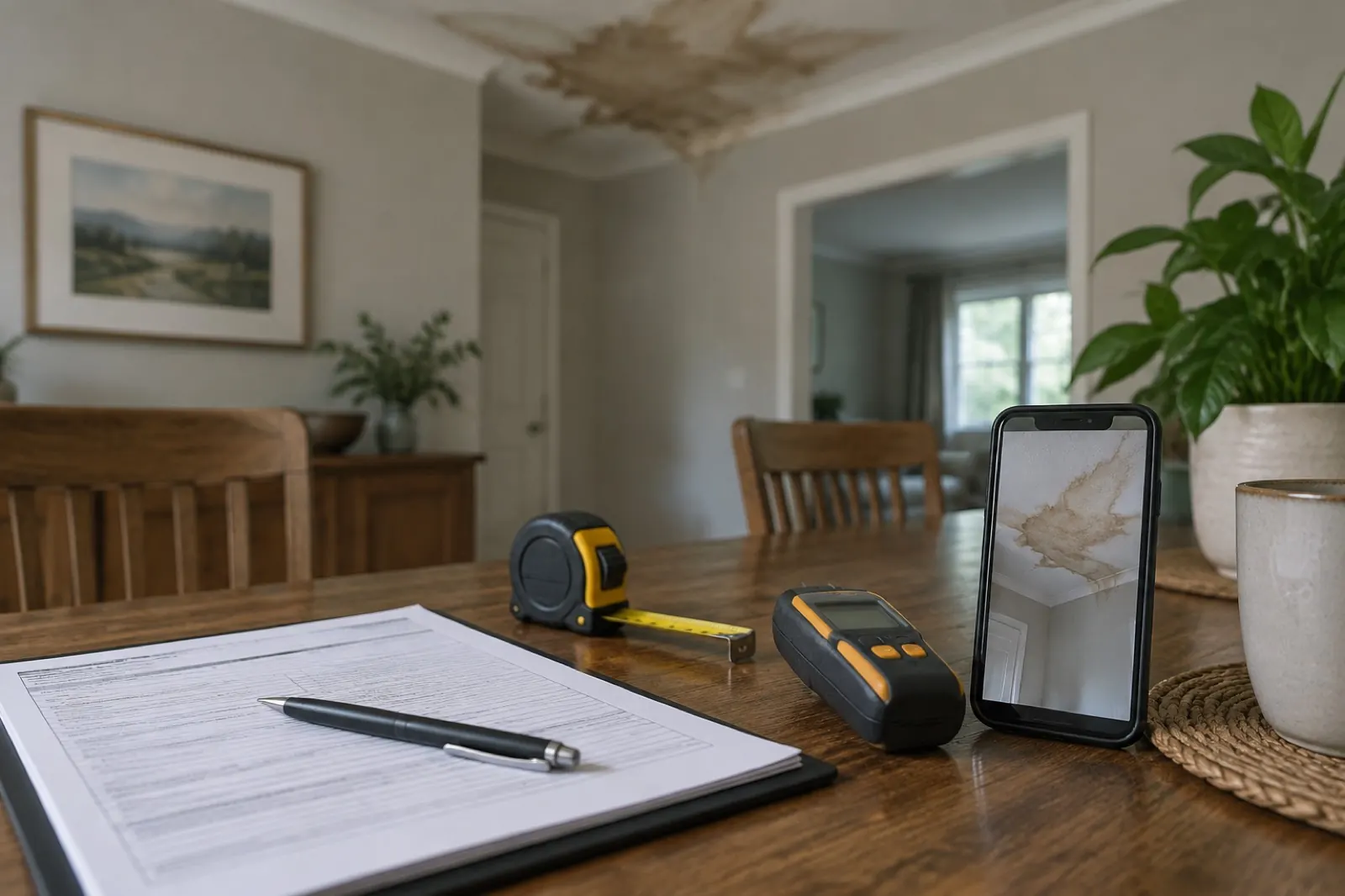
Headline figures
Start here
- Does Homeowners Insurance Cover Water Damage? What Is and Is Not: the sudden and accidental test, the scenario table and the mold sublimit.
- Does Renters Insurance Cover Water Damage? What It Does and Does Not: the tenant’s side: belongings, loss of use and liability, not the building.
- Water Backup Coverage Renters Insurance: The Endorsement People Skip: the endorsement most people skip, and why it is not flood cover.
On this page
The test that decides most claims: sudden and accidental
Water is one of the most common property claims and one of the most misunderstood, and the confusion is almost always about cause rather than amount. A small amount of water from a covered cause is paid. A large amount from an excluded cause is not. The organising idea in standard forms is that insurance covers fortuitous events, not deterioration: a supply line that fails without warning is fortuitous, while a fitting that has seeped for months, leaving staining and swelling anyone could have seen, is deterioration the owner was expected to deal with.
That makes most disputes arguments about duration. The insurer looks for evidence of how long something had been happening: staining, rot, mineral deposits, delaminated material. The policyholder usually describes the moment they noticed it. Those are different questions, and the file is decided on the first. Our guide to whether homeowners insurance covers water damage works through the test with a full scenario table, and the short version is below.
| Scenario | Usually covered? | Why |
|---|---|---|
| Burst supply line under a sink | Yes | Sudden and accidental discharge from a plumbing system |
| Water heater tank failure | Yes | Sudden failure; the tank itself is often excluded |
| Slow leak behind a cabinet over months | No | Read as gradual damage and a maintenance failure |
| Surface flooding or storm surge | No | Flood is excluded and needs a separate policy |
| Sewer or drain backup | Only with an endorsement | Excluded unless backup cover was added |
| Rain through a storm-damaged roof | Yes | The opening was created by a covered peril |
| Pipe freezing while the house was empty | Usually, with a condition | Many forms require heat maintained or the supply drained |
One distinction catches people more than any other: insurance generally pays for the damage the water caused and generally does not pay to fix the thing that failed. Our burst pipe repair guide prices those as two separate bills for exactly that reason. The plumbing repair is maintenance; the wet floor, walls and contents are the loss.
The lines blur in predictable places. Wind-driven rain through a storm-created opening generally follows the covered peril, while rain through a gap that was already there is a different argument. Water entering through a window well or door sill in heavy rain is frequently treated as surface water, and therefore as flood. A sump pump that fails during a storm depends entirely on whether a sump overflow or backup endorsement is on the policy.
Homeowners and renters: whose policy pays for what
A rented home has two policies sitting on the same event, and knowing where the seam runs prevents most of the friction. The landlord’s property policy covers the structure and fixed installations. The tenant’s renters policy covers belongings, liability and the extra cost of living elsewhere, and has no dwelling coverage at all. Our guide to whether renters insurance covers water damage sets out who claims on whose policy for each common scenario, and why the practical answer is to file on your own policy while the landlord files on theirs, in parallel, from day one.
Two sections of a renters policy are routinely overlooked. Loss of use, also called additional living expense, pays for a hotel and above-normal costs while a unit is uninhabitable. Liability responds if the tenant caused the escape of water, for example by leaving a bath running, and the landlord’s insurer pursues the cost of repairing the building. That second point is the main reason landlords require the policy in the first place.
Fire runs on the same split. Fire and smoke are among the most consistently named perils on standard renters forms, and our guide to whether renters insurance covers fire damage explains why the gap between actual cash value and replacement cost matters more after a fire than after a leak: a fire takes a whole household at once, and consumer goods depreciate quickly. Suppression also puts a large volume of water into the building, so a fire file is very often a water file as well.
Smoke claims carry their own argument, which is less about coverage than about where the damage stops. Smoke travels well beyond the burned room through wall cavities and the HVAC system, so a scope drawn at the fire compartment is almost always too small. Our guide to smoke damage insurance claims covers the four residue types, contents pack-out, odour and the evidence that settles each of the recurring disputes, and the fire and smoke hub covers the restoration side.
Flood is a separate policy, and most homes do not have one
In insurance terms flood means rising surface water arriving from outside the building: a river leaving its channel, storm surge, runoff that overwhelms drainage. It is excluded from standard homeowners and renters forms and written as a separate product, through the National Flood Insurance Program or a private carrier. The distinction is about direction and origin, not severity. A homeowner with a large dwelling limit and no flood policy has no flood cover. FEMA's FloodSmart site explains what an NFIP policy covers and how waiting periods apply, which is why buying one as a storm approaches generally does not work.
Very few homes carry that policy. FEMA data put NFIP residential policies on 2.89% of US residential structures, 3,160,864 policies against 109,326,879 structures, and the typical county is far lower at a median of 0.44%, per our flood insurance take-up map. Inside the mapped high-risk zone, where federally backed mortgages generally require cover, take-up is 43.9%; outside it, where 96.1% of homes sit, it is 1.25% (FEMA OpenFEMA).
| State | Homes with an NFIP policy, FEMA | Policies in force |
|---|---|---|
| Louisiana | 22.03% | 359,013 |
| Florida | 13.72% | 1,040,464 |
| South Carolina | 6.14% | 121,413 |
| Texas | 5.75% | 504,754 |
| New Jersey | 5.02% | 121,462 |
| Delaware | 4.79% | 17,547 |
| Hawaii | 3.89% | 11,829 |
| Mississippi | 3.52% | 40,942 |
The consequence shows up after every large flood. In FEMA’s registration file for eight large disasters declared from 2017 to 2021, only 9.8% of 6,367,334 registrations reported flood insurance, and among owners whose homes FEMA inspectors found with water inside, 73.7% had no flood policy (FEMA OpenFEMA, via our disaster insurance gap report). 38.9% of those flooded owner homes held a homeowners policy but no flood policy, according to the same FEMA data, which is the gap this section is about.
The pattern repeats on the buildings that flood most. FEMA lists 240,651 repetitive loss properties, each with a history of paid flood claims, and 56.4% of them are not insured by the NFIP today, per the FEMA register analysed in our repetitive loss properties report.
Backup, seepage and the endorsements that close the gaps
Sewer and drain backup is the exclusion that feels most unfair, because a backup does feel sudden and accidental. The exclusion is written around the mechanism, water coming up through drains, toilets or a sump, rather than around suddenness, so the sudden-and-accidental test does not rescue the claim. It is closed by an endorsement that has to be added deliberately. Our guide to water backup coverage on renters insurance explains what that endorsement covers, what it still does not, and why it is sold in fixed limit tiers that are often well below the value of what a basement holds.
Backup and flood are two different exclusions. Water rising up a drain from inside the system is backup; water rising across the ground from outside is flood. Neither endorsement covers the other. Backup water is also Category 3 under ANSI/IICRC S500, which changes the restoration scope before anyone argues about limits: porous belongings and building materials are removed rather than cleaned, and our sewage backup cleanup cost guide shows what that does to the bill.
Several other gaps are closable, and most policyholders do not know whether they have closed them. These are worth finding on the declarations page before there is a loss:
- Water backup and sump overflow. Closes the backup exclusion, usually with its own limit.
- Service line cover. Buried supply and sewer lines on the property, which standard forms commonly exclude.
- Flood, as a separate policy. Through the NFIP or a private carrier, subject to a waiting period.
- Increased mold limits. Mold that follows a covered water loss is commonly capped by a sublimit far below the dwelling limit.
- Ordinance or law. The extra cost of rebuilding to current code, which matters in older housing.
- Replacement cost on contents. Contents often settle at actual cash value by default even where the dwelling is written at replacement cost.
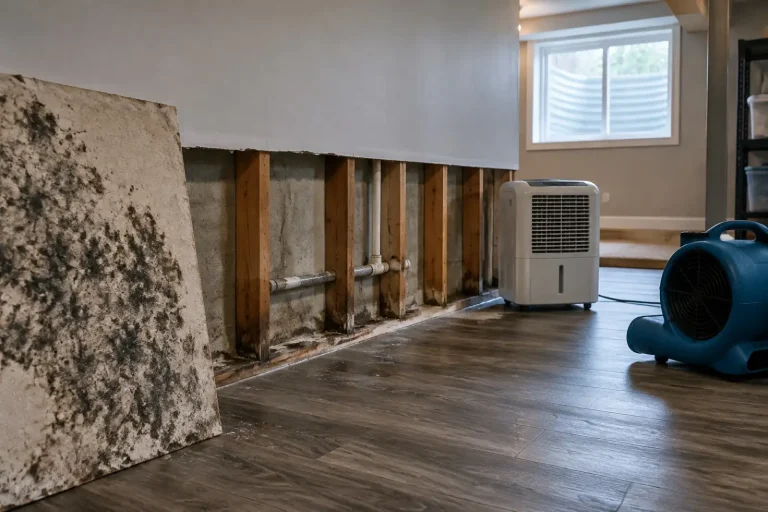
The mold sublimit deserves a second look because it is the line most often read too late. A delayed dry-out that produces mold through a wall cavity can reach a modest cap before the work is finished, with the balance falling to the owner. Mold from long-term humidity, condensation or an excluded cause generally follows the exclusion. The mold hub covers what the remediation itself involves.
Documentation and the duty to mitigate
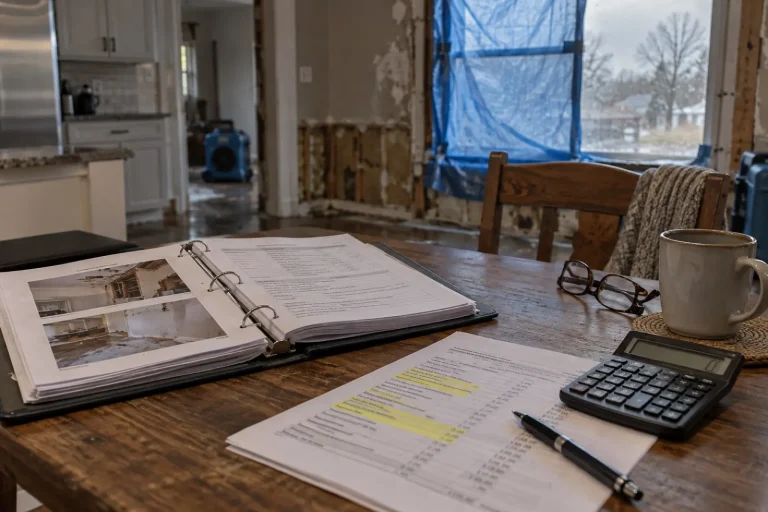
Standard policies impose a duty on the insured to take reasonable steps to prevent further damage. It is an obligation rather than an option, and failing it can reduce a claim for the damage the delay caused. The sequence that satisfies both the duty and the evidence problem is to document first and mitigate immediately afterwards, because once demolition starts the original condition is gone.
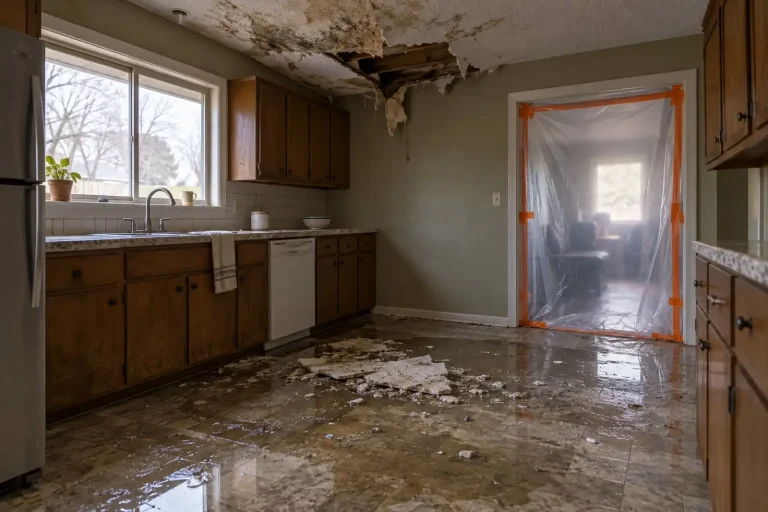
Waiting for an adjuster before drying feels cautious and carries two risks at once. One is the coverage argument: days of standing water are hard to describe as reasonable steps. The other is physical. Clean water degrades, and a loss attended several days late can be classed as contaminated by the time work starts, which is a larger and more expensive scope. Our water damage clean up guide sets out the first hour and first day in the order that protects both the building and the file.
| When | What to capture | What it proves later |
|---|---|---|
| Before anything moves | Wide and close dated photographs, the source visible where safe | The condition at discovery, the baseline for every scope argument |
| Before mitigation starts | Moisture readings on affected and on unaffected material | The extent of the loss, against a meaningful baseline |
| When you report | Date, time and who you spoke to | That the duty to report promptly was met |
| Every day equipment runs | The contractor’s daily moisture logs | That drying length followed readings, not assumption |
| Throughout | Invoices, written instructions, a damaged contents list | The claim total, and that costs were reasonable |
The moisture readings are the part most owners do not know to ask for. A competent assessment records readings on affected material and on unaffected material of the same type, so that dry becomes a measurable target. Our guide to water damage inspections explains what the report should contain and why a thermal image on its own is not a moisture reading. On a claim, that report is the evidence that the drying period and the equipment count were driven by conditions rather than convenience.
How the number is reached: adjusters, estimates and settlement basis
After notice, the insurer assigns an adjuster, either a staff adjuster or an independent one working for the insurer, whose job is to establish the cause, confirm coverage and agree the scope. A public adjuster is different: a professional the policyholder hires, for a fee, to prepare and negotiate the claim on their side. Rules for public adjusters are set state by state, and the state insurance department is the place to confirm them.
Most property estimates in the United States are written in Xactimate, priced from regional lists that are refreshed monthly. Because both sides read unit prices from the same list, disagreements are usually about scope and quantities rather than price, and about whether overhead and profit apply. Our guide to how Xactimate pricing works explains why line-item scope and measured quantities, documented at the time, decide the number, and the estimating hub covers the rest of that process.
The settlement basis then decides what the agreed scope is worth. Actual cash value pays replacement cost less depreciation for age and wear. Replacement cost pays to replace with like kind and quality, commonly in two payments, with the recoverable depreciation released only after the work is completed and invoiced. A replacement cost policyholder who never does the work therefore receives the actual cash value amount, and the owner funds the gap in the meantime. The worked example in our homeowners coverage guide shows the mechanism with illustrative round numbers.
Contents are the part of a claim that most often grows past expectations. On a smoke or water loss they can exceed the structural scope in both value and labour, and they are only as good as the inventory behind them. A room-by-room list, photographed before pack-out, carries more weight than one reconstructed from memory, and damaged items should be kept until the adjuster has seen them or released them in writing.
What payout data shows: claimed against paid
Private insurers do not publish claim-level data, so the only large public record of assessed damage against payment is the National Flood Insurance Program’s. Across 479,868 NFIP building claims with a loss year of 2015 or later, the median claim settles at 95.8% of assessed damage, and 34.1% settle below 90% of it, per FEMA OpenFEMA claims analysed in our insured flood loss gap report.
The shape of that chart is the policy structure, not a verdict on adjusting. On the smallest losses the deductible takes a large bite, which pulls the ratio down. At the top, the $250,000 residential building limit set out by FEMA FloodSmart does the same: 94.3% of NFIP claims assessed above $250,000 settle at or within $1,000 of that limit (FEMA OpenFEMA). A gap between damage and payment is what deductibles, limits and depreciation produce by design, and the report is a record of that rather than a judgement on any claim.
Contents behave differently from the building. Contents cover is bought separately, and only 35.2% of NFIP claims filed since 2015 record any contents payment, according to FEMA claims data. Where contents are claimed, the median settles at 85.1% of assessed contents damage (FEMA OpenFEMA), lower than the building figure because NFIP personal property settles at actual cash value. Our contents restoration report sizes that part of a flood loss, which runs at a median 28% of building damage in the FEMA claims.
When a claim is disputed
A denial is a position, stated in writing with reference to specific policy language, and the first useful step is to read which provision was cited. The response to a gradual damage exclusion is different from the response to a flood exclusion, and both differ from an argument about how much the loss is worth. This page describes the routes that exist; it is not advice on any claim.
- Get the reason in writing. Then read the cited provision in your own policy rather than in the letter’s paraphrase.
- Separate cause from amount. Cause disputes turn on evidence of what happened and when. Amount disputes turn on scope and quantities.
- Produce the day-one record. Contemporaneous photographs and readings carry more weight than a later account.
- Ask about appraisal. Many policies contain an appraisal clause for disagreements about the amount of loss. It is a different route from disputing coverage, and the policy wording sets how it runs.
- Use the regulator. Every state has an insurance department that accepts consumer complaints; the NAIC directory of state insurance departments lists them.
- Take advice on anything significant. A public adjuster or an attorney is the appropriate route for a large or contested loss.
Flood claims under the NFIP sit partly outside that picture, because the policy is a federal programme with its own claims and appeal procedures. FEMA FloodSmart is the authority for how an NFIP claim is filed, reviewed and appealed, and a policyholder with a private flood policy follows that policy’s own wording instead.
Most disputes are settled by evidence rather than argument. The files that resolve quickly are the ones where the cause is documented, the moisture readings exist, the contents list was built before anything was discarded, and the estimate states what it covers. That is also why the guides in this section keep returning to the same point: the first hour decides more of the claim than the last letter.
Every insurance and claims guide
Every coverage guide in this section, plus the smoke claim guide from the fire and smoke section.
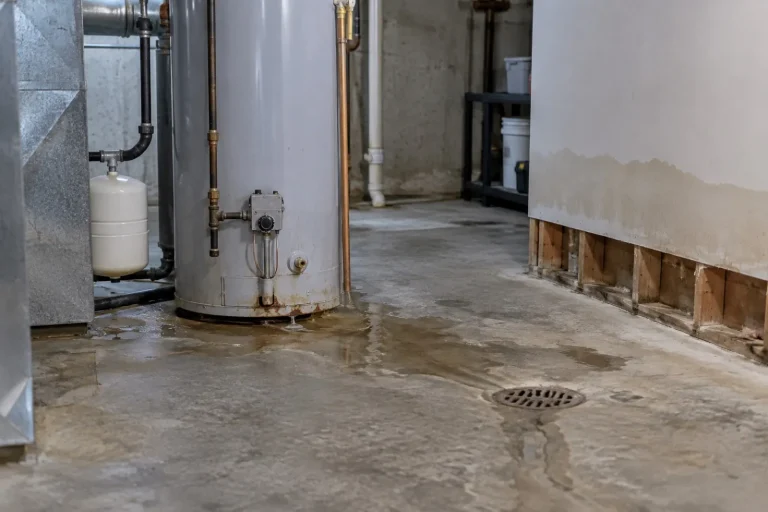 Does Homeowners Insurance Cover Water Damage? What Is and Is NotThe sudden and accidental test, a scenario table, the mold sublimit and the duty to mitigate.
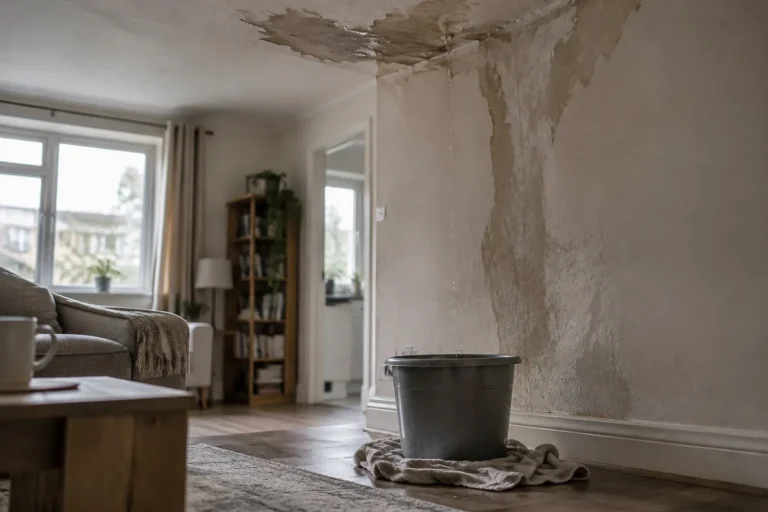 Does Renters Insurance Cover Water Damage? What It Does and Does NotYour belongings against the landlord's building, loss of use, and liability when you caused it.
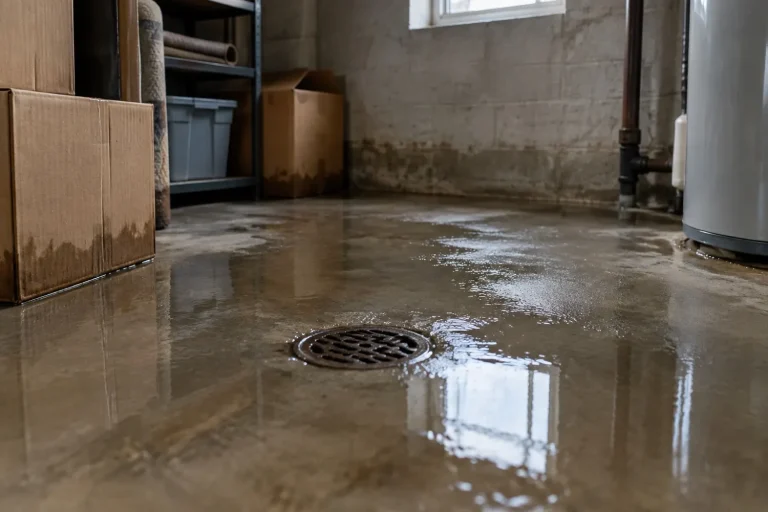 Water Backup Coverage Renters Insurance: The Endorsement People SkipThe endorsement that patches the backup exclusion, and why its limit tiers run out.
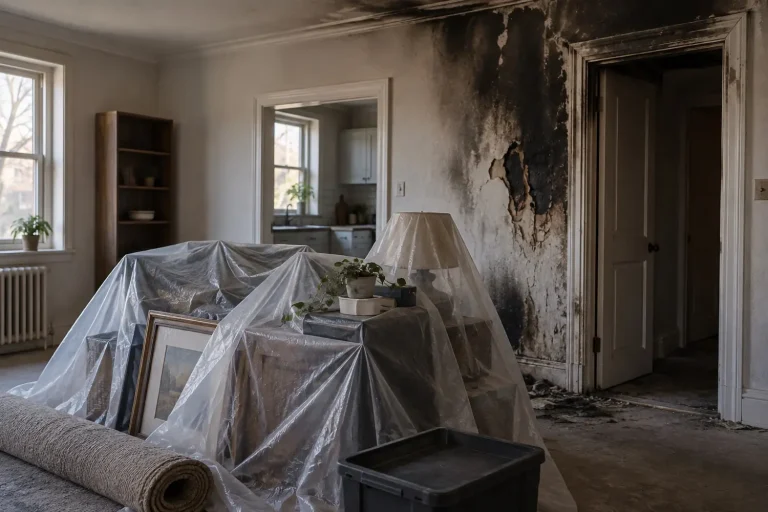 Does Renters Insurance Cover Fire Damage? What It Pays ForContents, temporary accommodation and liability after a fire, and the subrogation risk.
 Smoke Damage Insurance Claims: Scope, Contents and OdourWhy the scope boundary is the whole dispute, plus contents, odour and the HVAC question.
 Does Homeowners Insurance Cover Foundation Leaks? The 5 ClausesDoes Homeowners Insurance Cover Foundation Leaks? The 5 Clauses
 Does Homeowners Insurance Cover Frozen Pipes? The HO-3 Heat ClauseDoes Homeowners Insurance Cover Frozen Pipes? The HO-3 Heat Clause
 Does Flood Insurance Cover Mold? SFIP V.D.4 and the Access RuleDoes Flood Insurance Cover Mold? SFIP V.D.4 and the Access Rule
 Does Renters Insurance Cover Mold? What 4 Filed Forms SayDoes Renters Insurance Cover Mold? What 4 Filed Forms Say
 Does Flood Insurance Cover Basements? The SFIP’s 20 ItemsDoes Flood Insurance Cover Basements? The SFIP’s 20 Items
 How Long Does a Water Damage Claim Take? 12 States’ Legal ClocksHow Long Does a Water Damage Claim Take? 12 States’ Legal Clocks
 Does Landlord Insurance Cover Water Damage? DP 1 vs 2 vs 3Does Landlord Insurance Cover Water Damage? DP 1 vs 2 vs 3
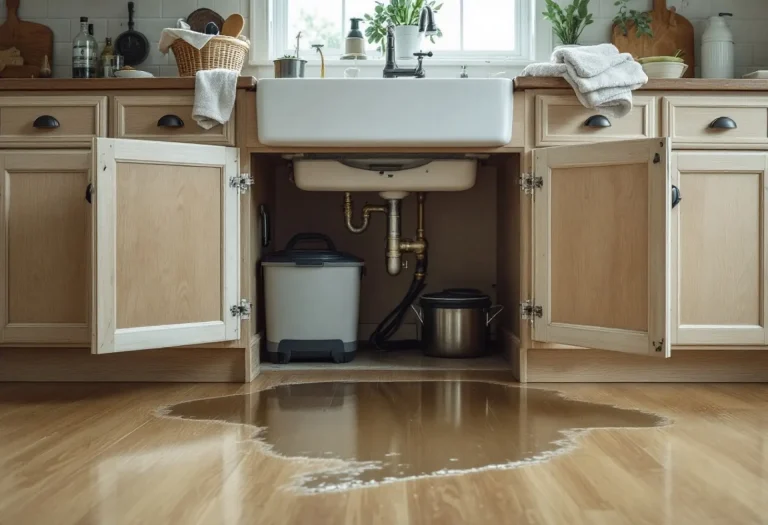 Should I File a Home Insurance Claim for Water Damage? Break-Even MathShould I File a Home Insurance Claim for Water Damage? Break-Even Math
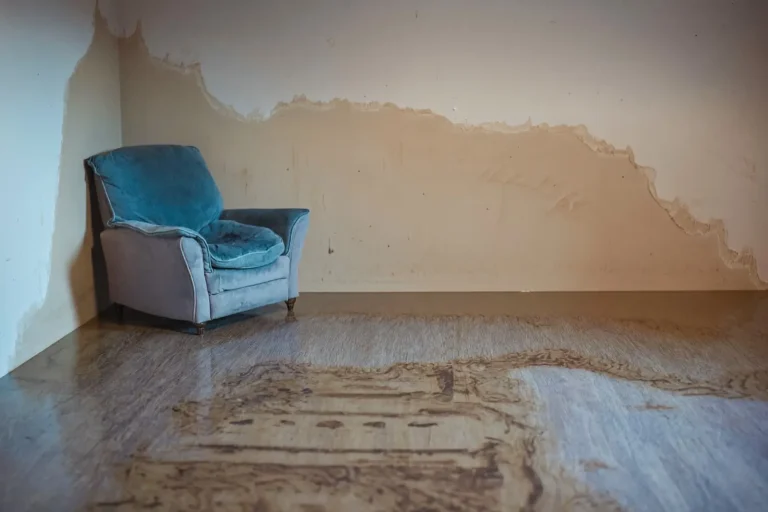 FEMA Inspection: What the Inspector Checks and How It Sets Your AwardFEMA Inspection: What the Inspector Checks and How It Sets Your Award
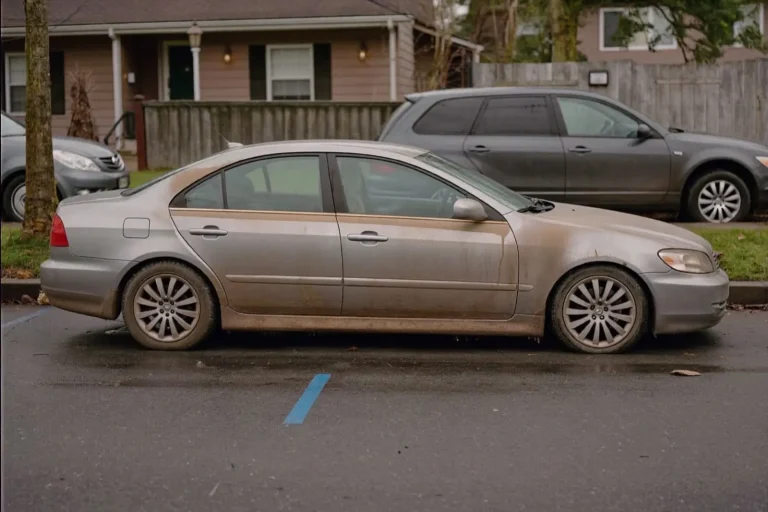 Does Car Insurance Cover Flood Damage? 2 Policy Forms, 6 State RulesDoes Car Insurance Cover Flood Damage? 2 Policy Forms, 6 State Rules
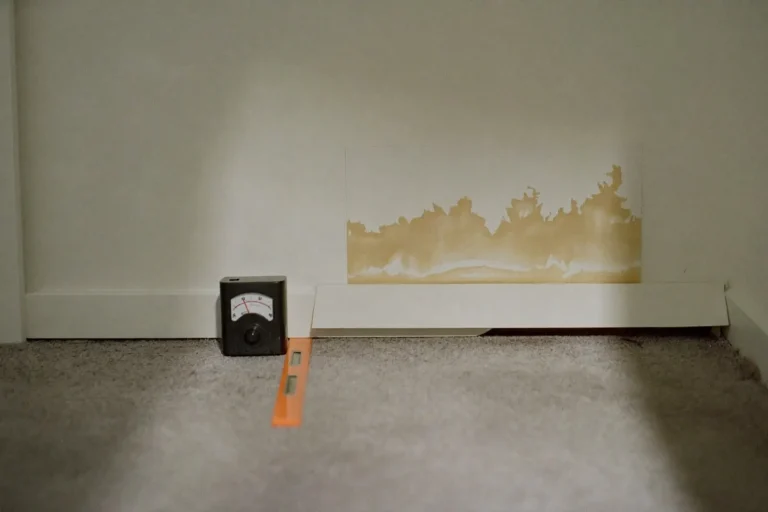 Dealing With Insurance Adjuster After Water Damage: 8 State ClocksDealing With Insurance Adjuster After Water Damage: 8 State Clocks
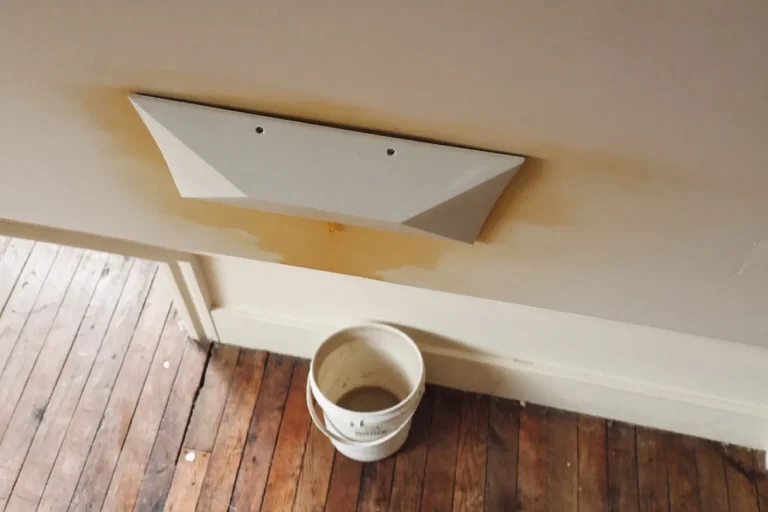 Water Damage in Apartment: Who Pays in 9 Leaks, 7 State DeadlinesWater Damage in Apartment: Who Pays in 9 Leaks, 7 State Deadlines
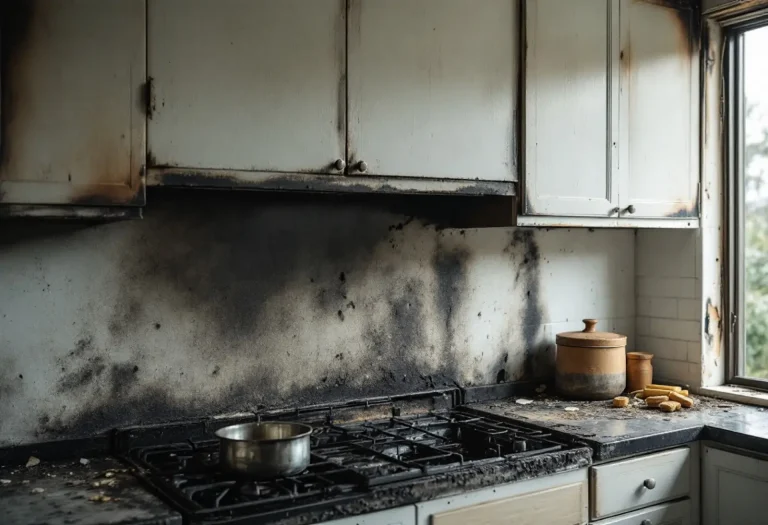 Does Homeowners Insurance Cover Fire Damage? 6 Fires, by ClauseDoes Homeowners Insurance Cover Fire Damage? 6 Fires, by Clause
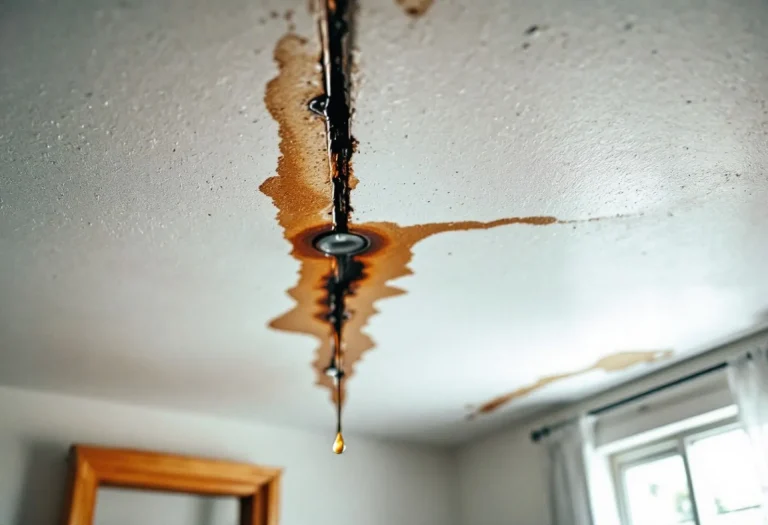 Does Condo Insurance Cover Water Damage? 10 Leaks, Who PaysDoes Condo Insurance Cover Water Damage? 10 Leaks, Who Pays
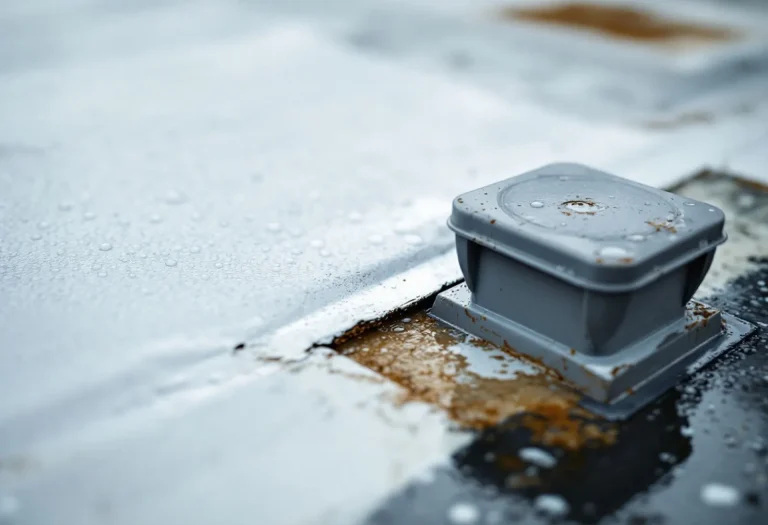 Does RV Insurance Cover Water Damage? 5 Insurer Documents QuotedDoes RV Insurance Cover Water Damage? 5 Insurer Documents Quoted
 Does Home Warranty Cover Water Damage? What 3 Contracts SayDoes Home Warranty Cover Water Damage? What 3 Contracts Say
 Assignment of Benefits: Florida Law, Water Damage, AOB RulesAssignment of Benefits: Florida Law, Water Damage, AOB Rules
 Recoverable Depreciation: Holdbacks, Deadlines and State RulesRecoverable Depreciation: Holdbacks, Deadlines and State Rules
 Insurance Check Mortgage Company Rules: Endorse, Hold, ReleaseInsurance Check Mortgage Company Rules: Endorse, Hold, Release
 Loss of Use Coverage: HO-3 Coverage D Read Clause by ClauseLoss of Use Coverage: HO-3 Coverage D Read Clause by Clause
 Proof of Loss: The 60-Day Rule in Homeowners and Flood PoliciesProof of Loss: The 60-Day Rule in Homeowners and Flood Policies
 Public Adjuster Fees: State Fee Caps From the StatutesPublic Adjuster Fees: State Fee Caps From the Statutes
 Does Homeowners Insurance Cover Mold Remediation? Clause by ClauseDoes Homeowners Insurance Cover Mold Remediation? Clause by Clause
 Does Insurance Cover Asbestos Removal? The Sudden-Loss TestDoes Insurance Cover Asbestos Removal? The Sudden-Loss Test
Related hubs
Questions people actually ask
How do I file a water damage insurance claim?
In general terms: stop the source, photograph everything before it moves, notify the insurer promptly and note when you did, then start mitigation and keep every invoice and moisture log. The insurer assigns an adjuster to establish cause and scope. Your policy’s conditions section sets the exact duties.
Does homeowners insurance cover water damage from a slow leak?
Generally not. Standard forms cover sudden and accidental escapes of water, and a leak that has run for weeks or months, with visible staining or rot, usually reads as gradual damage and a maintenance failure. The policy wording and the evidence of duration decide each case.
Is flood damage covered by homeowners insurance?
No. Flood, meaning rising surface water from outside the building, is excluded from standard homeowners and renters forms and needs a separate policy through the NFIP or a private carrier. FEMA FloodSmart explains what an NFIP policy covers.
Should I call a restoration company before my insurer?
The two are not alternatives. Policies generally require prompt notice and reasonable steps to prevent further damage, so owners commonly document the loss, notify the insurer and start mitigation on the same day. Waiting days for an adjuster before drying can worsen the loss.
What does actual cash value mean on a water claim?
Actual cash value pays the replacement cost of damaged property less depreciation for age and wear. Replacement cost pays to replace with like kind and quality, usually releasing the depreciation after the work is done. Which basis applies is shown on the declarations page.
What can I do if my water damage claim is denied?
Read the provision the denial cites, decide whether the dispute is about cause or amount, and produce the documentation from the day of the loss. Many policies have an appraisal clause for amount disputes, and every state insurance department accepts complaints. A public adjuster or attorney is the route for large or contested losses.
How long does an insurer have to pay a water damage claim?
Deadlines for acknowledging, deciding and paying claims are set by state law and regulation and vary by state. The state insurance department can confirm the rules that apply to a specific policy.
Sources
- FEMA FloodSmart, on what the NFIP covers, waiting periods, and the $250,000 residential building coverage limit.
- FEMA, Flood insurance, on the separation of flood cover from standard homeowners policies.
- National Association of Insurance Commissioners, State insurance departments.
- FEMA OpenFEMA, NFIP Redacted Claims v3, loss years 2015 onward, retrieved 4 October 2026.
- FEMA OpenFEMA, NFIP Residential Penetration Rates v1, as of 3 August 2026.
- FEMA OpenFEMA, Individual Assistance Housing Registrants Large Disasters v1, as analysed in our disaster insurance gap report, retrieved 6 October 2026.
- FEMA OpenFEMA, NFIP Multiple Loss Properties v1, as of 2 August 2026.
- IICRC, ANSI/IICRC S500, for the water category of backup and flood water.
- Coverage patterns on this page describe common structures in standard US homeowners and renters forms. They are not a substitute for policy language, and no carrier’s forms or claim files were reviewed for this page.
This product uses the Federal Emergency Management Agency’s OpenFEMA API, but is not endorsed by FEMA. The Federal Government or FEMA cannot vouch for the data or analyses derived from these data after the data have been retrieved from the Agency’s website(s).
How this page is maintained. This hub summarises the insurance section and links every article in it. It describes how coverage commonly works and does not advise on any policy or claim. Figures are recomputed from the research files each time the page is rebuilt, and it was last reviewed on 7 October 2026. Our standing rules for sources, retrieval dates and exclusions are on the methodology page. If anything here is wrong or out of date, the corrections page explains how to tell us and how fixes are logged.