The short answer
Yes, but narrowly, answers does renters insurance cover mold: filed renters forms pay for mold damage to your belongings only after a covered peril such as a burst supply line, often under a fungi cap. Per the text of one Oklahoma renters form, all fungi costs, hotels included, stop at $5,000 a policy period. Slow leaks, humidity, flood and neglect are excluded. Walls are the landlord’s.
What does the mold wording in a renters form actually say?
Renters insurance is sold on an HO-4 style form: Coverage C for your belongings, Coverage D for loss of use, Coverage E for personal liability. Nothing in it insures the building, which the New Jersey Department of Banking and Insurance renters guide says is the landlord’s insurance to cover after a fire. So the mold question is really three questions: did mold harm your property, did it force you out, and is someone blaming you for it.
The Oklahoma Insurance Department policy form library posts complete renters forms from the largest insurers in that state. Four of those forms, read in full for this page, handle mold in four different ways.
| Form | Where mold appears | Key wording | Dollar figure |
|---|---|---|---|
| HO 00 04 10 00 (ISO text, edition 10/2006 print) | Water peril 12, exclusion (4) | “Caused by mold, fungus or wet rot unless hidden within the walls or ceilings or beneath the floors or above the ceilings of a structure” | No fungi sublimit printed |
| HS 00 04 OK 10 14 renters policy | Exclusion 10 plus Additional Coverage 14 | “$5,000 is the most we will pay for the total of all occurrences during the policy period” | $5,000 property; fungi liability excluded |
| HOR OK 09 21 renters policy | Water peril, item 4; Section II fungi exclusion | Seepage or condensation “over a period of 14 or more days” excluded from “the first day” | No fungi limit found; fungi liability excluded |
| H4-2136 renters policy (2017) | Section I Losses Not Insured, item g | Excludes “any remediation of fungus,” testing, and loss of use caused by fungus | $0 for remediation by the text; fungi liability excluded |
The pattern is old wording versus new wording. The HO 00 04 10 00 contents broad form only carves mold out of the plumbing peril and gives it back when the mold was hidden inside walls, floors or ceilings. Newer forms, like the HS 00 04 OK 10 14 renters policy, define “fungi” to include “mold or mildew,” mycotoxins and spores, exclude it outright, then hand back a fixed dollar amount.
Which mold events fit the form text? Ten common cases
Each row below applies quoted text from the four filed forms to one event. The outcome column says how the printed words read, not what any insurer will pay on a given claim: endorsements, state amendments and claim facts change results, and the forms themselves come from one state’s library, the Oklahoma Insurance Department policy form library.
| Event | Typical renters form wording | Likely outcome per the form text | Citation |
|---|---|---|---|
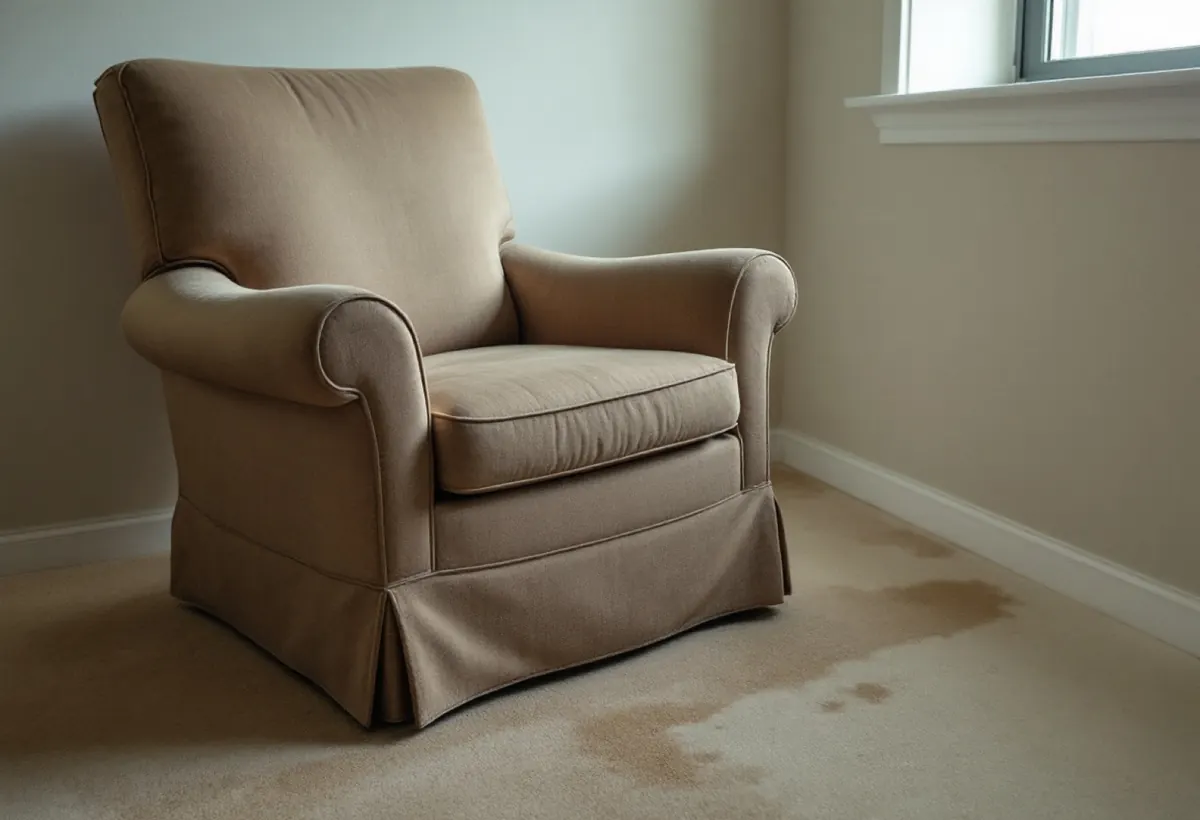
| Washer supply hose bursts; rug and sofa soak; mold follows | Peril: “accidental discharge or overflow of water … from within a household appliance” | Water damage fits the peril; the mold share sits inside the $5,000 cap in HS 00 04 OK and inside the remediation exclusion in H4-2136 | HO 00 04 peril 12; HS 00 04 OK coverage 14; H4-2136 item g |
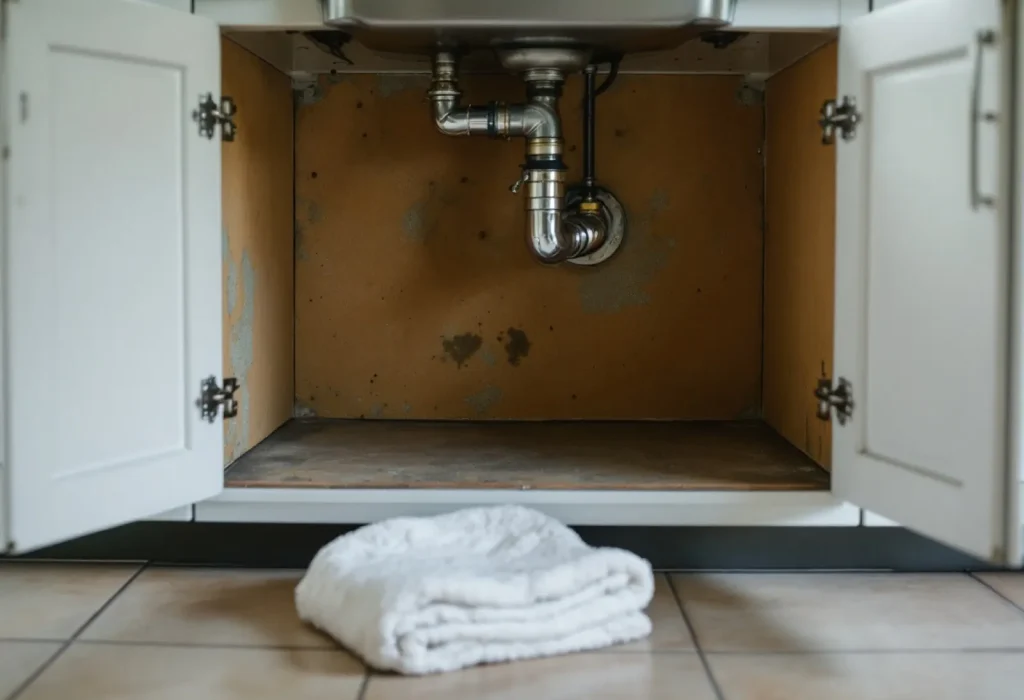
| Drip under the kitchen sink runs for weeks | “constant or repeated seepage or leakage of water … over a period of weeks, months or years” | Excluded by the text; HOR OK 09 21 sets the line at 14 days and excludes back to day one | HS 00 04 OK peril 12 b.(5); HOR OK 09 21 |
| Leak hidden inside a wall, unknown to you | Exclusion “does not apply if such condition … is unknown to all insureds and is hidden within the walls” | The seepage exclusion steps aside for your belongings; the wall itself is the landlord’s building | HS 00 04 OK peril 12; HO 00 04 peril 12 (4) |
| Bathroom condensation, no leak at all | “presence or condensation of humidity, moisture or vapor” | No peril occurred and the text excludes it | HS 00 04 OK peril 12 b.(5) |
| River or storm flooding | Water exclusion: “Flood, surface water, waves” | Excluded; the NJ regulator uses mold after flood as its example | HS 00 04 OK exclusion A.3.a; NJ DOBI guide |
| Sewer or floor drain backs up | “backs up through sewers or drains” | Excluded unless a backup endorsement is added | HO 00 04 exclusion 3.b |
| Rain through a window left open | Rain excluded “unless the direct force of wind or hail damages the building causing an opening” | No covered peril, so no mold coverage follows | HO 00 04 peril 2 |
| Fire, firefighting water, then mold | Fungi exclusion “does not apply: a. When fungi … results from fire or lightning” | The text lifts the fungi exclusion, so the $5,000 cap does not bind | HS 00 04 OK exclusion 10.a |
| Your unnoticed leak molds the landlord’s drywall | Excludes “property damage to property rented to, occupied or used by or in the care of” an insured, except fire, smoke or explosion | Liability text excludes it twice: rented property and fungi | HO 00 04 Section II; HS 00 04 OK exclusion 10 |
| Mold already there when you moved in | “This policy applies only to loss which occurs during the policy period” | No covered peril inside the policy period | HO 00 04 condition O; H4-2136 policy period |
Two rows surprise most renters. Fire is the one cause the HS 00 04 OK 10 14 renters policy lets through without the fungi cap: exclusion 10 says it does not apply when the fungi “results from fire or lightning.” And the hidden-leak carve-back in both the HO 00 04 and HS 00 04 OK forms protects belongings, not drywall, because Coverage C never insured the walls.
For the water half of these claims, the plumbing and appliance rules are set out on our renters water damage page.
Why can a leak that ran 14 days lose coverage from day one?
The HOR OK 09 21 renters policy puts a number on the slow-leak rule. Its water peril excludes loss “caused by constant or repeated seepage or leakage of water or steam or the presence of condensation or humidity, moisture or vapor, over a period of 14 or more days,” and adds that the insurer will not pay for damages “starting from the first day the seepage or leakage … began.” A drip that runs three weeks does not lose only its last seven days; by the text it loses all 21.
The HS 00 04 OK 10 14 renters policy uses no day count: its exclusion reaches seepage “over a period of weeks, months or years,” with the hidden-and-unknown exception for leaks inside fully enclosed walls, floors or ceilings. Mold biology runs on a shorter clock than either. The EPA's Brief Guide to Mold, Moisture and Your Home says that if wet materials are dried within 24 to 48 hours of a leak or spill, in most cases mold will not grow.
Both the HO 00 04 and HS 00 04 OK texts put the burden of speed on the tenant. The HO 00 04 10 00 contents broad form lists a duty to “protect the property from further damage,” and its Neglect exclusion bars loss from failing “to use all reasonable means to save and preserve property.” The HS 00 04 OK 10 14 renters policy writes the same duty into its fungi coverage: it applies only when “all reasonable means were used to save and preserve the property from further damage” after the loss.
How far does a $5,000 fungi limit stretch?
Not as far as a full contents limit. Per the HS 00 04 OK 10 14 renters policy, the $5,000 is “the most we will pay for the total of all occurrences during the policy period,” and it must cover four kinds of cost together: removing fungi from covered property, tearing out and replacing whatever is needed to reach it, testing air or property, and the extra living expenses you incur while it is fixed. The limit applies “regardless of the number of claims made” and cannot be stacked across policy periods.
According to the Massachusetts FAIR Plan limited fungi notice, the ISO limited fungi endorsement is tiered: $10,000 of property coverage, with $25,000 and $50,000 for extra premium, and a $50,000 liability aggregate that can be raised to $100,000. That notice also says testing is paid only “to the extent that there is a reason to believe” fungi are present, and only for a peril that “occurs during the policy period.”
A common rule of thumb online says a covered mold claim pays up to your whole personal property limit. That holds for the water damage itself, but per the HS 00 04 OK 10 14 renters policy the mold portion runs into its own $5,000 ceiling, and under the H4-2136 renters policy the fungus remediation, testing and fungus delays are excluded outright. Ask your insurer whether your form has a fungi sublimit, what it is, and which of the four cost types it shares.
Does loss of use pay for a hotel while mold is removed?
Only through a covered peril. The HO 00 04 10 00 contents broad form pays additional living expense when “a loss by a Peril Insured Against … makes the residence premises not fit to live in,” for the shortest time needed to repair or for the household to settle elsewhere. A civil authority order triggers it for no more than 2 weeks.
Mold changes the arithmetic. Per the HS 00 04 OK 10 14 renters policy, Coverage D gains a line: “We do not cover any loss or expense due to or consisting of fungi” except under the limited fungi coverage, where hotel costs share the same $5,000 as removal and testing. The H4-2136 renters policy goes further and excludes “any loss of use or delay in rebuilding, repairing, or replacing covered property” caused by fungus.
For scale, according to the California Department of Insurance guide, a renters Coverage D is generally 20% of Coverage C. Labelled calculation per the regulator’s percentage: a $20,000 contents limit carries $4,000 of loss of use, which is not a figure from any policy. How the Coverage D limit is set and spent is explained on the loss of use coverage page.
If a tenant’s neglect causes mold, does renters liability pay the landlord?
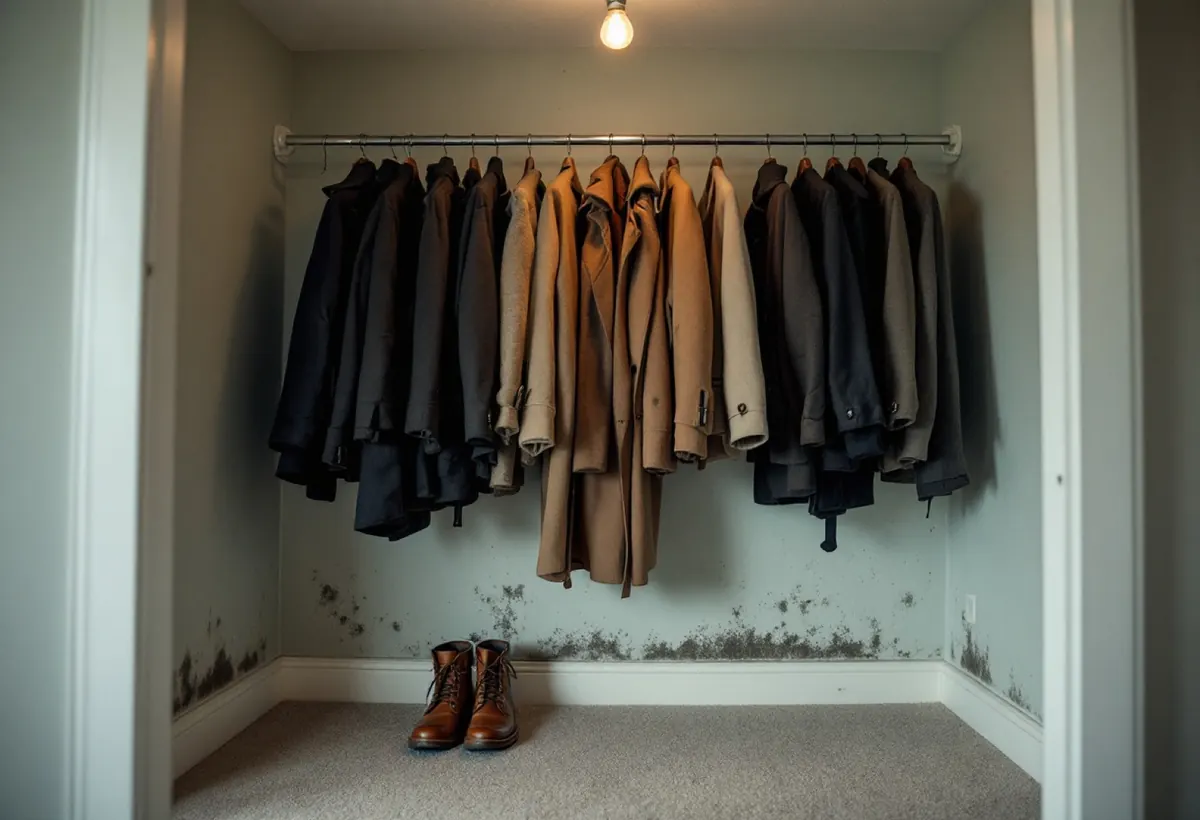
Read as printed, rarely. Section II of the HO 00 04 10 00 contents broad form excludes “property damage to property rented to, occupied or used by or in the care of an insured,” with one exception: damage “caused by fire, smoke or explosion.” Mold in the apartment you rent is damage to property rented to you, and mold is none of those three causes.
Newer forms add a second wall. The HS 00 04 OK 10 14 renters policy, the HOR OK 09 21 renters policy and the H4-2136 renters policy each exclude bodily injury or property damage arising out of the “inhalation of, ingestion of, contact with, exposure to, existence of, or presence of” fungi. The HS 00 04 OK 10 14 renters policy also offers, per the form, $1,000 per occurrence for damage to property of others, then excludes property rented to an insured and anything arising out of fungi from that too.
Where an insurer uses the ISO endorsement instead, per the Massachusetts FAIR Plan limited fungi notice there is a $50,000 fungi liability limit written on an aggregate basis: the most it pays for all fungi claims in the policy period, however many people claim. Ask the insurer for the exact Section II fungi wording and whether a landlord’s claim for mold in your unit falls under the rented-property exclusion.
Does a leak from the apartment upstairs count as your peril?
In the HO 00 04 10 00 contents broad form, the water peril excludes discharge “which occurs away from the building where the residence premises is located,” so a burst pipe in the unit above, in the same building, is not shut out by that line.
The HS 00 04 OK 10 14 renters policy words it differently: loss “on the residence premises caused by accidental discharge or overflow which occurs off the residence premises” is excluded, and its limited fungi coverage carves out mold “caused by an accidental discharge or overflow of water that occurs off the residence premises.” Definition 26 makes the residence premises, in a larger building, “that part of any other building where you reside.” Ask the insurer, in writing, how it reads a leak from another unit before relying on either reading.
Flood, sewer backup or rain through a window: why the mold claim fails on the water first
Mold coverage in these forms is derivative: no covered water event, no covered mold. The HS 00 04 OK 10 14 renters policy water exclusion lists “flood, surface water, waves,” water that “backs up through sewers or drains,” and water below the surface of the ground. The New Jersey DOBI guide lists mold among losses renters policies do not cover, “unless it is as a result of a covered loss (for example, mold damage due to flood would not be covered).”
Rain is narrower still. The HO 00 04 10 00 contents broad form windstorm peril excludes rain damage to contents “unless the direct force of wind or hail damages the building causing an opening in a roof or wall.” A window left open is not that opening. Backup cover is a separate endorsement, explained on the renters water backup page, and flood-caused mold is its own question on the flood insurance and mold page.
What should a renter ask the insurer and the state insurance department about mold?
Ask for the policy jacket and every endorsement by form number, then ask these, each tied to a clause quoted above:
- Does Section I contain a fungi exclusion, and is there a limited fungi additional coverage? What is the dollar limit, and is it per policy period like the $5,000 per the HS 00 04 OK 10 14 text?
- Do removal, tear-out, testing and additional living expense share that one limit?
- Does the water peril set a day count for seepage, like the 14 days in HOR OK 09 21, and does the exclusion run back to the first day?
- How does the form treat water from another unit in the same building?
- Does Section II exclude fungi claims and property rented to you, and is a fungi liability aggregate available, such as the $50,000 the FAIR Plan notice reports?
If the answers conflict with the printed form, your state insurance department takes coverage complaints; the California Department of Insurance guide lists its consumer line as 800-927-4357. A licensed public adjuster or a coverage attorney can read a denial letter against the form; bring the denial, the form numbers and dated photos. Whether the landlord must fix mold is landlord-tenant law, not insurance, and is set out on the black mold in apartment page. Owner-occupied HO-3 policies read differently, as the homeowners mold remediation page shows.
Out of scope: this page covers policy wording only. For questions about mold and health, see the EPA's Brief Guide to Mold, Moisture and Your Home and talk to a doctor.
Questions people actually ask
Does renters insurance cover mold damage to furniture?
Only when a covered peril, such as a burst appliance hose, caused the mold. Furniture is Coverage C property, but per the HS 00 04 OK 10 14 renters form, fungi costs cap at $5,000 a policy period, and the H4-2136 form excludes the cost to remove fungus from covered property or to repair, restore or replace that property.
Does State Farm renters insurance cover mold?
The State Farm renters form posted by the Oklahoma Insurance Department, H4-2136 from 2017, excludes any remediation of fungus, fungus testing and loss of use caused by fungus, and excludes fungus claims under liability. Other states and later editions may differ, so ask for your form number and its endorsements.
Does renters insurance pay for a mold inspection?
Sometimes, inside a cap. Per the form text, HS 00 04 OK 10 14 pays testing within its $5,000 fungi limit, and only if there is reason to believe fungi are present after a covered peril. H4-2136 excludes testing to confirm the type, absence, presence or level of fungus. A routine move-in inspection is not a covered loss in any of the forms read.
Does renters insurance cover mold in California?
The California Department of Insurance guide lists mold among the perils generally not covered by a homeowners policy, alongside seepage, neglect and flood. Coverage after a covered peril depends on the form. The same guide reports Coverage D is generally 20% of Coverage C; its consumer line is 800-927-4357.
Can renters insurance cover rent if mold makes me break the lease?
No by the printed text. HO 00 04 10 00 and HS 00 04 OK 10 14 both state under Coverage D: we do not cover loss or expense due to cancellation of a lease or agreement. Rent obligations after mold are a landlord-tenant law question for a tenant attorney or the local housing agency.
Do I have to report mold to the insurer quickly?
The forms say so. HO 00 04 10 00 lists give prompt notice to us or our agent as the first duty after loss, plus protecting the property from further damage. EPA advises drying wet materials within 24 to 48 hours, and HOR OK 09 21 excludes seepage lasting 14 or more days.
Sources
- HO 00 04 10 00 contents broad form, Homeowners Policy Contents Broad Form HO 00 04 10 00 (Ed. 10/2006 print), includes copyrighted material of Insurance Services Office, hosted by the Oklahoma Insurance Department. Retrieved 20 November 2026.
- HS 00 04 OK 10 14 renters policy, CSAA General Insurance Company Oklahoma Renters Policy, definitions 15 and 26, Coverage D, Additional Coverage 14, peril 12, exclusions A.3 and 10, Section II exclusion 10, hosted by the Oklahoma Insurance Department. Retrieved 20 November 2026.
- HOR OK 09 21 renters policy, filed renters form HOR OK 09 21 (Renters Protection Policy), water peril and Section II fungi exclusion, hosted by the Oklahoma Insurance Department. Retrieved 20 November 2026.
- H4-2136 renters policy, State Farm Renters Policy H4-2136 (2017), Section I Losses Not Insured item g and Section II fungus exclusion, hosted by the Oklahoma Insurance Department. Retrieved 20 November 2026.
- Oklahoma Insurance Department policy form library, Oklahoma Insurance Department, Policy Forms Used by the 10 Largest Homeowners’ Insurance Groups in Oklahoma. Retrieved 20 November 2026.
- Massachusetts FAIR Plan limited fungi notice, Massachusetts Property Insurance Underwriting Association, Homeowners Policyholder Notice: Limited Fungi, Wet or Dry Rot, or Bacteria Coverage (HO 06 01 03). Retrieved 20 November 2026.
- New Jersey Department of Banking and Insurance renters guide, A Consumer Guide to Renters Insurance, New Jersey Department of Banking and Insurance. Retrieved 20 November 2026.
- California Department of Insurance residential guide, Residential Insurance: Homeowners and Renters, California Department of Insurance. Retrieved 20 November 2026.
- EPA's Brief Guide to Mold, Moisture and Your Home, United States Environmental Protection Agency, last updated 18 February 2026. Retrieved 20 November 2026.
- The scenario table and the loss of use example are our reading and arithmetic on the quoted text; no outcome on this page was estimated or invented. Our methodology sets out the standing rules, and the insurance section lists related guides.
This page describes published policy forms and regulator guidance. It is not legal advice and does not state what any individual policy pays. Read your own policy and endorsements, and ask your insurer, your state insurance department or a licensed professional about a specific claim.