The short answer
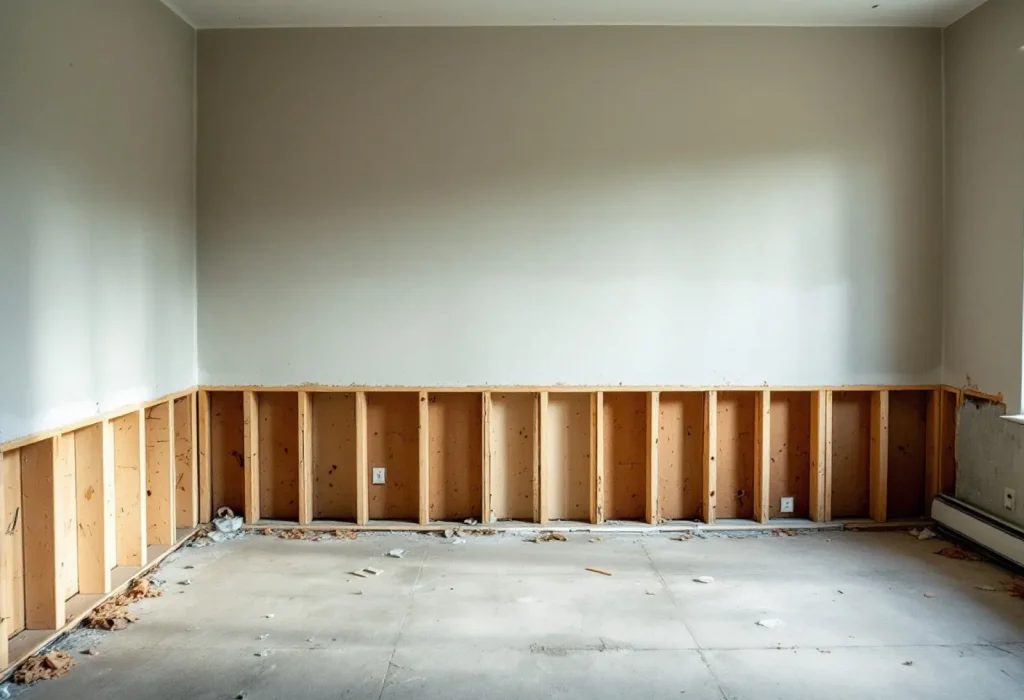
No, in most cases: the answer to does flood insurance cover mold under the NFIP Standard Flood Insurance Policy is set by clause V.D.4, which excludes mold resulting primarily from a condition within your control, including failure to inspect and maintain the property after a flood recedes. FEMA’s claims manual says mold could be insured when authorities or standing floodwater keep you out.
What does SFIP clause V.D.4 say about mold, word for word?
The SFIP Dwelling Form, 44 CFR Part 61 Appendix A(1) lists, under V.D, losses the NFIP does not insure “caused directly or indirectly” by them. Item 4 reads: “Water, moisture, mildew, or mold damage that results primarily from any condition: a. Substantially confined to the dwelling; or b. That is within your control, including but not limited to: (1) Design, structural, or mechanical defects; (2) Failure, stoppage, or breakage of water or sewer lines, drains, pumps, fixtures, or equipment; or (3) Failure to inspect and maintain the property after a flood recedes.”
Two words in that text do most of the work. “Primarily” means the exclusion turns on the main cause of the mold, and “within your control” means the question is whether the owner could have reached and dried the building. Item V.D.4.b(3) is the one that applies after a real flood; items (1) and (2) catch leaks and defects that were never a flood under the SFIP definition in II.B, which requires inundation of 2 or more acres of normally dry land or 2 or more properties.
Two neighbouring clauses matter too. V.F says the policy does not pay “for the testing for or monitoring of pollutants unless required by law or ordinance”, and VII.F says the insurer is not liable for loss “while there is a hazard that is increased by any means within your control or knowledge.” The SFIP is printed in federal regulation, and VII.C says it “cannot be changed, nor can any of its provisions be waived, without the express written consent of the Federal Insurance Administrator.”
FEMA’s consumer site puts it more bluntly. The FloodSmart page on documenting flood damage says mold can start forming within 24 to 48 hours of flooding and that “mold damage is not covered under standard NFIP flood insurance policies”, then adds 2 exceptions covered in the next section.
When can mold be part of the flood claim instead of excluded?
The NFIP Claims Manual, June 2025 edition, in its Coverage chapter under “Within the Policyholder’s Control”, says that when a policyholder “is prevented access to promptly remove wetted building and personal property items and this delay directly results in water, moisture, mildew or mold damage” to items not in contact with surface floodwater, “this damage could be insured because it is not within the control of the policyholder.” Its 2 examples: local authorities restrict access, or prolonged inundation prevents access.
FloodSmart repeats the same 2 cases in plain words: the policy “may cover mold damage” if officials restricted access because of hazards such as fallen trees, power lines or damaged roads, or if floodwater is still inside or around the home, making it unsafe to inspect or clean. In FEMA Flood Insurance Appeal Decision #C36, FEMA wrote that if a policyholder is “prohibited by civil authority” from entering, or could not mitigate because the property “was inaccessible due to the extensive flooding”, the mold “may be covered.”
Note the verbs: could, may. None of the 3 FEMA texts promises payment; the adjuster still has to tie the damage to direct physical loss by or from flood under the SFIP.
Nine mold scenarios and the SFIP clause that decides each one
The table pairs common post-flood situations with the clause that governs them and what the text, or a FEMA appeal decision applying it, says. It reports the documents’ words; an individual claim turns on the adjuster’s file and the insurer’s decision. Sources: the Standard Flood Insurance Policy, the NFIP Claims Manual, FEMA Flood Insurance Appeal Decision #B15 and FEMA Flood Insurance Appeal Decision #C36.
| Scenario | Clause | Outcome per the text | Citation |
|---|---|---|---|
| Flood-wet drywall and carpet removed within days of access; the bill includes antimicrobial treatment | Coverage A, direct physical loss by flood | Claims Manual: the claim “always includes the cost for flood cleanup and the treatment against growth of mold and mildew” | NFIP Claims Manual 2025, structural drying section |
| Local authorities close the road for weeks; mold grows on wet items above the waterline | V.D.4.b, control test | “Could be insured because it is not within the control of the policyholder” | NFIP Claims Manual 2025, Coverage chapter |
| Floodwater stays around the house and keeps the owner out | V.D.4.b, control test | Same exception: prolonged inundation that prevents access | Claims Manual; FloodSmart document damage page |
| Owner has full access but leaves wet carpet and drywall in place; mold spreads | V.D.4.b(3) | Excluded: failure to inspect and maintain after the flood recedes | SFIP V.D.4 |
| Mold found in HVAC vents above the waterline; vents cleaned over 2 years later | Insuring agreement plus V.D.4 | Denial upheld: no direct physical loss by flood, full access existed | FEMA appeal decision C36 |
| Mold reported under floor tile 5 months after the flood | V.D.4 | Denial upheld: no mold coverage “even if directly or indirectly caused by a flood” | FEMA appeal decision B15 |
| Heaters run while free water is still abundant; mold grows in undamaged rooms | Insuring agreement | “Not the result of direct physical loss by or from flood and is not covered” | NFIP Claims Manual 2025, drying methods |
| Owner orders air sampling for mold spores | V.F | Testing for pollutants not paid unless required by law or ordinance; FEMA treats mold as an indoor air pollutant | SFIP V.F; Claims Manual pollutants section |
| Mold from a burst supply line, with no flood in the area | V.D.4.a and V.D.4.b(2) | Excluded from the flood policy; this is a homeowners policy question | SFIP V.D.4 |
Across all 9 rows, mold is either part of the flood clean-up or a separate loss the owner could have stopped. In a basement, the SFIP basement item list also limits repairs, set out on does flood insurance cover basements.
Which 7 dates does the adjuster write down when mold appears?
The NFIP Claims Manual, June 2025 edition tells adjusters, under “Assessing Mold and Moisture Damage Above the Waterline”, to separate mold caused by the owner’s “failure to remove flood-wetted property items in a timely fashion” from damage caused by how long floodwater stayed inside or by lack of access. To do that it lists 7 dates: the date of loss, the date the building became accessible, the date the loss was reported, the inspection date, the date wet materials were removed and salvageable ones cleaned and treated, the date electrical and HVAC systems were restored, and the date structural drying began.
The manual says the adjuster “should document the reason for the passage of time” or get a signed statement, and if the delay looks unreasonable, “must determine if the delay contributed to the damage above the waterline.” It also tells insurers to raise the risk at first notice of loss and cites appeal C36 as the example.
EPA's Brief Guide to Mold, Moisture and Your Home says wet materials dried within 24 to 48 hours will in most cases not grow mold, and the NFIP Claims Manual says industry-standard drying is “normally less than 72 hours” once non-salvageable materials are out. Drying charges longer than 3 days need a reason in the drying log.
What happened in the 2 FEMA appeals over mold found 5 months and 2 years later?
In FEMA Flood Insurance Appeal Decision #B15, a September 2019 flood left a 3-inch interior waterline. Per the decision, the insurer paid $69,672.21 for the building and $84,737.65 for contents. In March 2020 an environmental firm found mold in 2 rooms; the insurer denied it under the mold exclusion, and an engineer had found the white residue under the tiles was efflorescence, not mold. FEMA concurred, writing that “if mold was found five months after the flood event, the SFIP does not provide mold damage coverage.”
In FEMA Flood Insurance Appeal Decision #C36, an August 2017 flood left a 12-inch interior waterline and the insurer paid $203,683.93 for the building. The owner later had first-floor air vents cleaned for mold, more than 2 years after the flood. FEMA found the vents sat above the waterline, so there was no direct physical loss by flood, and that the owner “had full access to his dwelling”, so the access exception did not apply.
Both decisions were reached “based on the documentation in the claim file”, because what the owners sent did not answer the insurer’s reason for denial. Under 44 CFR 62.20(e)(1), a written appeal must reach FEMA within 60 days of the insurer’s written denial, with a copy of that denial and the supporting documents.
Does the flood claim pay for mold treatment, drying and mold testing?
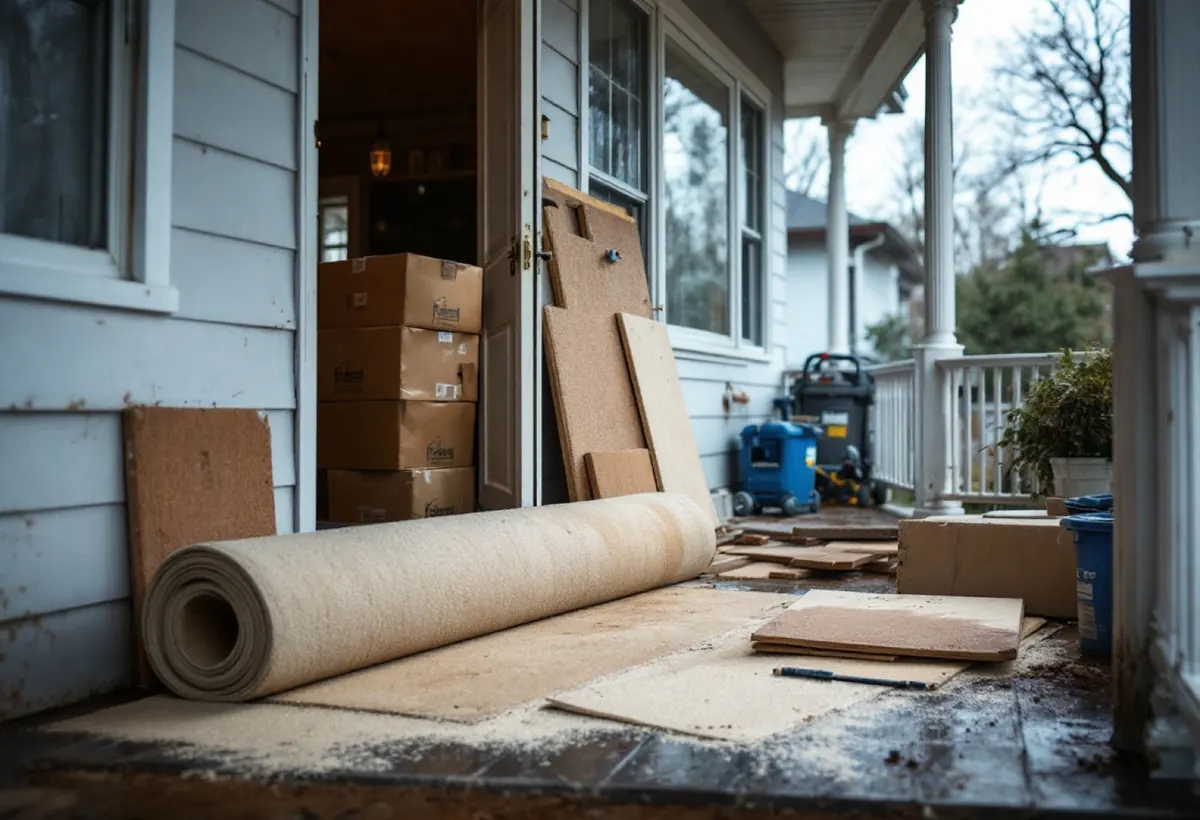
Treatment yes, as part of the flood loss, according to the NFIP Claims Manual: “The claim should account for the cost for structural drying, just as it always includes the cost for flood cleanup and the treatment against growth of mold and mildew.” Before mechanical drying, the manual says salvageable building material “should be cleaned and treated against mold and mildew.” That treatment belongs to the flood clean-up, not to remediation of mold that grew later.
Drying is priced 3 ways in the manual: a square-foot allowance when the owner dries the house with the HVAC system and household appliances (Method 1), adjuster-set charges when an invoice arrives without a proper drying log (Method 2), and the invoice itself when a complete drying log backs it (Method 3). Under Method 1, the manual adds that the claim “may have to account for an additional treatment against the growth of mold and mildew.” The manual also lists “treatment against mold and mildew” among the non-OHP trades left out when overhead and profit are estimated.
Testing is the clear no. SFIP V.F excludes pollutant testing and monitoring unless a law or ordinance requires it, and the Claims Manual states that FEMA “incorporates the EPA’s definition of mold as an indoor air pollutant”, so mold is subject to that exclusion.
Out of scope: health effects of mold are not covered on this page; EPA's Brief Guide to Mold, Moisture and Your Home is the federal starting point.
What does FEMA ask you to document when mold is in the picture?
SFIP VII.G lists the duties after a flood: prompt written notice, separating damaged from undamaged property, an inventory, and, under VII.G.4, a proof of loss “within 60 days after the loss”, signed and sworn, with 9 listed items. The clock runs from the loss, not from the day mold is noticed, and VII.G.7 says it applies “even if the adjuster does not furnish the form.” The form itself is explained on our proof of loss page.
| Item | What it carries for a mold question |
|---|---|
| a. Date and time of loss | Anchors the 60-day clock and the access timeline the adjuster builds |
| b. How the loss happened | Where rising water entered; separates flood from a pipe or roof leak (V.D.4.a and b) |
| f. Specifications and detailed repair estimates | Show tear out, cleaning and antimicrobial treatment as line items |
| i. Inventory of damaged personal property (VII.G.3) | Quantity, description, actual cash value and amount for moldy contents discarded |
| Photos before clean-up (FloodSmart) | Water levels on walls, furniture and appliances; serial numbers |
| Samples and receipts (FloodSmart) | Small pieces of carpet, drywall or insulation; receipts for repairs |
| Access evidence (Claims Manual) | Signed statement on why time passed, such as a road closure notice |
The FloodSmart page on documenting flood damage adds: photograph before cleaning, keep small samples for the adjuster, and “talk to your insurance provider before signing a contract.” The Claims Manual lists “take steps to prevent mold” among its policyholder tips. The physical work order is on our basement flood cleanup page.
Questions to put in writing to the insurer or NFIP adjuster:
- Has the date the building became accessible been recorded, and what evidence of a closure or standing water is needed (Claims Manual, mold above the waterline)?
- Is antimicrobial treatment of flood-wet framing included in the estimate as clean-up?
- Which drying method (1, 2 or 3) will the claim use, and what must the drying log show past 3 days?
- If any item is denied under V.D.4, is the denial in writing, so the 60-day appeal under 44 CFR 62.20 can run?
Will FEMA disaster aid pay for mold remediation instead?
Sometimes, through a separate program. The FEMA Individual Assistance Program and Policy Guide 1.1 (amended July 2025) lets Home Repair Assistance cover basement damage “presenting a hazard (e.g., wet or moldy drywall, carpet, or cabinets) in non-essential living areas (for removal only).” FEMA's September 2021 Hurricane Ida fact sheet said homeowners with disaster-caused mold “may be eligible” for repair funds; that sheet was written for that disaster.
The same guide says FEMA “cannot provide assistance for disaster-caused needs covered by insurance benefits”, so an insured owner sends the insurance settlement first and FEMA compares it with the loss. Aid is not flood insurance, and FEMA’s guide requires owners in a Special Flood Hazard Area who receive aid for insurable property to buy and keep flood insurance. What that coverage costs by state is on our flood insurance cost by state page.
Do Florida and other private flood policies treat mold differently?
Private policies are written by each insurer, so the SFIP words above do not bind them. Florida sets categories in Florida Statutes s. 627.715: “standard” private flood insurance “must provide the same coverage, including deductibles and adjustment of losses” as the NFIP standard policy; “preferred” adds water intrusion from outside and additional living expenses; “flexible” may narrow coverage, for example to actual cash value.
Which category a Florida policy belongs to appears on the policy, and its mold wording sits in its own exclusions. This page quotes no private form. Ask the insurer, or the state insurance department that regulates it, 2 things: which s. 627.715 category the policy is filed under, and whether its mold exclusion has an access exception like the one FEMA describes in the Claims Manual.
Mold from leaks, not floods, falls under a homeowners or renters policy instead. Those are covered on does homeowners insurance cover mold remediation and does renters insurance cover mold.
Questions people actually ask
Should I tell my insurance company about mold after a flood?
The SFIP Dwelling Form requires prompt written notice of a flood loss under VII.G.1, and the NFIP Claims Manual tells insurers to raise the mold risk at the first notice of loss. Reporting mold early lets the adjuster record when the building became accessible, which is the date the V.D.4 control test turns on. Ask that the conversation be confirmed in writing.
Can black mold be claimed on homeowners insurance after a flood?
Colour does not change the clause. The NFIP Claims Manual calls the SFIP “a single-peril policy” that pays only for direct physical loss by or from flood, so flood-caused mold is judged under SFIP V.D.4 whatever its colour. Mold from a burst pipe falls outside the flood policy under V.D.4.b(2); ask the homeowners insurer which mold exclusion or mold limit in that form applies.
What will flood insurance not cover besides mold?
SFIP V.A excludes loss of use, additional living expenses and other economic loss. FEMA’s agent guidance also lists property outside the building such as decks, fences, wells, septic systems and pools; currency and valuable papers; cars; and most personal property kept in basements. Earth movement, sewer backup without a general flood, and pollutant testing are excluded under V.C, V.D.5 and V.F.
How much can an NFIP policy pay in total?
FEMA’s agent guidance gives a building coverage limit of $250,000 and a contents limit of $100,000 for a homeowner’s policy, with separate deductibles for building and contents under SFIP VI.B. Any mold treatment paid as flood clean-up comes out of those same limits, not from a separate mold allowance.
Does flood insurance pay if I dry the house myself?
The NFIP Claims Manual’s Method 1 gives a square-foot allowance when the owner dries with the HVAC system and household appliances, and notes the claim may need an extra mold and mildew treatment because that drying takes longer. SFIP III.C.1 values debris removal done by you or your household at the Federal minimum wage. Keep receipts and photos of each day’s progress.
Sources
- SFIP Dwelling Form, 44 CFR Part 61 Appendix A(1), via the eCFR versioner API (title current to 18 November 2026): II.B, III.C, V.A, V.D.4, V.F, VII.F, VII.G, VII.J and VII.O. Retrieved 20 November 2026.
- 44 CFR 62.20, claims appeals, via eCFR. Retrieved 20 November 2026.
- NFIP Claims Manual, June 2025 edition, Federal Emergency Management Agency: Assessing Mold and Moisture Damage Above the Waterline; Within the Policyholder’s Control; pollutants; structural drying methods; overhead. Retrieved 20 November 2026.
- FloodSmart page on documenting flood damage, FEMA National Flood Insurance Program. Retrieved 20 November 2026.
- FEMA agent guidance on what flood policies cover, FEMA, August 2021, marked historical. Retrieved 20 November 2026.
- FEMA Flood Insurance Appeal Decision #B15, FEMA Federal Insurance Directorate. Retrieved 20 November 2026.
- FEMA Flood Insurance Appeal Decision #C36, FEMA Federal Insurance and Mitigation Administration. Retrieved 20 November 2026.
- EPA's Brief Guide to Mold, Moisture and Your Home, United States Environmental Protection Agency, and EPA mold clean-up guidance. Retrieved 20 November 2026.
- FEMA Individual Assistance Program and Policy Guide 1.1, FEMA, Version 1.1 amended July 2025. Retrieved 20 November 2026.
- FEMA's September 2021 Hurricane Ida fact sheet, FEMA, released 17 September 2021. Retrieved 20 November 2026.
- Florida Statutes s. 627.715, The Florida Legislature, Online Sunshine. Retrieved 20 November 2026.
- Scenario rows quote or paraphrase the documents above; no claim outcome on this page was estimated. Our methodology sets out the standing rules, and the insurance hub lists related coverage pages.
This page describes published SFIP text and FEMA guidance. It does not say what any policy pays on any claim. For a decision on your own loss, read your declarations page and policy form, ask your insurer or NFIP adjuster which SFIP section they are applying, and contact your state insurance department or a licensed insurance professional or attorney about appeal and suit deadlines.