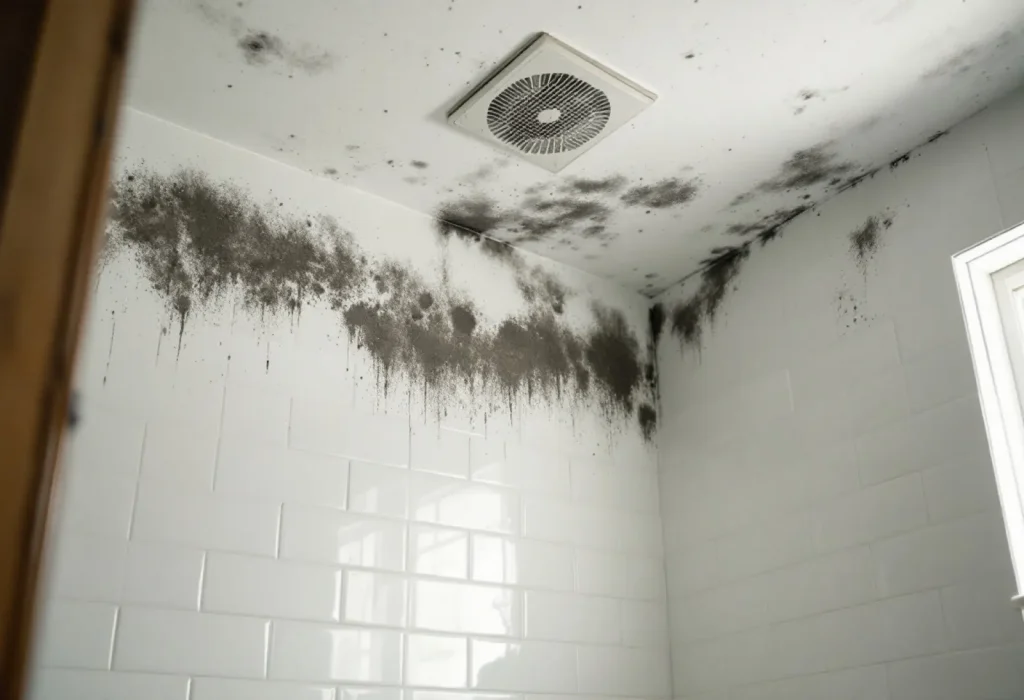
The short answer
Black mold in apartment units is the landlord’s repair once the tenant gives notice under all 8 rental codes compared here, if the tenant did not cause it and it meets the code’s health or habitability test; colour changes nothing. Send dated written notice where rent is paid, keep proof, and let the clock run: 7 days in Texas, 10 in Washington, 21 in Virginia.
What are the 5 steps a tenant takes for black mold, in order?
Each rental code on this page ties the landlord’s duty to notice, so the order below is built from the notice and timing rules in Texas Property Code chapter 92, RCW 59.18.070, Va. Code 55.1-1234 and C.R.S. 38-12-503. Skipping step 2 costs the most time, because the Texas, Virginia, Washington, Florida and Maryland remedies all start counting from the notice date, not from the date the mold appeared.
Step 1 is evidence, not cleanup. Photograph each patch with a ruler or tape in frame, note the room and date, and note any water source: a ceiling stain, a window that sweats, a leaking supply line. The size matters in New York City, where NYC Local Law 55 of 2018 grades visible mold in a room as non hazardous below 10 square feet, hazardous from 10 to 30 square feet and immediately hazardous at 30 square feet or more.
Step 4 matters more than most tenants expect. In Texas, repair and deduct for a condition other than sewage, flooding, water cutoff or failed heating or cooling is available only after the landlord has been notified in writing by a local housing, building or health official, per section 92.0561(d)(3)(D) of Texas Property Code chapter 92. In California, California SB 655 (2015) made visible mold a substandard condition “as determined by a health officer or a code enforcement officer”, which is the inspector’s call, not the tenant’s.
Does “black” mold get different treatment in a housing code?
No. None of the 8 codes compared here uses the word black. CDC describes Stachybotrys chartarum as a greenish black mold that grows on high cellulose material such as gypsum board and paper, and states that it is not necessary to identify the type, since all molds should be treated the same for removal, per CDC facts about Stachybotrys chartarum. EPA: What are molds? adds that molds come in many colours, white and black among them.
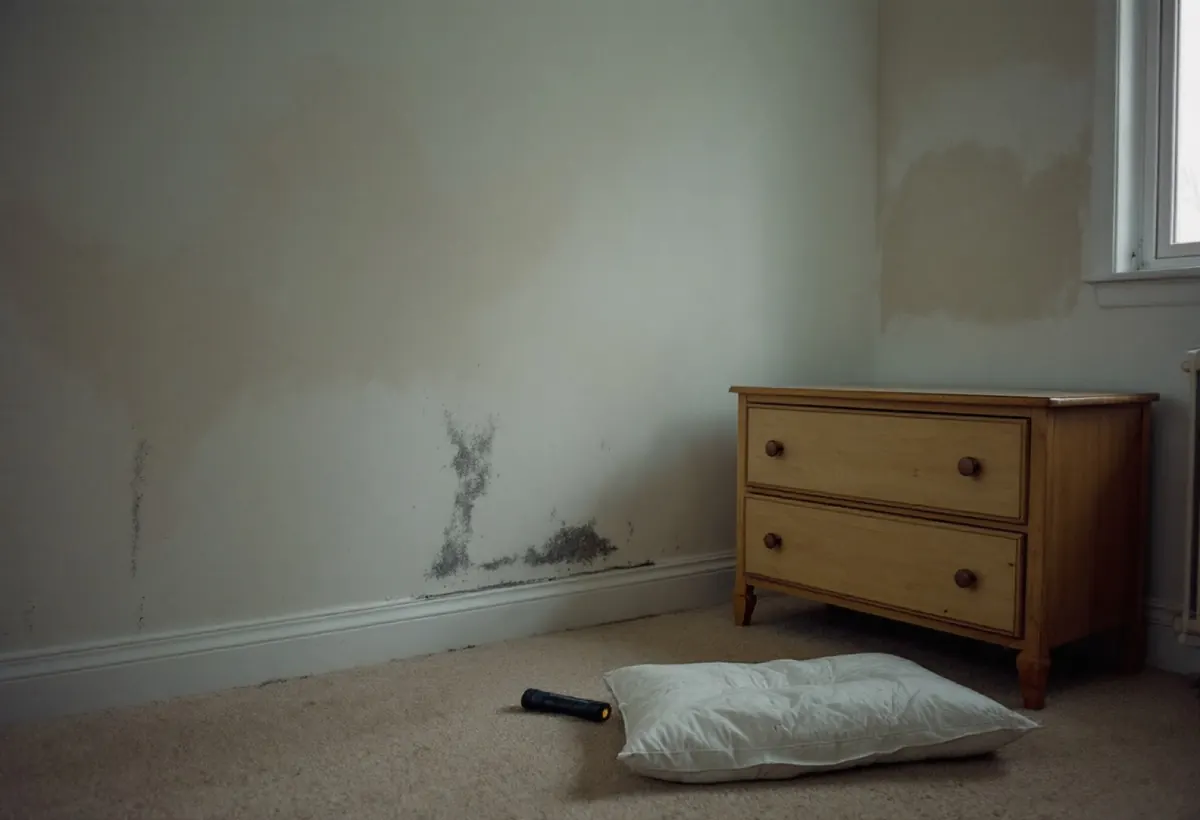
What the codes do measure is visibility, size and location. NYC Local Law 55 of 2018 (Administrative Code 27-2017.3) excludes mold “present on tile or grout” from the violation, and the California text in California SB 655 (2015) and the Colorado text in C.R.S. 38-12-505 both exclude mold that is minor and found on surfaces that can accumulate moisture as part of their intended use. A spotted shower grout line is a cleaning job under those words; a patch spreading over painted drywall is not.
Testing rarely moves a case. The EPA brief guide to mold, moisture and your home says sampling is usually unnecessary when mold growth is visible, and that no EPA or other federal limits exist for mold or spores, so a lab report cannot show a building breaks a federal mold standard. How to tell species apart is covered in our comparison of black mold versus regular mold. When a test does help, such as confirming cleanup, the options are laid out on the mold testing page.
Out of scope: this page covers tenant procedure, not health. Questions about exposure belong with a doctor and the CDC mold pages.
How many days does the landlord get? 8 rental codes side by side
The table reads each statute for four things: whether mold is named, how long the landlord has after notice, what the tenant may do when the clock runs out, and where the words are. Three of the 8 name mold outright (New York City, California, Colorado), Virginia names it as a landlord duty, Washington names it only as an information duty, and Texas, Florida and Maryland reach mold through general health and safety wording.
| Jurisdiction | Mold named in the code? | Repair clock after notice | Tenant remedy in the statute | Citation |
|---|---|---|---|---|
| New York City (3+ apartments) | Yes: Admin. Code 27-2017.3 | HPD inspects within 30 days of a complaint; mold Class C: 21 days, Class B: 30, Class A: 90 after violation served | 311 complaint, HPD violation, Housing Court | NYC Local Law 55 of 2018; HPD violation correction timeline |
| California | Yes: Health and Safety Code 17920.3(a)(13) | Reasonable time; repair after day 30 presumed reasonable | Repair and deduct up to 1 month’s rent, twice in 12 months, or vacate | California SB 655 (2015); California Civil Code 1942 |
| Colorado | Yes: 38-12-505(1)(a) | Reply within 24 hours; contain, stop water, HEPA filter within 96 hours | End lease on 10 to 30 days’ notice with 5 business days to cure; injunction | C.R.S. 38-12-503; C.R.S. 38-12-507 |
| Virginia | Yes: 55.1-1220(A)(5) and 55.1-1215 | Mold disclosed at move in: 5 business days after the tenant opts to take or keep possession (55.1-1215); mid tenancy mold: promptly (55.1-1220), general clock 21 days to remedy; lease ends no sooner than 30 days after notice; escrow delay over 30 days presumed unreasonable | Terminate, damages, attorney fees, rent escrow in general district court | Va. Code 55.1-1215; Va. Code 55.1-1220; Va. Code 55.1-1234; Va. Code 55.1-1244 |
| Washington | Mold information duty only: 59.18.060 | 24 hours if imminently hazardous to life; 72 hours for appliances; 10 days all other | Repair and deduct up to 2 months’ rent per repair and per 12 months | RCW 59.18.060; RCW 59.18.070; RCW 59.18.100 |
| Texas | No: “mold” does not appear in chapter 92 | 7 days presumed reasonable (rebuttable) | Terminate, repair and deduct up to 1 month’s rent or $500 per the 92.0561 cap, court remedies | Texas Property Code chapter 92 92.052, 92.056, 92.0561 |
| Florida | No: “mold” does not appear in chapter 83 part II | 7 days after written notice | Terminate, or rent reduced by lost rental value; defense to nonpayment eviction | Florida Statutes chapter 83 83.51, 83.56, 83.60 |
| Maryland (statewide) | No: 8-211 uses “health or fire hazard” | Over 30 days presumed unreasonable | Rent escrow and rent abatement in court | Maryland Real Property 8-211 (d), (f), (g) |
Two clocks are presumptions, not deadlines. Texas presumes 7 days is reasonable but lets the landlord rebut it with the severity of the condition and the availability of materials and labor, per 92.056(d) of Texas Property Code chapter 92. Maryland makes the court decide, with a presumption that more than 30 days is unreasonable under Maryland Real Property 8-211 (g)(3).
What must the written notice say for the clock to start?
A text to the building superintendent may not count. The notice rules below are copied from the statutes in the clock table, and they differ more than the deadlines do: Maryland lists certified mail in Maryland Real Property 8-211 (f), Colorado accepts electronic notice under C.R.S. 38-12-503 (2.3), and Texas requires written notice only if a written lease requires it, per 92.052(d).
| Code | What the notice has to contain or how it is sent | Section |
|---|---|---|
| Texas | Notice to where rent is paid; a second written notice, or the first sent by certified, registered or tracked mail; the tenant must not be behind on rent | 92.052(a), 92.056(b) |
| Texas repair and deduct | At least one notice states the intent to repair and describes the repair | 92.0561(d)(2) |
| Washington | Written; names the premises, the owner if known, and the defective condition | 59.18.070 |
| Colorado | Written or electronic, sent the way the landlord usually communicates; tenant keeps proof of delivery | 38-12-503(2.3) |
| Florida | Written; specifies the noncompliance and the intent to terminate, or the intent to withhold rent | 83.56(1), 83.60(1)(b) |
| Maryland | Certified mail listing the conditions, actual notice, or an agency violation notice | 8-211(f) |
| Virginia | Written; specifies the acts and omissions and the termination date | 55.1-1234 |
| California | Written or oral notice to the landlord or agent | 1942(a) |
A notice that satisfies the strictest rows above names the address and unit, the rooms, the measured size of each patch, any water source, the date first seen and the photos attached, and goes by a tracked method. Texas also requires every written lease to state the repair remedies in underlined or bold print, per 92.056(g) of Texas Property Code chapter 92, so the lease itself is worth rereading before the letter goes out.
What happens after a mold complaint to NYC 311 or HPD?
The NYC311 mold complaint page asks tenants to try the landlord, managing agent or superintendent first, and requires contact details with the complaint. HPD then calls the managing agent and the tenant; if the tenant says the condition is not corrected, or HPD cannot reach them, a Code Enforcement inspector is sent and the owner is not told the inspection date.
NYC Local Law 55 of 2018 sets the timing. HPD must inspect no later than 30 days after receiving a complaint and serve a notice of violation within 10 more days (27-2017.6). Under the HPD violation correction timeline, an owner has 21 days from service to correct a Class C mold violation, 30 days for Class B and 90 days for Class A before civil penalties apply if sought in Housing Court.
Buildings with 10 or more units carry an extra rule. The HPD indoor allergen hazards page states that owners must hire a New York State Department of Labor licensed mold assessor and a separate, independent licensed remediator whenever there is more than 10 square feet of mold, and that Class B and C mold violations in those buildings need the contractors’ filing receipts to be certified as corrected. Owners must also investigate every occupied unit for indoor allergen hazards at least once a year under 27-2017.2.
NYCHA public housing complaints go through a separate NYCHA maintenance complaint, and co-op or condo residents report to the board first, per the NYC311 mold complaint page. If the owner still does not correct the condition, the same page points tenants to Housing Court and asks them to keep a record of all contact with the landlord and HPD.
When can a tenant repair and deduct, escrow rent or end the lease over mold?
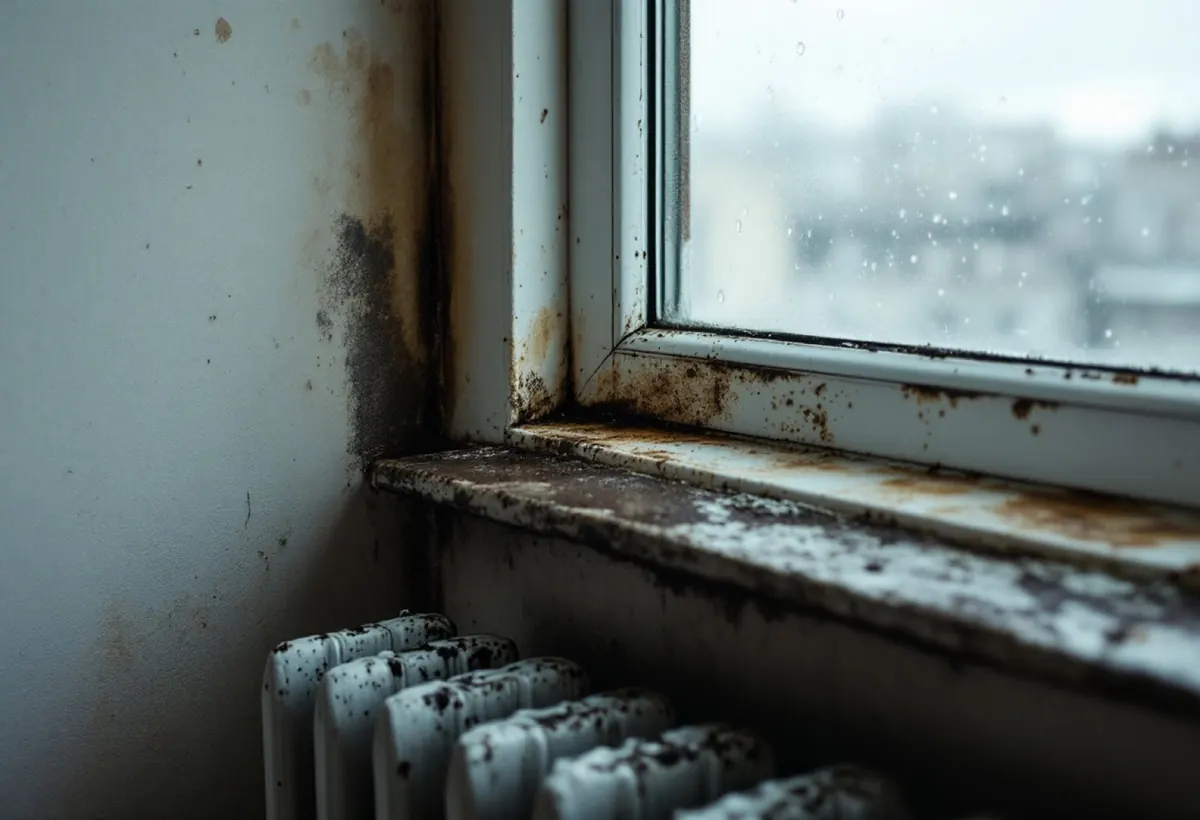
Only after the notice and the clock, and each code attaches conditions. California Civil Code 1942 allows repair and deduct up to one month’s rent, no more than twice in any 12 month period, and presumes a tenant who acts after the 30th day waited a reasonable time. RCW 59.18.100 allows up to two months’ rent per repair and caps the total at two months’ rent in any 12 months, using a licensed or registered contractor where one is required.
Termination rules vary just as much. Texas lets a qualifying tenant end the lease with a pro rata rent refund and a deposit credit under 92.056(f) of Texas Property Code chapter 92. C.R.S. 38-12-507 requires 10 to 30 days’ written notice that gives the landlord 5 business days to fix the breach. Va. Code 55.1-1234 sets a termination date no sooner than 30 days after notice if the breach is not remedied in 21 days.
Withholding rent without the statutory steps is where tenants lose cases. Va. Code 55.1-1244 requires the tenant to pay rent into court within 5 days of the due date to use escrow, and Florida’s rent defense in 83.60(1)(b) of Florida Statutes chapter 83 needs a written notice stating the intent to withhold, delivered 7 days before.
Retaliation is limited by statute in several of these states. Texas section 92.331 of Texas Property Code chapter 92 bars eviction filings, rent increases or reduced services for six months after a good faith repair notice or code complaint, and Florida 83.64 of Florida Statutes chapter 83 names a complaint to a code enforcement agency as protected conduct.
Questions for tenant legal aid or the local housing agency, with the statute in hand: Does my lease waive or restate the repair duties under Texas 92.006, which 92.0561(d)(1) cites, and does it print the remedies in bold as 92.056(g) requires? Does my county require a written code violation before repair and deduct? Which court takes rent escrow filings, and what proof of delivery will it want? Whether a renters policy responds to mold damage to belongings is a separate policy language question, covered in does renters insurance cover mold.
What does a proper landlord fix include under NYC, Colorado and Virginia rules?
Three codes spell out the work. NYC Local Law 55 of 2018 (27-2017.9) lists 8 practices: correct the moisture or leak causing the mold, cover or remove furniture, isolate the area with plastic sheeting and seal vents, use HEPA vacuums at the point of dust, clean with soap or detergent and water, discard what cannot be cleaned in sealed heavy plastic bags, wet clean or HEPA vacuum the dust, and leave the area dry and visibly free of mold.
C.R.S. 38-12-503 (2.2) requires containment, stopping active water and a HEPA air filtration device within 96 hours, then, within a reasonable time, worker and occupant protection, drying, removal or decontamination, a check that remediation succeeded, and reassembly that controls moisture. Va. Code 55.1-1220 requires remediation to professional standards under Va. Code 8.01-226.12, a reinspection confirming no visible mold, and a summary of the remediation given to the tenant.
The fix fails if the water source stays. The EPA brief guide to mold, moisture and your home notes that mold returns when cleanup happens without fixing the water problem, and recommends drying wet materials within 24 to 48 hours. When the source is a leak from another unit or a burst line, who pays for the water damage is a separate question covered in water damage in an apartment.
Tenant caused conditions sit outside most of these duties. Texas 92.052(b), Colorado 38-12-503(3) and Va. Code 55.1-1234 all exclude conditions caused by the tenant, household members or guests, and Va. Code 55.1-1227 (A)(10) requires a Virginia tenant to limit moisture and promptly report visible mold. The EPA guide suggests keeping indoor humidity below 60 percent, ideally 30 to 50 percent.
More renter and owner mold pages sit in the mold hub.
Questions people actually ask
Can I clean a small mold spot myself in a rental?
The EPA brief guide to mold, moisture and your home says patches under about 10 square feet, roughly 3 feet by 3 feet, can usually be cleaned by the occupant. In a rental the notice still matters: Virginia 55.1-1227(A)(10) requires tenants to report visible mold promptly, and cleaning before photographing removes the evidence the statutes rely on. Mold on tile or grout is excluded from the New York City violation entirely.
Do I need a mold test before complaining to the landlord?
None of the 8 codes compared here requires a lab test from the tenant. California and New York City rely on an inspector’s visual finding of visible mold, and the EPA says sampling is usually unnecessary when growth is visible because no federal mold limits exist. Measured size, photos and dated notice carry more weight under 27-2017.3 and 17920.3.
Does a landlord have to tell the next tenant about past mold?
In Virginia, Va. Code 55.1-1220 says that once mold has been remediated to professional standards, the landlord does not have to disclose the past mold to later tenants, though the current tenant gets a remediation summary. Disclosure duties at lease signing differ by state and are compared in mold disclosure laws.
Who pays for belongings ruined by mold in an apartment?
The statutes tie damages to fault. Virginia 55.1-1220(B) makes a landlord liable only for actual damages proximately caused by a failure to exercise ordinary care, and Virginia 55.1-1234 adds damages and attorney fees for noncompliance. Texas 92.052(b) and Colorado 38-12-503(3) exclude conditions the tenant caused. A tenant’s own policy wording decides any insurance claim.
Does Washington require landlords to give tenants mold information?
Yes. RCW 59.18.060 requires landlords to provide Department of Health information about indoor mold, either in writing to each tenant or posted in a visible public location on the property, including how tenants can control mold growth in their units. It does not set a separate mold repair deadline; the 10 day general clock in RCW 59.18.070 applies.
Sources
- NYC Local Law 55 of 2018, New York City Council, Local Law 55 of 2018 (Administrative Code 27-2017.1 to 27-2017.10). Retrieved 20 November 2026.
- HPD indoor allergen hazards page, NYC Department of Housing Preservation and Development, Indoor Allergen Hazards (Mold, Mice, Roaches and Rats). Retrieved 20 November 2026.
- HPD violation correction timeline, NYC Department of Housing Preservation and Development, Clear Violations: timeline for violation correction. Retrieved 20 November 2026.
- NYC311 mold complaint page, City of New York, NYC311 Mold Complaint (KA-02262). Retrieved 20 November 2026.
- California SB 655 (2015), California Legislature, SB 655 chaptered 9 October 2015, amending Health and Safety Code 17920.3 and adding Civil Code 1941.7. Retrieved 20 November 2026.
- California Civil Code 1942, California Civil Code section 1942, text as published by public.law from leginfo.legislature.ca.gov (the official site refused automated requests). Retrieved 20 November 2026.
- C.R.S. 38-12-503, C.R.S. 38-12-505 and C.R.S. 38-12-507, Colorado Revised Statutes, warranty of habitability, uninhabitable premises and tenant remedies, text as published by public.law from the Colorado Revised Statutes. Retrieved 20 November 2026.
- Va. Code 55.1-1215, Va. Code 55.1-1220, Va. Code 55.1-1227, Va. Code 55.1-1234, Va. Code 55.1-1244 and Va. Code 8.01-226.12, Code of Virginia, Virginia Legislative Information System. Retrieved 20 November 2026.
- RCW 59.18.060, RCW 59.18.070 and RCW 59.18.100, Revised Code of Washington, Washington State Legislature. Retrieved 20 November 2026.
- Texas Property Code chapter 92, Texas Legislature, Property Code chapter 92, Residential Tenancies. Retrieved 20 November 2026.
- Florida Statutes chapter 83, Florida Legislature, Florida Statutes chapter 83 part II, Residential Tenancies. Retrieved 20 November 2026.
- Maryland Real Property 8-211, Maryland General Assembly, Real Property 8-211, Repair of dangerous defects. Retrieved 20 November 2026.
- EPA brief guide to mold, moisture and your home, U.S. Environmental Protection Agency. Retrieved 20 November 2026.
- EPA: What are molds?, U.S. Environmental Protection Agency. Retrieved 20 November 2026.
- CDC facts about Stachybotrys chartarum, Centers for Disease Control and Prevention, National Center for Environmental Health. Retrieved 20 November 2026.
- CDC mold pages, Centers for Disease Control and Prevention, About Mold. Retrieved 20 November 2026.
- How we read and check sources: methodology.
This page quotes statutes and official agency pages; it is not legal advice and does not say what any reader must do in their own tenancy. City and county codes can add duties. For a specific situation, ask a tenant legal aid office or the local housing agency the questions listed above. Electrical hazards near water belong with an electrician.