The short answer
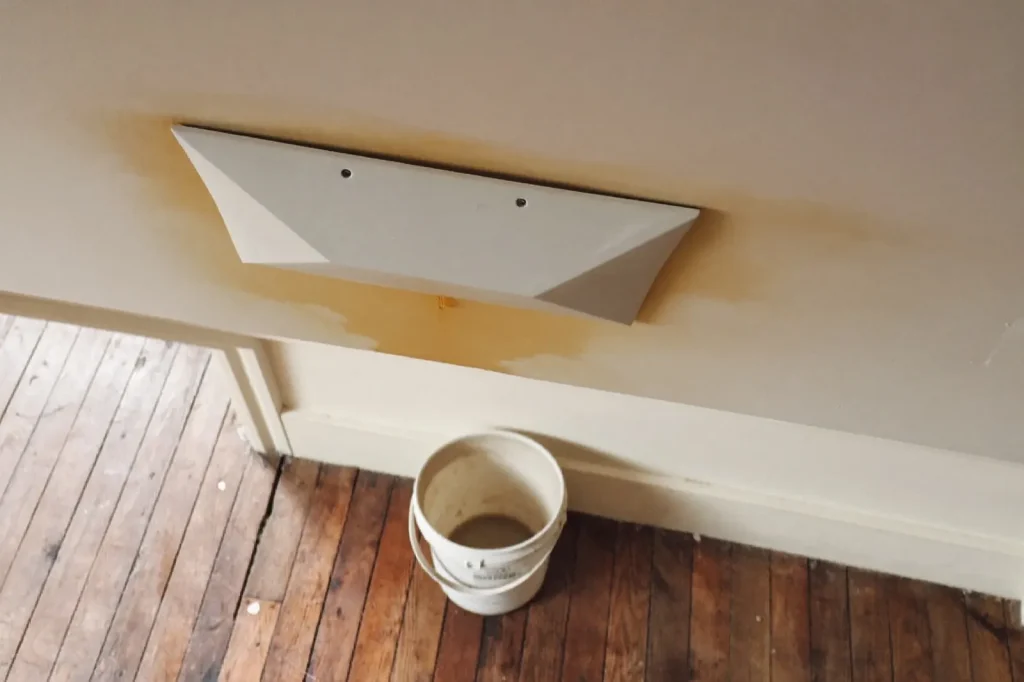
Water damage in apartment units is split by cause: the landlord repairs the building, including burst pipes, roof leaks and failed plumbing, while the tenant’s renters policy covers belongings. A tenant who causes the leak can owe the repair, and the standard HO-4 liability coverage excludes damage to the unit you rent. The state statutes read here give landlords 24 hours to 30 days after notice.
Who pays in 9 apartment leak scenarios?
Three documents decide every row: your state’s landlord and tenant statute, the lease, and the ISO HO 00 04 10 00 renters form if you carry one. The statute assigns building repairs; the renters form pays for your belongings and, sometimes, your liability. Each cell below paraphrases the text as retrieved 8 November 2026, not a coverage opinion on your policy.
| Leak source | Building repair | Your belongings | Your liability |
|---|---|---|---|
| 1. Pipe in the wall bursts, nobody at fault | Landlord: plumbing duty in Cal. Civ. Code 1941.1(a)(2), Fla. Stat. 83.51(1)(b), ORS 90.320(1)(b) | Your HO-4, peril 12, accidental discharge from plumbing | No tenant fault, so nothing for your Coverage E to answer |
| 2. Your tub or washer overflows into your own unit | Repair duty can fall away: Tex. Prop. Code 92.052(b), Cal. Civ. Code 1941.2(a) | Your HO-4, peril 12, if the overflow came from plumbing or an appliance | Coverage E excludes property rented to you, except fire, smoke or explosion; per the form, the $1,000 property of others clause may apply |
| 3. Your overflow soaks the unit below | Landlord repairs the building, then may pursue you | Your belongings, peril 12 | Coverage E if you are legally liable, defense included |
| 4. Unit above leaks into yours | Landlord, same plumbing duty | Your HO-4, peril 12; the source unit does not matter | Upstairs tenant’s Coverage E only if that tenant is liable |
| 5. Rain through a failed roof or window | Landlord: waterproofing in Cal. Civ. Code 1941.1(a)(1), ORS 90.320(1)(a) | Covered only if wind or hail first opened the roof or wall | None unless a tenant broke the window |
| 6. Sewer or drain backs up into the unit | Landlord; Texas lets you repair and deduct for raw sewage, Tex. Prop. Code 92.0561(d)(3)(A) | Excluded by HO-4 Exclusion 3.b without an endorsement | Check your declarations for a backup endorsement |
| 7. Flood or surface water from outside | Landlord for the building | Excluded by HO-4 Exclusion 3.a | Separate flood policy for contents |
| 8. Slow leak you saw but did not report | Landlord duty starts at notice in Tex. Prop. Code 92.052(a)(1) and RCW 59.18.070 | Peril 12 still lists accidental discharge; mold only if hidden in walls, floors or ceilings | Delay can shift cost to you under Cal. Civ. Code 1941.2 if it contributed substantially |
| 9. Unit becomes unlivable during repairs | Rent rules: Fla. Stat. 83.63, Tex. Prop. Code 92.054 | Coverage D, Additional Living Expense, if a covered peril caused it | Lease termination options differ by state |
Row 2 is the one most renters get wrong. Section II Exclusion F.3 of the HO-4 form removes Coverage E for “property damage” to property “rented to, occupied or used by or in the care of” an insured, and the only carve-back is fire, smoke or explosion. A water-soaked floor in your own rented unit therefore sits outside your liability coverage on this edition, while the same water reaching the unit below sits inside it.
The narrow bridge is Damage To Property Of Others, which per the HO-4 form pays “at replacement cost, up to $1,000 per occurrence” for property damage an insured causes to property of others. Per the form, its exclusions list property owned by an insured and property rented to a tenant of an insured, not property rented to you, so ask your carrier in writing whether it will apply that $1,000 to the landlord’s carpet.
How many days does a landlord get to fix a leak in 7 states?
Most states write the clock from the tenant’s notice, not from the leak. Washington is the fastest of the seven read here: RCW 59.18.070 makes the landlord begin remedial work within 24 hours when a defect cuts off hot or cold water and within 72 hours when it takes out a major plumbing fixture the landlord supplied. California sits at the other end, with a 30 day presumption written into Cal. Civ. Code 1942(b).
| State and statute | What the landlord must keep up | Clock after notice | Tenant remedy if missed |
|---|---|---|---|
| California, Cal. Civ. Code 1941.1, Cal. Civ. Code 1942 | Waterproof roof and exterior walls; plumbing in good working order | Reasonable time; repair and deduct presumed reasonable after day 30, sooner if circumstances require | Repair and deduct up to 1 month’s rent, at most twice in 12 months, or vacate |
| Texas, Tex. Prop. Code 92.052, Tex. Prop. Code 92.056, Tex. Prop. Code 92.0561 | Conditions that materially affect health or safety | 7 days presumed reasonable after notice | Per the statute, repair and deduct up to 1 month’s rent or $500, whichever is greater, for raw sewage or flooding from broken pipes |
| Florida, Fla. Stat. 83.51, Fla. Stat. 83.56, Fla. Stat. 83.60 | Housing codes, or roofs, walls, floors and plumbing in reasonable working condition | 7 days after written notice | Terminate the lease, or withhold rent as a defense with the court setting the reduction |
| Washington, RCW 59.18.070, RCW 59.18.100 | Duties in RCW 59.18.060 and the lease | Start within 24 hours with no water, 72 hours for a major plumbing fixture, 10 days otherwise | Repair and deduct up to 1 month’s rent per repair and per 12 months |
| Arizona, A.R.S. 33-1361, A.R.S. 33-1363 | Duties in A.R.S. 33-1324 | 5 days for health and safety, 10 days otherwise | Per the statute, self-help under $300 or half a month’s rent, whichever is greater, by a licensed contractor with a lien waiver |
| Oregon, ORS 90.320, ORS 90.360, ORS 90.368 | Waterproofing, plumbing in good working order | 7 days for an essential service, 30 days otherwise; repair notice date at least 7 days out | Fix a minor defect up to $300, such as leaky plumbing, but not mold |
| New York, N.Y. Real Property Law 235-b | Fit for human habitation; nothing dangerous to health or safety | No day count in the statute | Damages decided by a court; the warranty cannot be waived in the lease |
Two conditions sit under nearly every remedy. Texas lets a tenant repair and deduct only if rent was current when notice was given, under Tex. Prop. Code 92.052(a)(2), and Cal. Civ. Code 1941.2 removes California’s repair duty when the tenant’s own breach contributed substantially to the damage. Arizona’s self-help under A.R.S. 33-1363 requires a licensed contractor, an itemized statement and a lien waiver before the deduction.
What must a leak notice to the landlord say to start the clock?
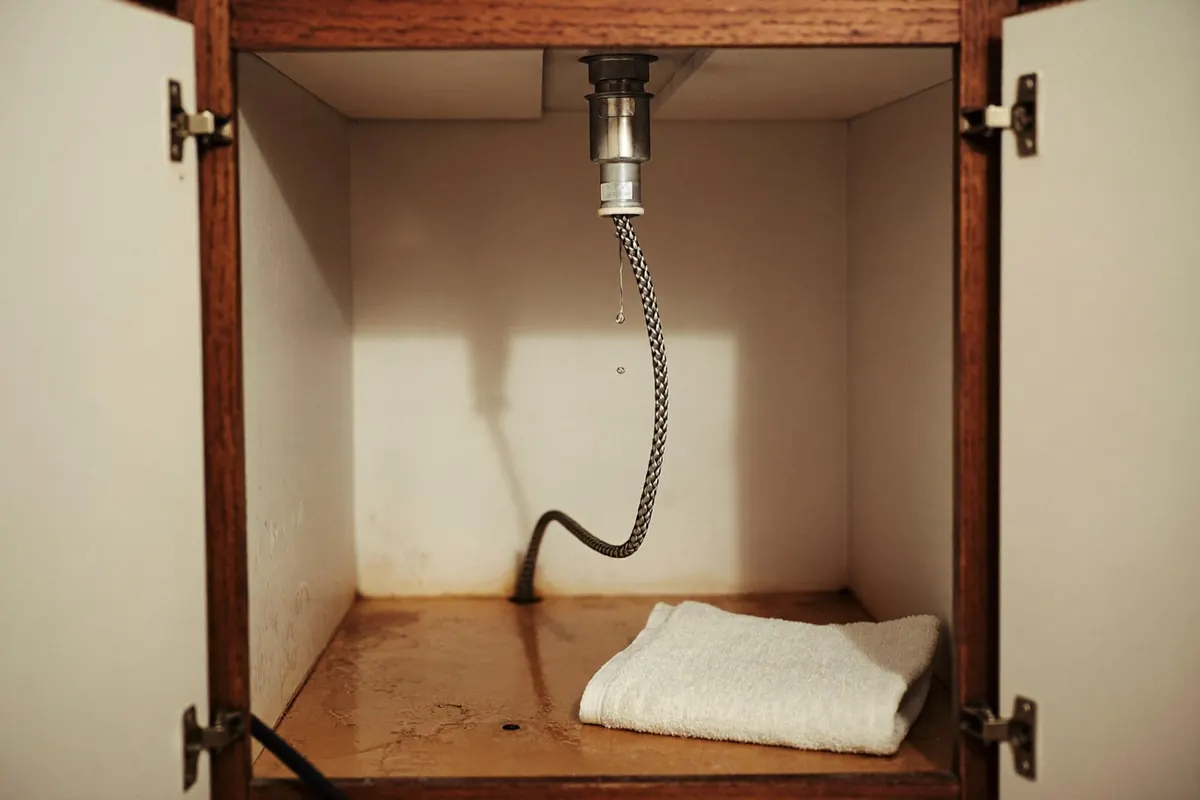
A text to the building manager may not satisfy a statute that asks for writing. RCW 59.18.070 asks for written notice naming the premises, the owner if known, and the nature of the defect, delivered to the person who collects rent. Fla. Stat. 83.56(1) and Fla. Stat. 83.60(1)(b) both require written notice that states what you intend to do, terminate or withhold, before the 7 day count means anything.
- Where to send it: Texas counts notice given to the person or place where rent is normally paid (Tex. Prop. Code 92.056(b)(1)); written notice is required if your written lease requires it (Tex. Prop. Code 92.052(d)).
- How to send it: in Texas a single notice by certified, registered or tracked mail replaces the second notice that Tex. Prop. Code 92.056(b)(3) otherwise demands.
- What to describe: the room, the visible damage, when you first saw it and whether water is still running, with dated photos.
- What you intend: Oregon’s repair notice under ORS 90.368(3) must state your intention to repair and deduct and give a repair date at least 7 days out.
- What you ask for: a date for the plumber, whether drying equipment is coming, and whether the unit is safe to stay in.
Speed matters for a second reason. EPA's mold and moisture guide says wet materials dried within 24 to 48 hours after a leak usually will not grow mold, and visible mold growth is a listed substandard condition under Cal. Health and Safety Code 17920.3(a)(13). The timeline from wet drywall to growth is set out on our page on how long mold takes to grow after water damage.
Which 4 parts of a renters policy touch an apartment leak?
The ISO HO 00 04 10 00 renters form splits a leak across four places, and each has its own trigger. Read them in this order, because the first one most renters assume will pay, Coverage E, is the one Exclusion F.3 limits for the rented unit itself.
| Part of the HO-4 | What the form says | Where a leak falls |
|---|---|---|
| Coverage C, personal property | Named perils; peril 12 is accidental discharge or overflow from plumbing, heating, air conditioning, sprinklers or a household appliance | Your furniture and clothing, minus the failed appliance itself |
| Building Additions And Alterations | Per the form, improvements you paid for in the unit, up to 10% of the Coverage C limit | Flooring or shelving you installed at your own expense |
| Coverage D, Loss Of Use | Additional Living Expense when a covered peril makes the residence “not fit to live in” | Hotel cost above your normal spending while the unit dries |
| Section II, liability and property of others | Coverage E if legally liable; $1,000 per occurrence for property of others | The unit below under E; the landlord’s finishes only under the property of others clause |
The exclusions decide more apartment claims than the coverages. Exclusion 3 removes flood and surface water, water that “backs up through sewers or drains” and groundwater seeping through a foundation, which covers most basement and garden-level units. Peril 12 also refuses mold “unless hidden within the walls or ceilings or beneath the floors”. Backup can be added back by endorsement, which our page on water backup coverage for renters covers.
The full claim walkthrough, from deductible to depreciation on belongings, is on does renters insurance cover water damage, and how Coverage D pays out is on the loss of use coverage page. Once a claim is open, the state deadlines your insurer must meet are in our guide to dealing with an insurance adjuster after water damage.
The apartment above me leaked: who pays my ceiling and my couch?
Split the loss in two. The ceiling is the landlord’s: every statute in the table assigns building repair to the owner, and Fla. Stat. 83.51(1)(b) names roofs, walls, floors and plumbing outright. Your couch goes to your own HO-4 form under peril 12, which turns on accidental discharge from plumbing or an appliance and does not ask which unit the pipe served, only whether the discharge happened away from your building.
The upstairs tenant pays only if that tenant was at fault. Their Coverage E responds to damages “for which an insured is legally liable”, and a cracked supply line behind their wall is usually the landlord’s plumbing, not their negligence. A bathtub left running is different. If you file with your own carrier first, the form’s subrogation condition lets your insurer pursue the responsible party afterward, so photograph the source unit if you can reach it. Ceiling repair steps are on the water damage ceiling page.
Owners in a condominium building face a different split: an association master policy and an HO-6 rather than a landlord and an HO-4. If your apartment is a rented condo unit, both apply, and the statute-by-statute line is on does condo insurance cover water damage.
Do you still owe rent while the apartment dries out?
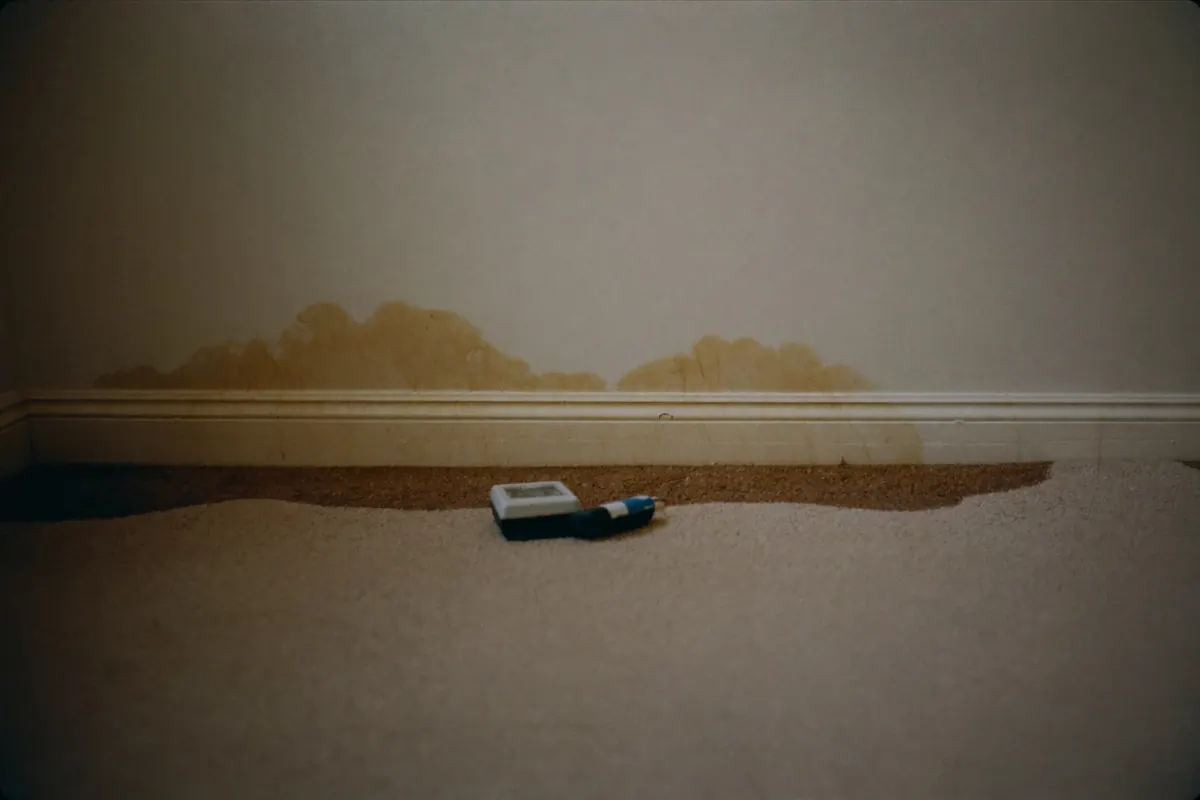
It depends on whether part or all of the unit is unusable, and four states answer it four ways. Florida is the most tenant-friendly on paper: under Fla. Stat. 83.63, if damage not caused by the tenant substantially impairs the premises, the tenant may vacate the unusable part and owe rent reduced by that part’s fair rental value, or end the lease and leave.
- Texas, Tex. Prop. Code 92.054: if an insured casualty caused the condition, the repair clock does not start until the landlord receives the insurance proceeds. A partly unusable unit earns a proportional rent cut only on a county or district court judgment; a totally unusable one lets either side end the lease in writing.
- California, Cal. Civ. Code 1942(a): a tenant who vacates over an untenantable condition the landlord neglected is discharged from further rent from that date.
- New York, N.Y. Real Property Law 235-b: the court assesses damages for the breach, and subdivision 3 says it need not require expert testimony to do so.
- Arizona and Oregon: A.R.S. 33-1361 and ORS 90.360 let you set a termination date in your notice, at least 10 and 30 days out respectively for ordinary breaches.
Hotel bills are a separate question from rent. Coverage D of the HO-4 form pays the necessary increase in living expenses when a covered peril makes the unit unfit, for the shortest time needed to repair. Ask your carrier for the Coverage D limit in dollars and whether they treat a sewer backup, excluded under Exclusion 3.b, as a covered peril for that purpose.
Questions people actually ask
Can my landlord charge me for water damage I caused?
Often yes. Tex. Prop. Code 92.052(b) removes the landlord’s repair duty during the lease for conditions caused by the tenant, family or guests unless the cause was normal wear and tear, and N.Y. Real Property Law 235-b excludes conditions caused by tenant misconduct. Your renters Coverage E will not pay for damage to the unit you rent under Exclusion F.3, but per the form the $1,000 property of others clause may.
Who is responsible for water damage in an apartment from a roof leak?
The landlord, for the building. Cal. Civ. Code 1941.1(a)(1) and ORS 90.320(1)(a) both require effective waterproofing of the roof and exterior walls, and Fla. Stat. 83.51(1)(b) lists roofs where no local code applies. Your belongings are a harder claim: the HO-4 windstorm peril pays for rain damage to contents only when wind or hail first opens the roof or wall.
Can I break my lease because of water damage?
In several states, yes, after written notice. Fla. Stat. 83.56(1) allows termination if the landlord does not fix a material breach within 7 days of notice stating that intent, and Fla. Stat. 83.63 allows it when casualty damage substantially impairs the unit. Tex. Prop. Code 92.054(b) lets either side terminate when the unit is totally unusable and the tenant did not cause the loss.
Does the landlord’s insurance cover my belongings?
Do not plan on it. The HO-4 form exists to insure a tenant’s personal property, and none of the seven statutes read for this page makes the landlord insure it. Recovery from the landlord for belongings turns on negligence, such as ignoring written notice of a dripping pipe for weeks, which is a question for small claims court or a tenant attorney.
What if water damage in my apartment turned into mold?
Report it in writing the same day. California treats visible mold growth as substandard housing under Cal. Health and Safety Code 17920.3(a)(13), while per the statute Oregon excludes mold from its $300 repair and deduct remedy in ORS 90.368(1)(b), so the landlord handles it. The HO-4 pays for mold only when hidden inside walls, floors or ceilings. For health questions, use EPA's mold and moisture guide and your doctor.
Sources
- Insurance Services Office, Homeowners 4 Contents Broad Form, HO 00 04 10 00 (Ed. 10/2006), AAA filing with the Oklahoma Insurance Department, retrieved 8 November 2026.
- California Legislature via Public.Law, Civil Code 1941.1, 1941.2 and 1942, retrieved 8 November 2026.
- California Legislature via Public.Law, Health and Safety Code 17920.3, substandard buildings, retrieved 8 November 2026.
- Texas Legislature via Public.Law, Property Code 92.052, 92.054, 92.056 and 92.0561, retrieved 8 November 2026.
- Florida Legislature, 2025 Florida Statutes 83.51, 83.56, 83.60 and 83.63, retrieved 8 November 2026.
- Washington State Legislature, RCW 59.18.070 and RCW 59.18.100, retrieved 8 November 2026.
- Arizona State Legislature, A.R.S. 33-1361 and A.R.S. 33-1363, retrieved 8 November 2026.
- Oregon Legislature via Public.Law, ORS 90.320, 90.360 and 90.368, retrieved 8 November 2026.
- New York State Senate, Real Property Law 235-b, Warranty of habitability, retrieved 8 November 2026.
- US Environmental Protection Agency, A Brief Guide to Mold, Moisture and Your Home, retrieved 8 November 2026.
This page reads statutes and a standard policy form and is not legal or insurance advice. It does not say what your lease or policy pays: your lease, declarations, endorsements, local ordinances and courts control. Your state insurance department can answer policy questions, and a local tenant rights organization or attorney can answer lease questions, using the scenario you match above. Method: how we source and check our figures. More claim pages sit in the insurance hub.