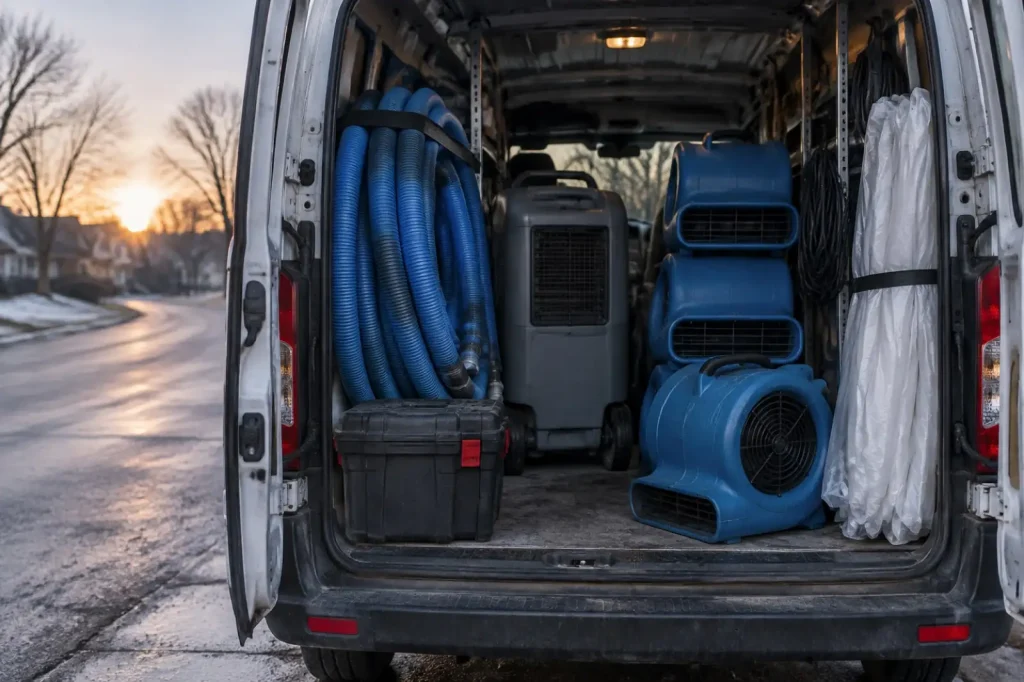
The short answer
Restoration technician pay has no official federal figure under that name, because BLS has no occupation called restoration technician. The closest code, hazardous materials removal workers, had a median of $23.78 an hour ($49,450 a year) in May 2025 according to BLS. Job boards that use the title report less: Indeed shows an average of $21.01 an hour and PayScale a median of $19.83.
Key takeaways
- There is no SOC code for restoration technician. Depending on the employer, the same person can be coded as a hazardous materials removal worker, a construction laborer or a building cleaning worker, and those codes pay differently.
- For SOC 47-4041, BLS puts the 10th percentile at $18.49 and the 90th at $39.62 an hour, a 2.1 times spread inside one code.
- 62% of the workers in that code are employed in remediation and other waste management services, per BLS industry data.
- BLS wage figures exclude overtime. On an emergency-response trade, that is the main thing sitting on top of the federal number.
- No official dataset prices individual certifications. IICRC credentials are prerequisites for other credentials and for some work, which is how they move pay.
On this page
- Why there is no official figure
- The closest occupation codes compared
- The pay ladder inside SOC 47-4041
- Which employers the workers are in
- Pay where most of the jobs are
- What job boards report
- What sits on top: overtime, on-call, travel
- Certifications that move pay
- Where the pay ladder leads
- How to use these numbers on a real offer
- Questions people actually ask
Why there is no official restoration technician figure
Federal wage statistics are organised by the Standard Occupational Classification. BLS surveys employers, and each employer assigns each job to one SOC code. There is no code for a water damage, fire or mold restoration technician, so their pay is spread across whichever codes their employers chose.
The closest fit is SOC 47-4041, hazardous materials removal workers. The occupational profile on O*NET OnLine, 47-4041.00 lists sample job titles that include Mold Damage Technician alongside Asbestos Abatement Worker and Hazmat Technician, and one of its listed tasks is cleaning mold-contaminated sites by removing damaged porous materials or cleaning nonporous ones. Water extraction, drying and contents work are not in that description. A technician who mostly does those may be coded as a construction laborer or a building cleaning worker instead.
So the honest approach is to compare the candidate codes side by side rather than relabel one of them. Our restoration wage report ranks every state for 47-4041 and explains the same limitation in detail.
The closest occupation codes compared
Six codes cover most of what restoration crews do: abatement and mold work, demolition and general labour, specialty cleaning, janitorial cleaning, drywall replacement and general repair. The table shows national pay for each from the BLS Public Data API, May 2025 estimates.
| Occupation (SOC) | Employment | 10th percentile hourly | Median hourly | 90th percentile hourly | Median annual |
|---|---|---|---|---|---|
| Hazardous materials removal workers (47-4041) | 51,710 | $18.49 | $23.78 | $39.62 | $49,450 |
| Construction laborers (47-2061) | 1,096,780 | $16.87 | $22.66 | $37.54 | $47,120 |
| Building cleaning workers, all other (37-2019) | 17,210 | $15.56 | $21.17 | $30.78 | $44,040 |
| Janitors and cleaners (37-2011) | 2,209,760 | $13.77 | $17.71 | $24.17 | $36,840 |
| Drywall and ceiling tile installers (47-2081) | 83,080 | $18.49 | $28.33 | $49.04 | $58,930 |
| Maintenance and repair workers, general (49-9071) | 1,529,700 | $17.00 | $23.84 | $37.11 | $49,590 |
Two things stand out in the BLS data. Hazardous materials removal sits in the middle of the group, close to construction laborers and general maintenance workers, well above janitors and below drywall installers. And the cleaning codes pay least, which matters because contents and cleaning technicians are the most likely to be coded there.
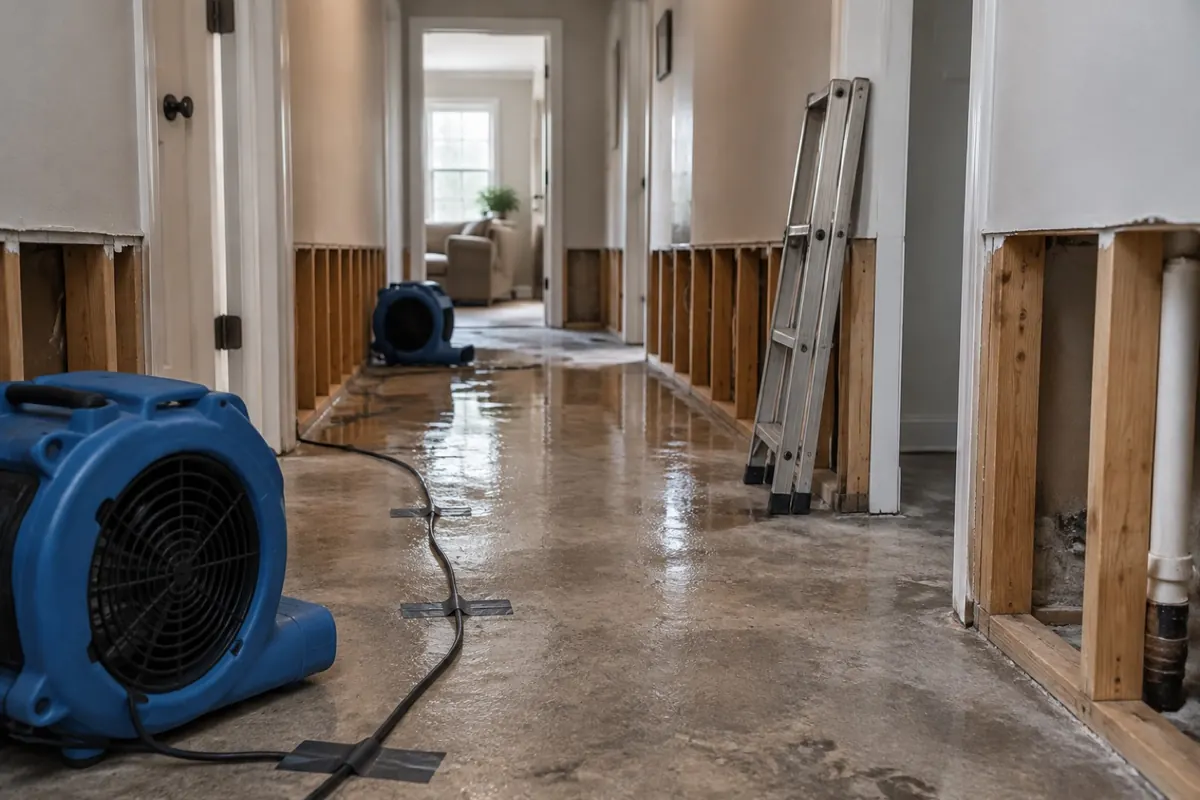
The pay ladder inside SOC 47-4041
BLS publishes percentiles, which are more useful than an average for anyone deciding whether an offer is fair. For 47-4041 the 90th percentile is 2.1 times the 10th, per the BLS May 2025 data.
| Point in the distribution | Hourly | Annual |
|---|---|---|
| 10th percentile | $18.49 | $38,460 |
| 25th percentile | $21.50 | $44,720 |
| Median | $23.78 | $49,450 |
| 75th percentile | $29.58 | $61,530 |
| 90th percentile | $39.62 | $82,410 |
| Mean | $27.13 | $56,430 |
The mean, $27.13, sits above the median, $23.78, per BLS. That gap means the distribution is skewed upward: a smaller group of higher earners pulls the average up. For a typical offer, compare against the median and the 25th to 75th percentile band.
Which employers the workers are in
BLS also publishes the same occupation by industry. For 47-4041, 62% of the national workforce sits in one industry group, remediation and other waste management services, which includes remediation contractors.
| Industry | Employment | Mean hourly | Mean annual |
|---|---|---|---|
| Remediation and other waste management services (NAICS 5629) | 32,210 | $26.39 | $54,890 |
| Specialty trade contractors (NAICS 2380) | 730 | $28.06 | $58,360 |
| Nonresidential building construction (NAICS 2362) | 360 | $24.85 | $51,690 |
| Services to buildings and dwellings (NAICS 5617) | Not published | $19.55 | $40,670 |
The spread is the useful part. The same occupation code paid a mean of $28.06 an hour in specialty trade contractors and $19.55 in services to buildings and dwellings, per the BLS industry series. Who employs a technician can matter as much as what the technician does. Our remediation establishment census counts the firms in the remediation industry state by state, which is the other half of where the jobs are.
Pay where most of the jobs are
Rather than repeat the full state ranking, this section looks at the ten states that employ the most hazardous materials removal workers. Together they hold 60% of the 51,850 workers in the BLS state series, so they describe the market most technicians actually work in.
| State | Employment | Median annual | Mean hourly |
|---|---|---|---|
| California | 7,340 | $56,120 | $29.21 |
| Texas | 4,450 | $44,390 | $22.88 |
| New York | 4,090 | $73,090 | $34.57 |
| Washington | 3,250 | $60,160 | $32.64 |
| Massachusetts | 2,770 | $49,620 | $25.40 |
| New Jersey | 2,250 | $55,900 | $31.15 |
| Illinois | 1,980 | $61,330 | $31.49 |
| Florida | 1,780 | $42,350 | $21.70 |
| Michigan | 1,610 | $46,380 | $23.75 |
| Pennsylvania | 1,590 | $47,860 | $25.55 |
Among those ten, the median runs from $42,350 in Florida to $73,090 in New York, per BLS. The state series includes Puerto Rico, which is why its total (51,850) differs from the national estimate of 51,710. Every other state is in the restoration wage report.
What job boards report
Job boards do use the title restoration technician, which is why they dominate search results. Their figures are a different kind of number: Indeed’s are advertised pay from job postings, and PayScale’s are self-reported by users. Neither is a survey of what employers actually paid.
| Source | Central figure (hourly) | Low | High | Basis |
|---|---|---|---|---|
| Indeed | $21.01 average | $15.36 | $28.73 | 10.4k salaries from job postings on Indeed in the past 36 months |
| PayScale | $19.83 median | $15.55 | $26.10 | 166 self-reported salary profiles, updated 1 June 2026 |
| BLS, SOC 47-4041 | $23.78 median | $18.49 | $39.62 | Employer survey, May 2025 |
| BLS, SOC 37-2011 | $17.71 median | $13.77 | $24.17 | Employer survey, May 2025 |
Both boards sit below the BLS median for 47-4041: Indeed’s average is 12% lower and PayScale’s median 17% lower, per the figures above. Both sit above the BLS median for janitors and cleaners. That is what you would expect if the title covers a mix of entry-level water and cleaning roles and fewer abatement roles.
PayScale also reports pay by experience on its page: an average total compensation of $15.40 an hour for under one year of experience (28 salaries) and $19.36 for one to four years (96 salaries). Small samples, but the direction matches the BLS percentile ladder.
What sits on top: overtime, on-call and travel
BLS states the boundary in its BLS OEWS news release, May 2025 data: OEWS wages are straight-time, gross pay, exclusive of premium pay, and overtime pay, shift differentials and nonproduction bonuses are excluded. For a trade that answers emergency calls, that exclusion is large. Every BLS figure on this page is pay before overtime.
Indeed puts a number on it for the job title: $5,625 of overtime a year on top of the average base, from postings. At one and a half times Indeed’s average hourly rate, that is about 178 overtime hours a year, our arithmetic on Indeed’s figures. It is an advertised figure, not a measured one.
| Situation | Federal rule | Source |
|---|---|---|
| Hours over 40 in a workweek | At least one and one-half times the regular rate for nonexempt employees | US Department of Labor Fact Sheet 22 |
| On call at the employer’s premises | Working time | US Department of Labor Fact Sheet 22 |
| On call at home, or reachable by message | Not working time in most cases; added constraints can make it compensable | US Department of Labor Fact Sheet 22 |
| Travel away from home overnight, such as a storm deployment | Work time when it cuts across the normal workday, including on nonworking days | US Department of Labor Fact Sheet 22 |
Storm and catastrophe deployments are where these rules bite, because they combine long weeks, overnight travel and on-call time. No federal dataset measures how much deployment work adds to annual pay, so this page does not estimate it. The rules above decide which of those hours must be paid. When the busy months fall depends on the region and the hazard, which our restoration seasonality calendar maps from federal disaster records.
Certifications that move pay
No official dataset puts a dollar figure on an individual certification, and this page does not invent one. What can be shown is how credentials gate other credentials and work, which is the mechanism by which they raise pay.
| Credential | Prerequisite | What it opens |
|---|---|---|
| IICRC WRT, Water Damage Restoration Technician | None | The base water credential and the prerequisite for ASD and AMRT |
| IICRC ASD, Applied Structural Drying | WRT | Drying-plan work; IICRC says it helps in pursuing partnerships with third-party administrators |
| IICRC AMRT, Applied Microbial Remediation Technician | WRT | Mold and sewage remediation work |
| Asbestos abatement worker accreditation | At least a 4-day course, annual refresher | Legal entry to asbestos abatement, inside SOC 47-4041 |
| Xactimate certification | Software training | Estimating roles |
The pattern for a technician is straightforward. WRT is the entry point and costs nothing in prerequisites. ASD and AMRT both require it and lead toward drying lead and mold work. Estimating is the larger step, covered in our Xactimate training guide, which explains why the certification is a commercial filter rather than a licence.
Where the pay ladder leads
The clearest pay step in the BLS data is out of field work. Claims adjusters, examiners and investigators (SOC 13-1031), the occupation on the insurer side of a restoration claim, had a median of $37.50 an hour in May 2025 per BLS, 1.6 times the 47-4041 median. Estimating, the skill both sides of a claim work in, is one bridge between the two.
Inside a restoration firm the steps are less visible in federal data: technician, crew lead, project manager, estimator. None has its own SOC code. Our operations hub covers how firms staff and run jobs, including the roles that sit between the van and the office.
How to use these numbers on a real offer
A posted hourly rate is only comparable once four questions are answered. The figures above give a benchmark for each.
- Which code does the job really sit in? A role that is mostly extraction, drying and contents is closer to the cleaning and laborer codes. A role with mold or asbestos abatement is closer to 47-4041. Compare against the right row.
- Where in the band is it? For 47-4041 the BLS 25th to 75th percentile runs from $21.50 to $29.58 an hour. An offer below the 25th percentile for an experienced hire is low by the federal measure.
- Is overtime paid and how is on-call handled? BLS figures exclude overtime, so two offers at the same base can differ widely in annual pay. Ask how call-outs, standby and travel days are paid.
- Does the employer pay for credentials? WRT, ASD, AMRT and asbestos accreditation all carry course time. An employer that funds them is paying part of the wage in training.
None of this replaces local information. State law, local labour markets and union agreements all move the figure, and the state agency that enforces wage law is the authority on what must be paid where you work.
Questions people actually ask
How much does a restoration technician make an hour?
Job boards report $19.83 (PayScale median) to $21.01 (Indeed average). The closest federal code, hazardous materials removal workers, had a BLS median of $23.78 in May 2025, before overtime.
Is there a BLS category for restoration technicians?
No. BLS has no occupation code for restoration technicians. The nearest is SOC 47-4041, whose O*NET sample titles include Mold Damage Technician. Others are coded as construction laborers or building cleaning workers, depending on the employer.
Does restoration technician pay include overtime?
BLS wage estimates do not; they exclude overtime, shift differentials and nonproduction bonuses. Indeed shows $5,625 a year of overtime on top of base pay for the title, from job postings. Federal law requires one and a half times the regular rate after 40 hours for nonexempt workers.
Which state pays restoration technicians the most?
For SOC 47-4041, among the ten largest state markets New York has the highest median at $73,090, per BLS. Our restoration wage report ranks every state.
Does IICRC certification increase pay?
No official dataset measures it. WRT is the prerequisite for ASD and AMRT, and IICRC says ASD helps firms pursue third-party administrator partnerships, so credentials open work and roles rather than carrying a fixed premium.
Are storm deployments paid differently?
Federal rules decide which hours count: travel away from home overnight is work time when it cuts across the normal workday, and hours over 40 earn overtime for nonexempt workers. No federal dataset measures what deployments add to annual pay.
Sources
- US Bureau of Labor Statistics, BLS Occupational Employment and Wage Statistics, May 2025 estimates. National and industry figures pulled from the BLS Public Data API on 7 October 2026, series OEUN0000000000000 plus SOC plus datatype (for example OEUN000000000000047404108, median hourly) and OEUN0000000 plus industry plus 474041 plus datatype.
- BLS state series for SOC 47-4041 via our research data loader, retrieved 2 October 2026.
- BLS OEWS news release, May 2025 data, USDL-26-0725, released 15 May 2026: the OEWS wage definition and exclusions. Retrieved 7 October 2026.
- O*NET OnLine, 47-4041.00, National Center for O*NET Development: sample job titles and tasks. Retrieved 7 October 2026.
- Indeed salary page, advertised pay from job postings in the past 36 months. Retrieved 7 October 2026.
- PayScale salary page, self-reported salary profiles, last updated 1 June 2026. Retrieved 7 October 2026.
- US Department of Labor Fact Sheet 22, Hours Worked under the Fair Labor Standards Act. Retrieved 7 October 2026.
- IICRC WRT page, IICRC ASD page and IICRC AMRT page, Institute of Inspection, Cleaning and Restoration Certification. Retrieved 7 October 2026.
- EPA Model Accreditation Plan, 40 CFR Part 763, training minimums for abatement workers.
- Percentages, ratios and the overtime-hours estimate are our arithmetic on the cited figures. Our methodology sets out the standing rules.
Job board figures are advertised or self-reported and change frequently. BLS figures describe occupation codes, not the restoration technician title.