The short answer
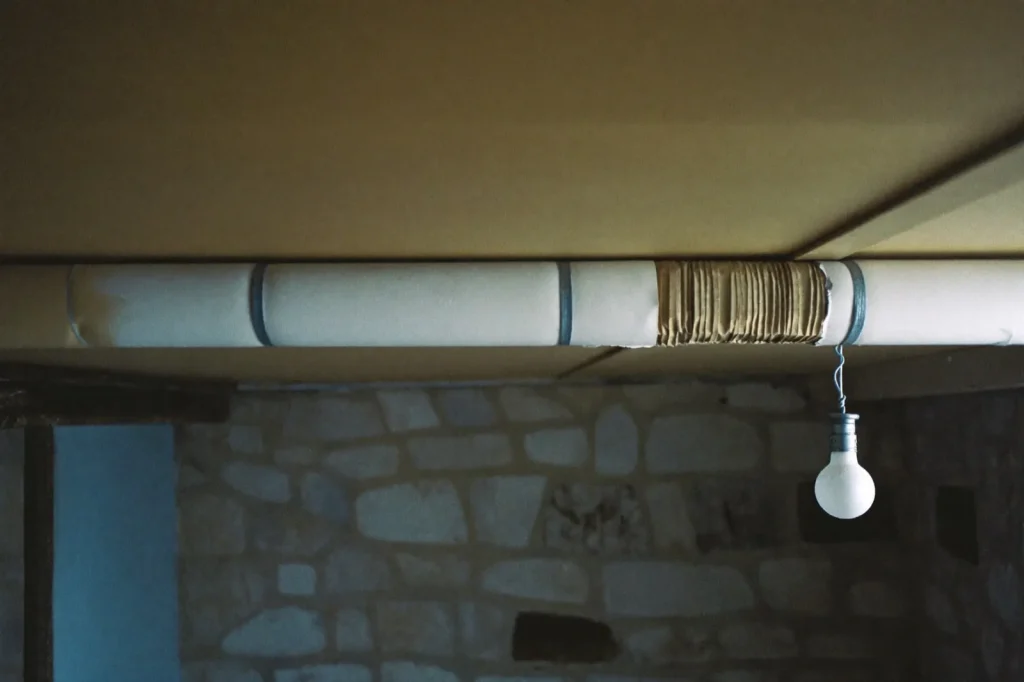
Air cell asbestos is pipe and duct insulation built from alternating layers of plain and corrugated asbestos paper, so a cut end shows rings of small channels under a canvas or paper jacket. EPA’s 1985 guidance lists corrugated asbestos paper at 35 to 90 percent asbestos, and federal rules barred its US manufacture after 26 August 1996.
Out of scope. This page covers identification and the rules that apply when air cell is disturbed. Health effects are covered by EPA's Learn About Asbestos page and by NIH; nothing here replaces a bulk sample read by an accredited lab.
What does air cell asbestos look like at a cut end?
The 1911 Philip Carey Company catalogue gives the clearest description of the product. Carey’s Sectional Air Cell Pipe Covering was “constructed of alternate layers of plain and corrugated asbestos paper”, which formed successive layers of continuous dead air cells around the pipe. Like the company’s molded covering, the sections were cut into halves lengthwise and furnished with a canvas jacket, in regular thicknesses of 1/2, 3/4 and 1 inch.
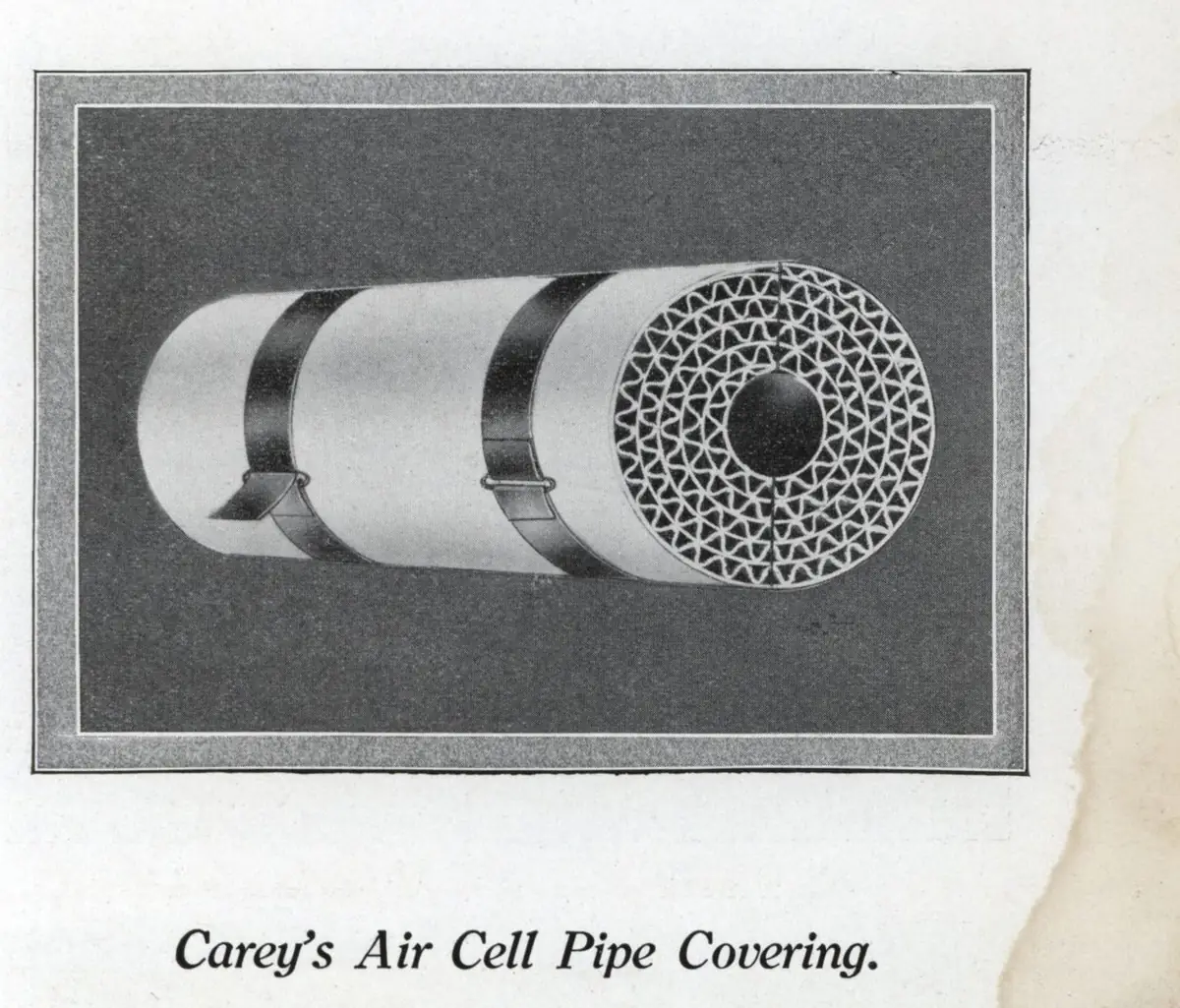
So the tell is at an open end, a tear or a cut: concentric rings of small channels, like the flutes inside a box, in a white to gray paper. Along the run, the surface is the jacket, not the paper. EPA's homeowner guidance is direct about the limits of this: you generally cannot tell whether a material contains asbestos by looking at it unless it is labelled, and if in doubt you should treat it as asbestos and leave it alone.
The federal definition backs up the paper reading. 59 FR 33208 (28 June 1994) defines corrugated paper as an asbestos-containing product made of corrugated paper, often cemented to a flat backing, which may be laminated with foils, and names “thermal insulation for pipe coverings” first among its major applications. The same text is now codified at 40 CFR 763.163.
How much asbestos is in air cell? EPA’s 1985 range against 7 lab results
Appendix A of the EPA's 1985 Purple Book (EPA 560/5-85-024) lists two grades of corrugated paper product. The high temperature grade is given as 90 percent asbestos with a sodium silicate binder, in use from 1935. The moderate temperature grade is given as 35 to 70 percent asbestos with a starch binder, in use from 1910. EPA credits the table to a February 1981 US Navy Civil Engineering Laboratory report.
Real samples fall inside that band. The GSA's Goodfellow Federal Center crawlspace survey lists 7 air cell rows across federal buildings, every one of them chrysotile, from 30 to 85 percent. 6 of the 7 sit between EPA’s 35 percent floor and its 90 percent high temperature figure; the 30 percent result in Building 104F sits below it.
Two numbers frame what those results mean. Under OSHA 29 CFR 1926.1101, thermal system insulation ACM is insulation with more than 1 percent asbestos, and the median GSA air cell result, 70 percent, is 70 times that line. Under 40 CFR 763.87, one sample over 1 percent is enough to make a whole homogeneous area ACM, while calling an area clean needs every required sample at 1 percent or less.
How we counted. The 7 values are every row titled air cell pipe insulation in the GSA document (PDF created August 2021), taken as printed. The median and the count inside EPA’s range are computed in this page’s code. One federal site is not a national sample; it shows how far real air cell sits above the 1 percent line.
Air cell, magnesia block or fiberglass: which one is on your pipe?
Most old steam and hot water runs carry one of three or four coverings, and the cut end separates them faster than the jacket does. According to the 1911 Philip Carey Company catalogue, 85% magnesia was “approximately 85% pure Carbonate of Magnesia and 15% fibrous Asbestos”, molded into a light porous section, which is why a magnesia break looks solid rather than fluted. Note one disagreement: EPA’s 1985 table dates 85% magnesia from 1926, yet Carey was already selling it in 1911.
| Covering | How it was made | Asbestos, percent | Years in use (EPA 1985) | Cut end |
|---|---|---|---|---|
| Air cell (corrugated paper) | Plain and corrugated asbestos paper in alternate layers; canvas jacket | 35 to 70 (moderate temp); 90 (high temp) | 1910 and 1935 onward | Rings of small channels |
| 85% magnesia | Molded magnesia and asbestos fibre in half sections; canvas jacket | 15 | 1926 to 1949 | Solid, chalky, porous block |
| Calcium silicate | Preformed block and pipe covering | 6 to 8 | 1949 to 1971 | Not described in sources read |
| Fiberglass, foam glass, rubber | Not asbestos products | None listed | Not listed | AHERA lets an inspector skip sampling |
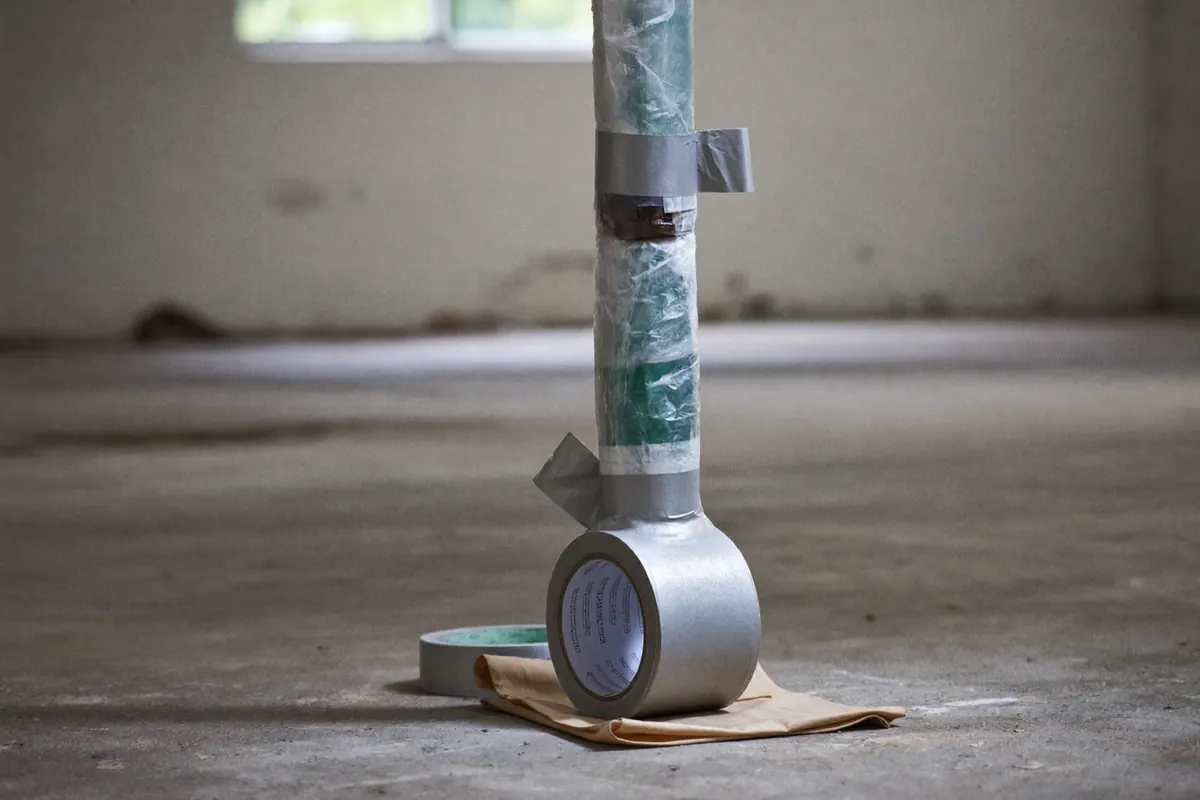
The fiberglass row needs a warning. Under 40 CFR 763.86 paragraph (b)(4), an accredited inspector need not sample insulation determined to be fiberglass, foam glass or rubber, but that is a trained call, not a glance. The GSA's Goodfellow Federal Center crawlspace survey lists “old fiberglass pipe insulation with tar paper” in Building 104F at 30 percent chrysotile, so a newer looking wrap over an old run can still carry an asbestos layer. The wider family of coverings is on our asbestos pipe insulation page.
Where was air cell used besides steam and hot water pipes?
The pipe covering was only one shape. 59 FR 33208 (28 June 1994) lists the major applications of asbestos corrugated paper as pipe coverings, block insulation, panel insulation in elevators, insulation in appliances, and insulation in low pressure steam, hot water and process lines. The 1911 Philip Carey Company catalogue also sold the corrugated felt flat as Asbestos Air Cell Fireboard, from one fourth inch single ply to one inch, for ceilings, walls and partitions.
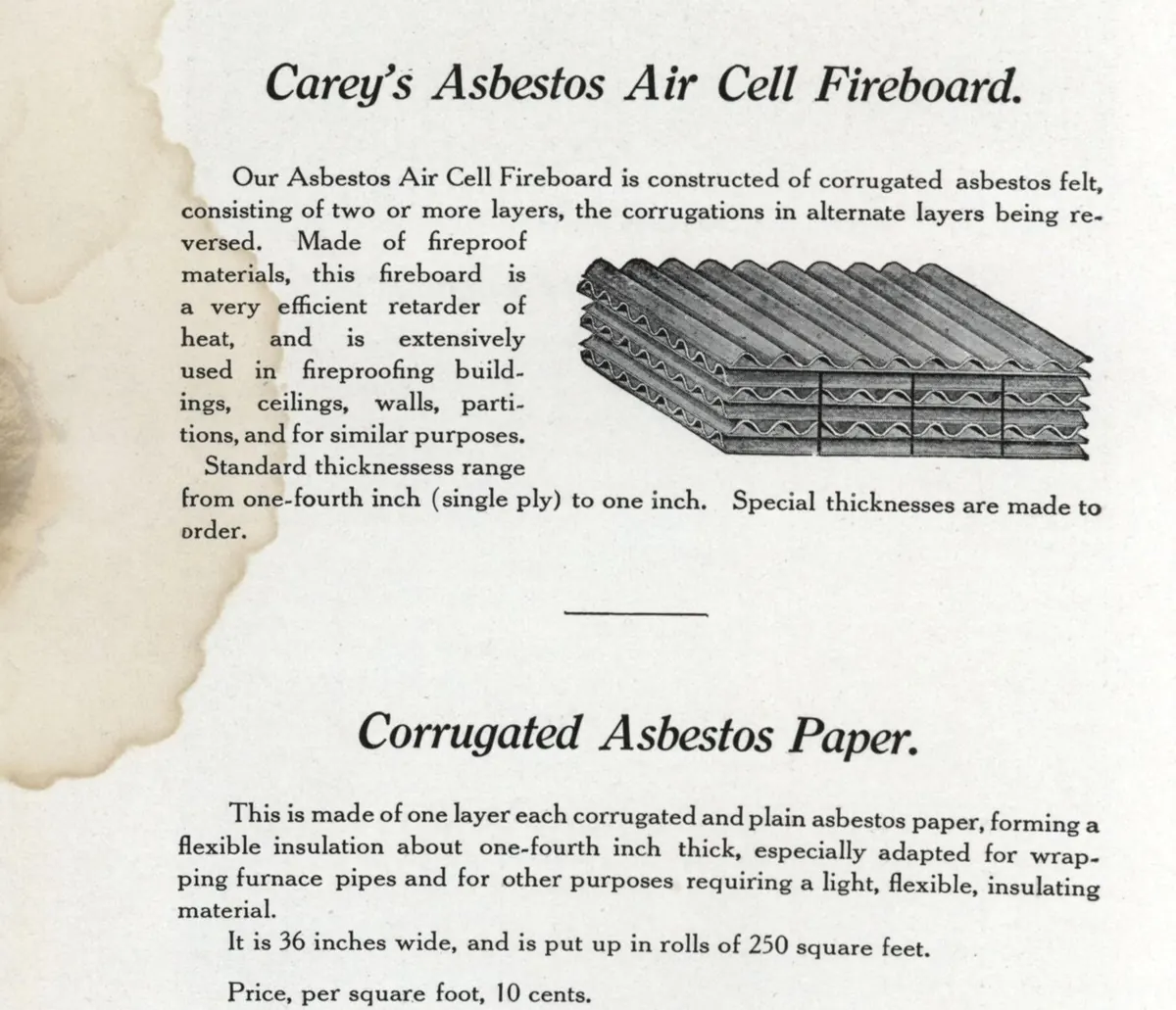
Homes got the lighter forms. The same catalogue sold Corrugated Asbestos Paper, one corrugated and one plain layer about one fourth inch thick, “especially adapted for wrapping furnace pipes”, in 36 inch rolls of 250 square feet at 10 cents a square foot. EPA's Learn About Asbestos page names hot water and steam pipes covered with an asbestos blanket or tape among the places asbestos turns up in houses, and the EPA's 1985 Purple Book (EPA 560/5-85-024) notes that pipe insulation sometimes covers ducts as well.
Read together, those sources point to four places in an older house: steam and hot water runs (EPA), furnace pipes (the 1911 catalogue), ducts (EPA’s 1985 guide) and appliance insulation (the 1994 definition). Torn pieces also end up below the runs: the GSA's Goodfellow Federal Center crawlspace survey recorded air cell remnants in the crawlspaces of 7 buildings.
When did manufacturers stop making asbestos corrugated paper?
Later than most people assume. The EPA's 1985 Purple Book (EPA 560/5-85-024) still listed both corrugated paper grades as in use to the present in June 1985. EPA’s 1989 ban and phaseout rule was largely overturned in 1991, per EPA's asbestos actions page, but corrugated paper was one of the five paper and felt products that stayed banned.
The dates are in the regulation. Under 40 CFR 763.165 paragraph (b), no person may manufacture or import corrugated paper after 26 August 1996, and under 40 CFR 763.169 paragraph (b) no one may distribute it in commerce after 25 August 1997. The definition of distribution in that subpart excludes users of an installed product, so the ban never required anyone to strip pipes. The full sequence of federal asbestos bans is on our when was asbestos banned page.
For a building, the practical cutoff is 1980. OSHA 29 CFR 1926.1101 defines presumed asbestos containing material, PACM, as thermal system insulation and surfacing material in buildings constructed no later than 1980, so pipe wrap in such a building is treated as asbestos unless an AHERA inspection or bulk testing rebuts it.
Is torn air cell friable, and is removing it OSHA Class I work?
Air cell is paper, and under 40 CFR 61.141 friable asbestos material is anything over 1 percent asbestos that, when dry, can be crumbled, pulverized or reduced to powder by hand pressure. Whether a given piece meets that test is for the inspector, but the regulatory labels that follow from a positive result are fixed.
| Term | What the rule says | Source |
|---|---|---|
| Thermal system insulation (TSI) | ACM on pipes, fittings, boilers, breeching, tanks, ducts | OSHA 29 CFR 1926.1101 |
| Class I work | Removal of TSI and surfacing ACM and PACM | OSHA 29 CFR 1926.1101 |
| Class III work | Repair and maintenance where TSI is likely to be disturbed | OSHA 29 CFR 1926.1101 |
| Friable asbestos material | Over 1 percent asbestos and, when dry, crumbled or reduced to powder by hand pressure | 40 CFR 61.141 |
| Full NESHAP work practices | At least 260 linear feet on pipes or 160 square feet on other components | 40 CFR 61.145 |
| Facility | Excludes residential buildings with four or fewer dwelling units | 40 CFR 61.141 |
For a contractor, removing air cell is Class I work under OSHA 29 CFR 1926.1101, and glove bags are allowed on straight runs and elbows only if they are 6 mil plastic, used once, kept off surfaces above 150 degrees F and worked by at least two people. A house of four or fewer units falls outside the 40 CFR 61.141 facility definition, but the OSHA standard still covers any employer’s crew. The regulatory category is explained on our thermal system insulation page, and the friability test on our friable asbestos page.
Condition decides whether it comes out. Table 4 of the EPA's 1985 Purple Book (EPA 560/5-85-024) says intact pipe insulation with low disturbance potential needs no action beyond a special operations and maintenance program, minor damage calls for patching or a new jacket, and poor condition calls for removal and replacement as soon as possible.
Found air cell in a basement: what not to do, and what to ask an inspector
EPA's homeowner guidance sets the don’ts: do not dust, sweep or vacuum debris that may contain asbestos; do not saw, sand, scrape or drill it; do not track it through the house. It recommends that even sampling and minor repair be done by a trained and accredited asbestos professional, and says sealing pipe insulation should be done only by a professional trained to handle asbestos.
Then book the sample. Under 40 CFR 763.86 paragraph (b), an accredited inspector collects at least three bulk samples from each homogeneous area of thermal system insulation, or at least one from a patched section under 6 linear or square feet. Lab options are compared on our asbestos testing lab page.
- Ask how many homogeneous areas the inspector sees on your runs and fittings, because each one needs its own samples under 40 CFR 763.86.
- Ask whether elbow and valve cement will be sampled separately from the air cell, since paragraph (b)(3) treats fitting cement as its own system.
- Ask for the lab’s NVLAP accreditation and the percent and fibre type on the report, as GSA’s survey printed them.
- If the result is positive, ask whether repair by jacketing fits the condition grades in Table 4 of EPA’s 1985 guide before pricing removal.
If the wrap is intact and the area will not be disturbed, EPA’s guidance favours leaving it alone. If it is torn, covering is one of the two repair routes EPA names, and our asbestos encapsulation page covers the sealing route. Removal belongs with a licensed asbestos abatement professional under your state’s rules, and both sit under our standards coverage.
Questions people actually ask
Is air cell insulation just corrugated cardboard?
No. It looks like cardboard flutes, but EPA’s 1994 definition at 40 CFR 763.163 calls it an asbestos-containing corrugated paper, and EPA’s 1985 guide lists binders of starch for the 35 to 70 percent grade and sodium silicate for the 90 percent grade. EPA says you generally cannot tell asbestos by looking; a polarized light microscopy result from an accredited lab is what separates them.
Does the 1996 ban mean installed air cell must be removed?
No. 40 CFR 763.165 and 763.169 barred manufacture, import, processing and distribution of corrugated paper from 1996 and 1997, and the subpart’s definition of distribution excludes users of an installed product. EPA’s 1985 guide says intact pipe insulation with low disturbance potential needs only an operations and maintenance program. Removal is usually triggered by damage or a renovation that will disturb it.
Is the asbestos in air cell chrysotile or amosite?
In GSA’s published Goodfellow Federal Center survey, all 7 air cell rows were chrysotile, from 30 to 85 percent. EPA’s 1985 table gives percentages but not fibre type for corrugated paper. Other buildings and makers can differ, which is why a lab report should state the fibre type as well as the percent for each sample.
Can a sample from one pipe clear the whole basement?
Not under AHERA practice. 40 CFR 763.86 asks for at least three samples per homogeneous area of thermal system insulation, and 40 CFR 763.87 clears an area only if every required sample is 1 percent or less. One positive sample over 1 percent makes the whole homogeneous area ACM, so different runs, patches and fittings each need their own read.
Can I cover torn air cell with a new jacket myself?
EPA’s homeowner guidance says exposed insulated piping may be covered with a protective wrap or jacket, recommends that even minor repair be done by a trained and accredited professional, and says sealing pipe insulation should be done only by one. Check your state asbestos program’s rules on repair work before you start.
Sources
- Philip Carey Company, 1911 Philip Carey Company catalogue, Carey’s Coverings catalog no. 411, pages 15, 18, 19 and 40, Internet Archive (Public Domain Mark 1.0).
- US EPA, EPA's 1985 Purple Book (EPA 560/5-85-024), Guidance for Controlling Asbestos-Containing Materials in Buildings, June 1985, Appendix A and Table 4.
- US General Services Administration, GSA's Goodfellow Federal Center crawlspace survey, PDF created August 2021.
- US EPA, 40 CFR 763.163, 40 CFR 763.165 and 40 CFR 763.169, TSCA asbestos product prohibitions, eCFR.
- US EPA, 59 FR 33208 (28 June 1994), Federal Register technical amendment, govinfo.
- US EPA, 40 CFR 763.86 and 40 CFR 763.87, AHERA sampling and analysis, eCFR.
- US Department of Labor, OSHA 29 CFR 1926.1101, asbestos in construction, eCFR.
- US EPA, 40 CFR 61.141 and 40 CFR 61.145, asbestos NESHAP, eCFR.
- US EPA, EPA's homeowner guidance, Protect Your Family from Exposures to Asbestos (last updated 25 June 2026).
- US EPA, EPA's Learn About Asbestos page (last updated 13 July 2026).
- US EPA, EPA's asbestos actions page, EPA Actions to Protect the Public from Exposure to Asbestos (last updated 21 January 2026).
- All retrieved 8 November 2026. See our methodology for how we read primary sources and published data.
This page summarises published rules and data and is not legal advice. State and local asbestos rules can be stricter than the federal ones described here.