The short answer
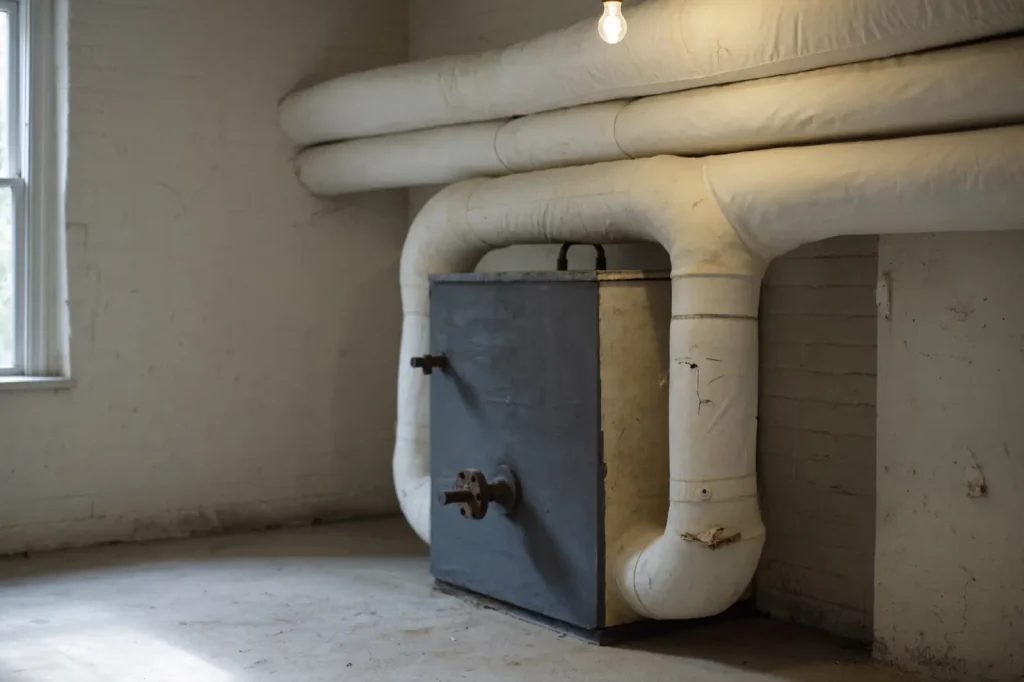
Thermal system insulation (TSI) is the regulatory term for insulation applied to pipes, fittings, boilers, breeching, tanks and ducts to prevent heat loss or gain. OSHA presumes TSI in buildings constructed no later than 1980 contains asbestos, removing it is Class I work under 29 CFR 1926.1101, and EPA’s AHERA rule requires at least three bulk samples per homogeneous area.
Key takeaways
- Under 29 CFR 1926.1101(b), removal of TSI is Class I work at any quantity; the same task on floor tile or siding is Class II.
- Above 25 linear feet or 10 square feet of TSI removed, OSHA adds critical barriers, full body clothing and a three room decontamination area.
- In schools, 40 CFR 763.90(b) requires damaged TSI to be at least repaired; encapsulation and enclosure are listed only for surfacing and miscellaneous material.
Which obligations switch on because a material is TSI?
Fourteen separate federal duties hang on whether a material is classified as thermal system insulation. OSHA’s construction rule (29 CFR 1926.1101) and general industry rule (29 CFR 1910.1001) protect workers; EPA’s AHERA rule in 40 CFR Part 763 Subpart E governs school buildings; EPA’s Asbestos NESHAP in 40 CFR Part 61 Subpart M governs air emissions during demolition and renovation. The matrix lists each duty with its paragraph.
| Obligation | Rule and paragraph | What TSI changes | Who it binds |
|---|---|---|---|
| Treat as asbestos without testing (PACM) | 29 CFR 1926.1101(b), (k)(1); 29 CFR 1910.1001(b), (j)(2) | TSI in buildings constructed no later than 1980 is presumed ACM until rebutted | Employers, building owners |
| Rebut the presumption | 29 CFR 1926.1101(k)(5)(ii) | AHERA style inspection, or bulk samples collected per 40 CFR 763.86 by an accredited inspector or a CIH; lab in NVLAP or an equivalent round robin | Employers, building owners |
| Tell bidders, staff and tenants before work | 29 CFR 1926.1101(k)(2) | Presence, location and quantity of ACM and PACM, in writing or in person | Building owners |
| Post signs at mechanical rooms | 29 CFR 1926.1101(k)(6) | Signs at entrances to mechanical rooms containing ACM or PACM | Building owners |
| Classify removal as Class I | 29 CFR 1926.1101(b) | Removal of TSI or surfacing ACM and PACM is Class I at any quantity | Employers |
| Competent person supervision | 29 CFR 1926.1101(b), (g)(4)(i) | Supervisor trained to EPA’s Model Accreditation Plan supervisor level | Employers |
| Barriers, clothing and decontamination | 29 CFR 1926.1101(g)(4)(ii), (i)(1), (j)(1) | Removal of more than 25 linear or 10 square feet of TSI | Employers |
| Half mask respirator for repair | 29 CFR 1926.1101(h)(3)(iii)(B) | Class III work that disturbs TSI needs at least a half mask, never a filtering facepiece | Employers |
| Assume debris is asbestos | 29 CFR 1926.1101(g)(10)(ii) | Where friable TSI or surfacing material is accessible | Employers in control of the area |
| Sample count per homogeneous area | 40 CFR 763.86(b) | At least 3 samples for TSI at any size; 1 for a patch under 6 linear or square feet; none if fiberglass, foam glass or rubber | Schools (local education agencies) |
| Assessment category | 40 CFR 763.88(b)(1) | Category (1) names damaged TSI ACM without the word friable that the surfacing and miscellaneous categories carry | Schools |
| Response action | 40 CFR 763.90(b) | At least repair damaged TSI; remove if repair is not feasible; keep all TSI ACM intact | Schools |
| Operations and maintenance program | 40 CFR 763.90(e), (f) | TSI ACM with potential for damage or significant damage | Schools |
| Notice and work practices | 40 CFR 61.145(a)(4) | Friable TSI is RACM; 260 linear feet on pipes triggers the full NESHAP rules | Owners and operators of a NESHAP facility |
How do OSHA and AHERA word the TSI definition differently?
OSHA’s definition is circular on purpose. OSHA’s 29 CFR 1926.1101(b) defines TSI as “ACM applied to pipes, fittings, boilers, breeching, tanks, ducts or other structural components to prevent heat loss or gain,” then separately defines thermal system insulation ACM as TSI containing more than 1% asbestos. The general industry standard, 29 CFR 1910.1001(b), repeats the wording word for word.
| Rule set | Citation | How TSI is defined |
|---|---|---|
| OSHA construction | 29 CFR 1926.1101(b) | ACM applied to pipes, fittings, boilers, breeching, tanks, ducts or other structural components to prevent heat loss or gain |
| OSHA general industry | 29 CFR 1910.1001(b) | Same wording as construction; also uses TSI to define a homogeneous area |
| EPA AHERA (schools) | 40 CFR 763.83 | Material applied to the same components “to prevent heat loss or gain, or water condensation, or for other purposes” |
| EPA NESHAP | 40 CFR 61.141 | No TSI definition; pipes are measured in linear feet and the test is friability |
AHERA’s wording in 40 CFR 763.83 is broader in two ways that matter in the field. It covers material applied “to prevent heat loss or gain, or water condensation, or for other purposes,” so insulation on chilled water and cold water lines, which exists to stop condensation, is TSI in a school even though it does nothing for heat. It also limits TSI to interior structural components, consistent with AHERA’s focus on the inside of school buildings.
The NESHAP never uses the term. Under 40 CFR 61.141, pipe insulation is just material that is friable or nonfriable, and it reaches the rule through RACM and the 260 linear foot pipe threshold. The friability vocabulary is laid out on our friable asbestos page.
Why is TSI in a 1980 or older building presumed asbestos?
Because OSHA writes the presumption into the definition. 29 CFR 1926.1101(b) defines presumed asbestos containing material, PACM, as “thermal system insulation and surfacing material found in buildings constructed no later than 1980,” and paragraph (k)(1) requires employers and building owners to identify TSI and sprayed or troweled surfacing as asbestos containing unless they rebut it. Asphalt and vinyl flooring installed no later than 1980 must also be treated as asbestos containing, but OSHA does not call flooring PACM.
Rebuttal has a defined route in 29 CFR 1926.1101(k)(5)(ii): either an inspection that meets AHERA’s requirements, or bulk samples collected the way 40 CFR 763.86 describes, by an accredited inspector or a CIH, analysed by a lab with current proficiency in NVLAP, a NIST program or the AIHA bulk round robin. A homeowner kit result does not meet that route. Our page on the asbestos inspector credential explains who can sign the inspection.
The presumption is not a finding that the insulation contains asbestos. It shifts the burden: until a qualifying inspection rebuts it, an owner must give the 29 CFR 1926.1101(k)(2) notices and an employer must run any removal as Class I work. A building constructed in 1981 carries no presumption, but paragraph (k)(1) still requires owners to treat materials as ACM when they knew, or should have known through due diligence, that they contain asbestos.
What does removing more than 25 linear feet of TSI add under OSHA’s Class I rules?
Every Class I job, at any size, needs supervision by a competent person under 29 CFR 1926.1101(g)(4)(i), and the competent person definition requires Class I and II supervisors to be trained in a course meeting EPA’s Model Accreditation Plan supervisor criteria, or its equivalent. Paragraphs (g)(4)(iii) to (v) add, for all Class I jobs, HVAC isolation with a double layer of 6 mil plastic, impermeable drop cloths under the work and covers over objects in the regulated area.
Above 25 linear or 10 square feet of TSI or surfacing material, three more duties switch on. Paragraph (g)(4)(ii) requires critical barriers over all openings or another isolation method proved by perimeter monitoring; (i)(1) requires full body protective clothing; and (j)(1) requires a decontamination area of equipment room, shower and clean room in series, adjacent to the regulated area.
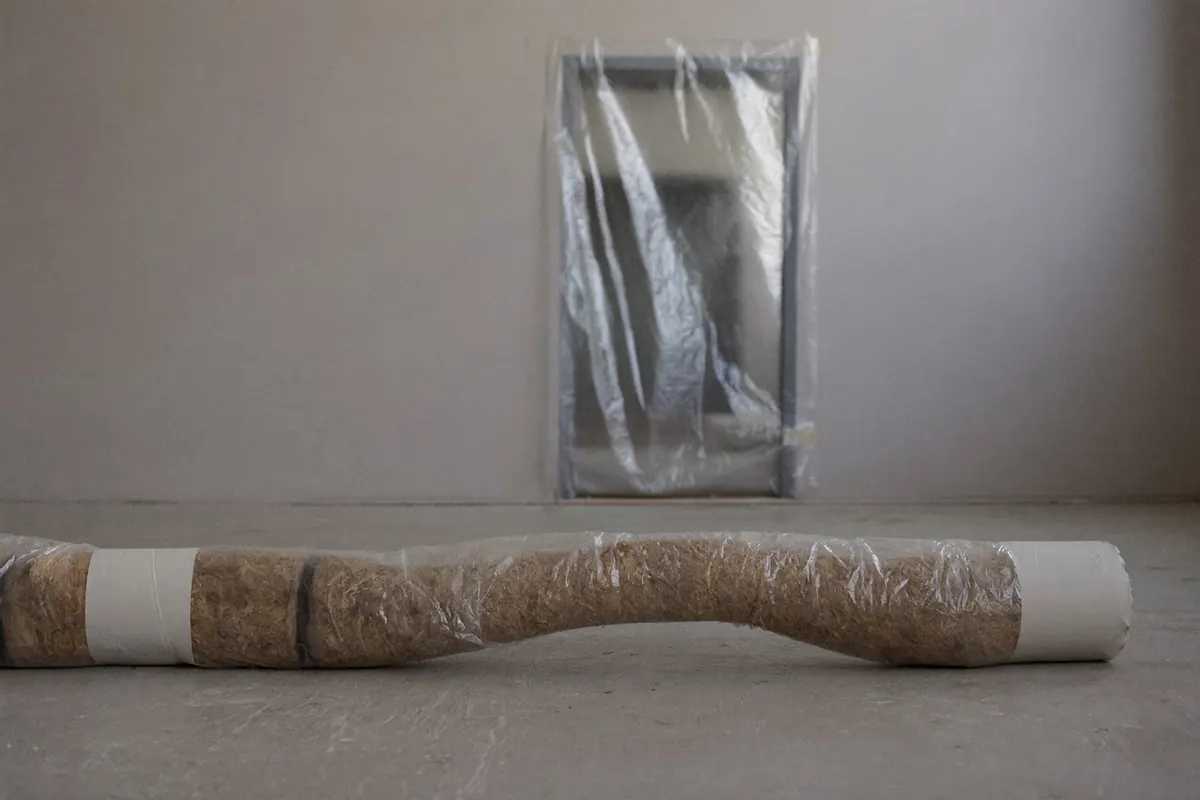
Pipe work has its own control method. 29 CFR 1926.1101(g)(5)(ii) allows glove bags for straight runs of piping and for elbows and connections, made of 6 mil plastic, smoke tested, used once and never moved, and never on surfaces hotter than 150 °F. Repair rather than removal is Class III work, but paragraph (h)(3)(iii)(B) still requires at least a half mask respirator, not a filtering facepiece, for any Class III task that disturbs TSI. Respirator selection by class is on our respirator for asbestos removal page.
TSI vs surfacing material vs miscellaneous material: why AHERA’s category sets the sample count
AHERA sorts every suspect material in a school into one of three buckets in 40 CFR 763.83: surfacing material (sprayed or troweled on, such as acoustical plaster and fireproofing), thermal system insulation, and miscellaneous material, defined as interior material on structural components such as floor and ceiling tiles. Under 40 CFR 763.85(a)(4)(vi)(D), the inspection report must say which bucket each homogeneous area falls in.
The bucket fixes the minimum sampling. EPA’s 40 CFR 763.86(a) scales surfacing samples with area, from 3 samples for 1,000 square feet or less to 7 above 5,000 square feet. For TSI, paragraph (b) requires at least 3 randomly distributed samples per homogeneous area whatever its size, 1 sample for a patched section under 6 linear or square feet, and no samples where the inspector determines the insulation is fiberglass, foam glass or rubber.
Because EPA’s 40 CFR 763.87(c) declares an entire homogeneous area ACM when any one sample exceeds 1% asbestos, the TSI rule of three samples on a run of any length is a floor, not a ceiling. The same 3 sample count applies in OSHA’s rebuttal route, because 29 CFR 1926.1101(k)(5)(ii) points back to 40 CFR 763.86. Survey scoping is covered on our asbestos survey page.
Why does damaged TSI in a school get repair, not a choice of encapsulation?
AHERA writes a separate response track for TSI. Under 40 CFR 763.90(b), if damaged or significantly damaged TSI ACM is present, the school must at least repair the damaged area, remove it if repair is not technologically feasible, and maintain all TSI ACM and its covering intact. Surfacing and miscellaneous material get a menu of encapsulation, enclosure, removal or repair under paragraph (c).
| Condition found | Minimum response | Paragraph |
|---|---|---|
| Damaged or significantly damaged TSI ACM | At least repair; remove if repair is not technologically feasible; keep all TSI ACM intact | 40 CFR 763.90(b) |
| Damaged friable surfacing or miscellaneous ACM | Choose encapsulation, enclosure, removal or repair | 40 CFR 763.90(c) |
| Significantly damaged friable surfacing or miscellaneous ACM | Isolate the space and restrict access; remove, or enclose or encapsulate if sufficient | 40 CFR 763.90(d) |
| TSI ACM with potential for damage | Operations and maintenance program | 40 CFR 763.90(e) |
| TSI ACM with potential for significant damage | O&M plus preventive measures; remove if they cannot work | 40 CFR 763.90(f) |
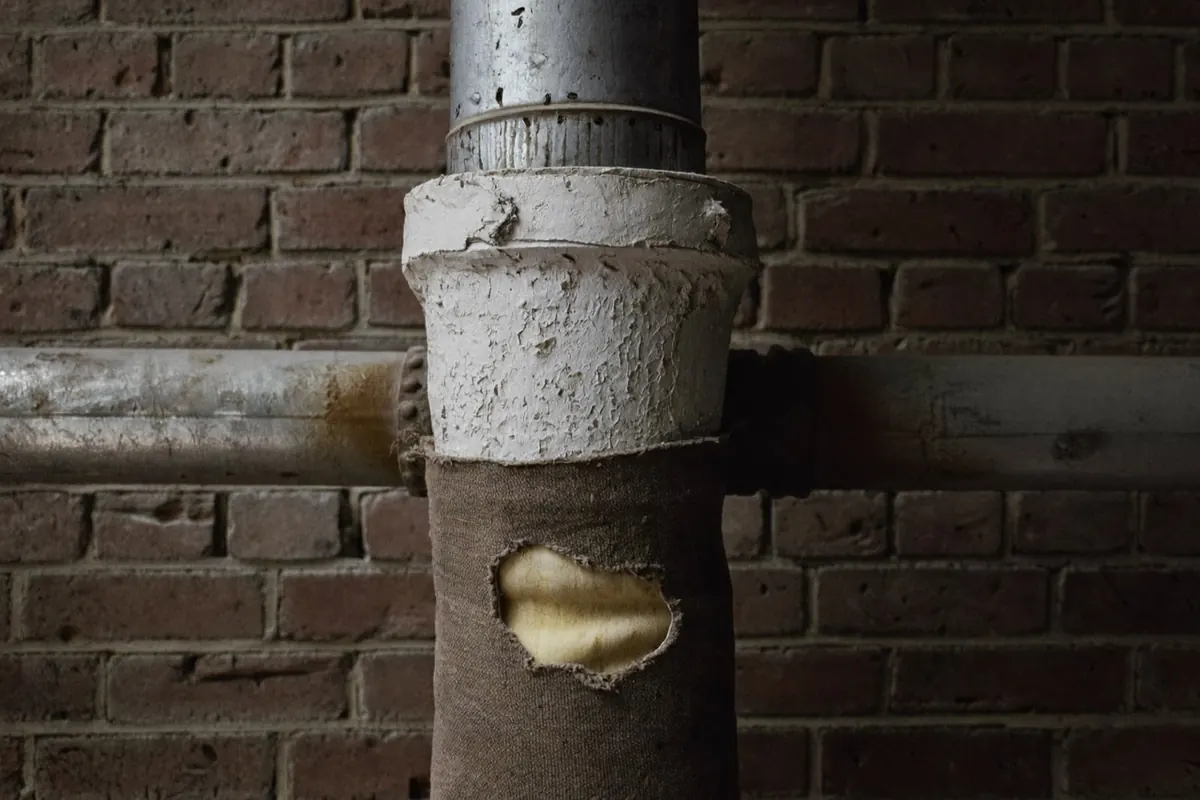
The damage test is written for jacketed pipe. 40 CFR 763.83 calls TSI damaged when it “has lost its structural integrity, or its covering, in whole or in part, is crushed, water-stained, gouged, punctured, missing, or not intact such that it is not able to contain fibers.” Water staining is in that list, so a leak that soaks lagging belongs in the next assessment. Outside schools, EPA’s homeowner page notes pipe, furnace and boiler insulation can sometimes be repaired by sealing, and exposed piping covered with a protective wrap or jacket; our asbestos encapsulation page compares those options.
When does TSI also fall under the Asbestos NESHAP’s 260 linear foot rule?
When it is RACM in a covered facility. EPA Region 4 RACM guidance lists steam and hot water pipe coverings and thermal block insulation on boilers and hot water tanks among friable materials, and friable material is RACM under 40 CFR 61.141. A renovation that strips, removes, cuts or drills at least 260 linear feet of RACM on pipes, 160 square feet on other components or 35 cubic feet off components triggers written notice and the wetting, lowering and waste rules in 40 CFR 61.145(b) and (c).
The NESHAP facility definition in 40 CFR 61.141 excludes residential buildings with four or fewer dwelling units, so pipe insulation in a single family house usually meets OSHA and state rules but not the federal NESHAP. Corrugated aircell pipe wrap is one TSI product among many; identification is on our air cell asbestos page, and what older pipe lagging looks like is on our asbestos pipe insulation page.
Out of scope: health effects. This page reads regulations and EPA guidance only; for health information see EPA's homeowner asbestos page and CDC’s Agency for Toxic Substances and Disease Registry.
Questions people actually ask
Is all thermal system insulation asbestos?
No. OSHA presumes it only in buildings constructed no later than 1980, and 40 CFR 763.86(b)(4) lets an AHERA inspector skip sampling where the insulation is fiberglass, foam glass, rubber or other non asbestos material. Paragraph (b)(3) separately requires samples from each mechanical system where cement or plaster is used on fittings such as tees, elbows or valves.
Is duct insulation TSI?
Yes, by the wording of both rules. 29 CFR 1926.1101(b) and 40 CFR 763.83 both list ducts among the components TSI is applied to, so insulation wrapped on ductwork is sampled as TSI in a school survey: at least 3 bulk samples per homogeneous area under 40 CFR 763.86(b), rather than the area based count used for sprayed surfacing.
What is the difference between TSI and surfacing material?
Surfacing material is sprayed, troweled or otherwise applied to surfaces, such as acoustical plaster or fireproofing, per 29 CFR 1926.1101(b); TSI is applied to mechanical components to control heat. OSHA treats both the same for PACM and Class I. AHERA treats them differently: surfacing sample counts scale from 3 to 7 with area, and only surfacing gets the encapsulation option.
Can a building owner leave asbestos TSI in place?
Federal rules allow it if the material is managed. AHERA’s 40 CFR 763.90(e) requires an operations and maintenance program for TSI ACM with potential for damage, and OSHA’s (k)(6) requires signs at mechanical room entrances. EPA’s homeowner page says material in good condition that will not be disturbed is usually best left alone.
Who can take TSI samples that rebut PACM?
Under 29 CFR 1926.1101(k)(5)(ii), sample collection and evaluation must be done by an accredited inspector or a CIH, with analysis by a lab showing current proficiency through NVLAP, a NIST program or the AIHA bulk round robin. Ask the inspector for the homogeneous area list and sample locations, which the AHERA report format records.
Sources
- 29 CFR 1926.1101, OSHA Asbestos standard for construction, paragraphs (b), (g), (h), (i), (j) and (k), via Cornell LII. Retrieved 8 November 2026.
- 29 CFR 1910.1001, OSHA Asbestos standard for general industry, paragraphs (b) and (j), via Cornell LII. Retrieved 8 November 2026.
- 40 CFR 763.83, 40 CFR 763.85, 40 CFR 763.86, 40 CFR 763.87, 40 CFR 763.88 and 40 CFR 763.90, EPA Asbestos Hazard Emergency Response Act rules, 40 CFR Part 763 Subpart E, via Cornell LII. Retrieved 8 November 2026.
- 40 CFR 61.141 and 40 CFR 61.145, EPA Asbestos NESHAP definitions and demolition and renovation standard, via Cornell LII. Retrieved 8 November 2026.
- EPA Region 4 RACM guidance, U.S. EPA Region 4, Asbestos/NESHAP Regulated Asbestos Containing Materials Guidance, read from the Internet Archive copy captured 24 September 2009. Retrieved 8 November 2026.
- EPA's homeowner asbestos page, Protect Your Family from Exposures to Asbestos, U.S. EPA. Retrieved 8 November 2026.
- The rule matrix is compiled from the rule text above. Our methodology sets out the standing rules.
This page reads regulations and EPA guidance; it reports no sampling of its own and is not legal advice. Ask your state asbestos program or OSHA area office whether a state plan rule is stricter, and ask your accredited inspector to list each TSI homogeneous area with its sample results.
More rules pages sit on our standards hub.