The short answer
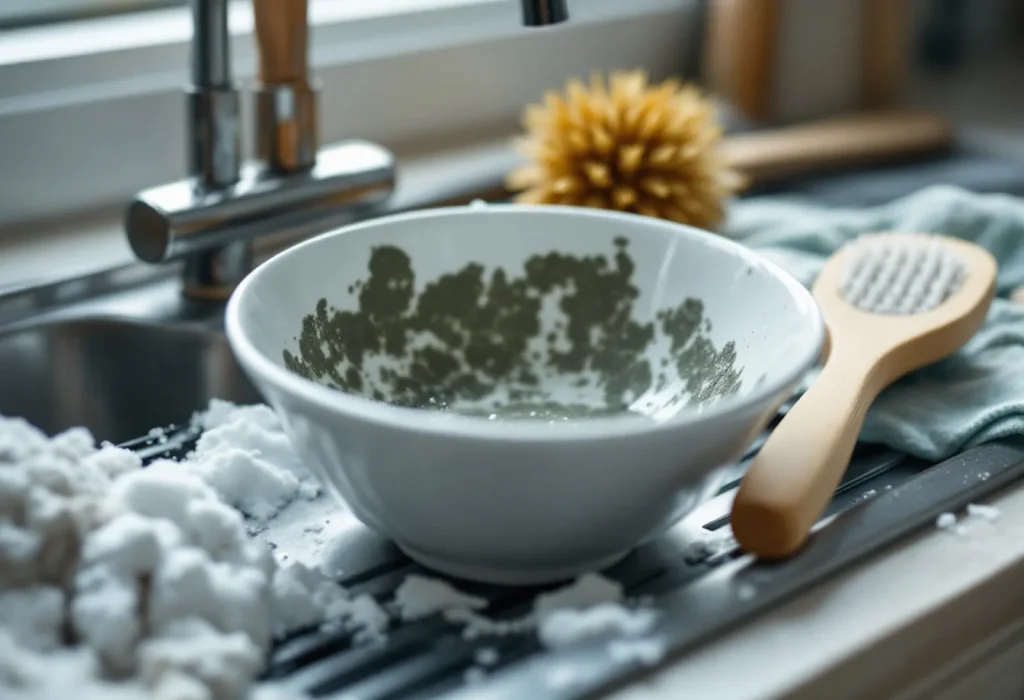
Does dish soap kill mold? It is a cleaner, not an EPA-registered mold killer, and needs no kill claim. EPA’s method for mold on hard surfaces is to scrub it off with detergent and water and dry it within 24 to 48 hours. Removal is the goal, because EPA says dead mold can still cause allergic reactions. Soap fails on porous material such as carpet and drywall.
Key takeaways
- EPA Table 2 lists a detergent damp wipe for nonporous hard surfaces, hard flooring and wood, but not for drywall, carpet, upholstery, books or concrete.
- CDC names dish detergent alongside bleach for household mold cleanup.
- A dish soap with no EPA Reg. No. on its label makes no federally reviewed kill claim; 40 CFR 152.15 requires registration for one.
- Never combine a detergent that contains ammonia with bleach.
If dish soap does not kill mold, why do EPA and CDC tell you to use it?
Because both agencies measure success by what is left on the surface, not by what died. EPA's Brief Guide to mold, last updated 18 February 2026, says to scrub mold off hard surfaces with detergent and water and dry completely. CDC's mold clean-up page says bleach or dish detergent can be used to clean mold in your home, and lists the two side by side.
The reasoning is spelled out in EPA 402-K-01-001, EPA’s 2008 schools and commercial buildings guide: the purpose of remediation is to remove the mold, it is necessary to clean up contamination and not just kill it, and dead mold is still allergenic. The same page says a biocide such as chlorine bleach is not recommended as a routine practice. A background level of spores will remain in the air anyway, roughly equal to or lower than outdoor air, per EPA, and those spores will not grow once the moisture problem is fixed.
So the question “does it kill” is the wrong test for a cleaner on a hard surface. A spray that kills every spore and leaves them in place fails EPA’s goal. A detergent wash that kills none but carries them down the drain meets it, as long as the surface is dried within the 24 to 48 hour window in the EPA Brief Guide.
What does a surfactant do to a water repelling mold spore?
Mold spores are built to shed water. A 2019 review in PLOS Pathogens, Blango, Kniemeyer and Brakhage, PLOS Pathogens, 2019, describes the outer coat of many mold spores: proteins called hydrophobins that “drive hydrophobicity and promote air buoyancy,” with the class I type forming a rodlet layer on the spore surface. Plain water tends to bead on a coat like that rather than lift it.
Detergent is the household tool for exactly that problem. CDC's handwashing science page says washing with soap beats water alone because the surfactants in soap lift soil and microbes from skin, and because people scrub more thoroughly with soap. That page is about hands, not walls, and no peer-reviewed test of dish detergent on hydrophobin-coated mold spores was found for this page. The mechanism EPA relies on is the same pairing of surfactant and friction: Method 2 in Table 2 is a damp wipe with water and detergent, scrubbed as needed.
one ranking page in the current results makes the surfactant point without a source, then tells readers to follow the soap with a disinfectant to kill residual spores, which EPA’s 2008 guide says is not routine practice. The same page calls ammonia a strong mold killer, a claim our mold killer page checks against EPA registrations.
Which surfaces can you wash mold off with dish soap, and which go in the trash?
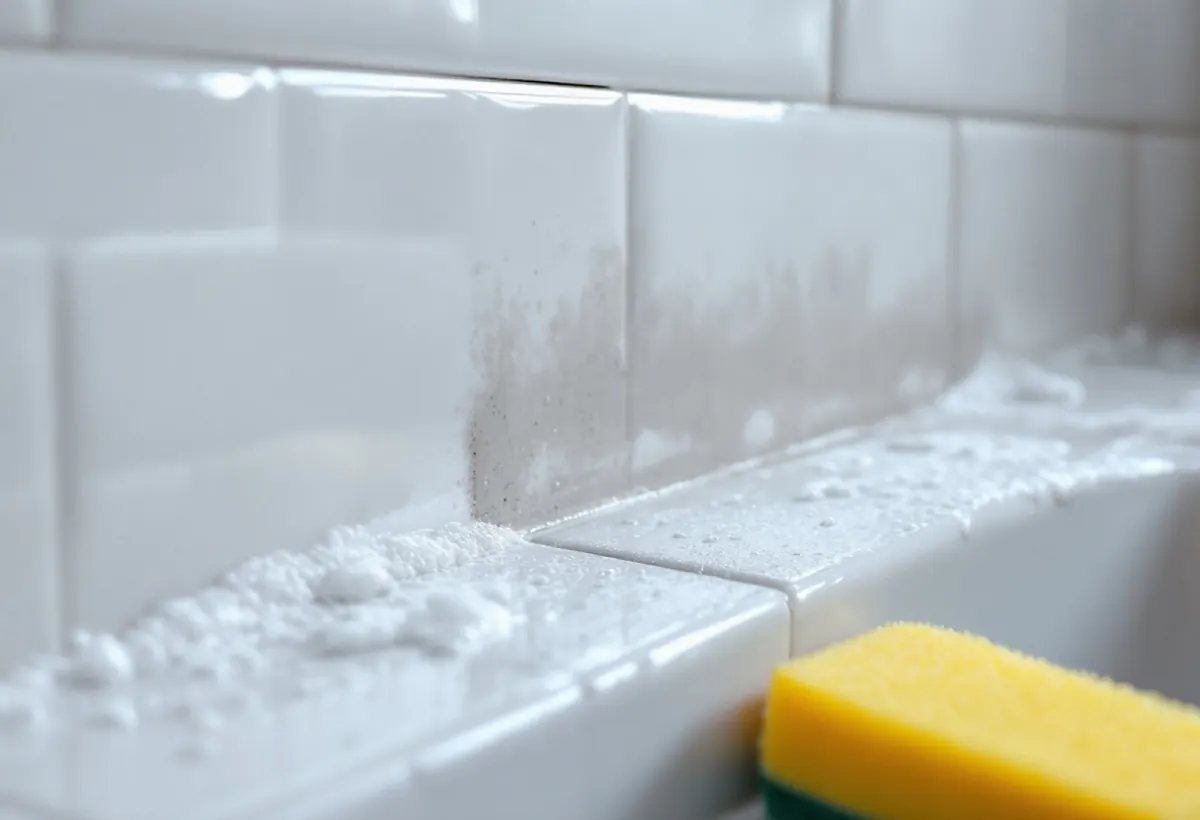
EPA has already answered this, in a table most ranking pages never cite. Table 2 of EPA 402-K-01-001 assigns cleanup methods by material for jobs under 10 square feet: Method 1 is a wet vacuum, Method 2 a damp wipe with water and detergent, Method 3 a HEPA vacuum after drying, and Method 4 discard. Read across the Method 2 column and the answer to the soap question falls out material by material.
| Surface | EPA methods, under 10 sq ft | Does a detergent wash do the job? | When to discard |
|---|---|---|---|
| Glass, glazed dishes, metal, plastic (EPA: nonporous hard surfaces) | 1, 2, 3 | Yes. Damp wipe with water and detergent, scrub, dry | Not listed for discard at any size |
| Ceramic tile, vinyl, linoleum (EPA: hard surface, porous flooring) | 1, 2, 3 | Yes, and check the underflooring is dry (Table 1) | Method 4 appears only above 100 sq ft |
| Finished wood: trim, furniture, floors | 1, 2, 3 | Yes with mild detergent (Table 1); Method 2 note says use wood floor cleaner on wood | Method 4 appears only above 100 sq ft |
| Painted drywall, gypsum board | 3 | No. Table 2 lists only a HEPA vacuum after drying | Method 4 from 10 sq ft upward |
| Carpet and backing | 1, 3 | No. Wet vacuum, dry, then HEPA vacuum | Method 4 from 10 sq ft upward; EPA home page: may have to go |
| Upholstered furniture, drapes | 1, 3 | No. Wet vacuum, dry, then HEPA vacuum | Method 4 from 10 sq ft upward |
| Concrete, cinder block | 1, 3 | No damp wipe listed. Wet vacuum, dry, HEPA vacuum | Not listed for discard |
| Books and papers | 3 | No. HEPA vacuum only | Table 1: discard non-valuable items once wet |
| Fridge shelves and door gaskets (USDA) | Not in EPA table | Baking soda wash, 1 tablespoon per quart, rinse, dry; visible mold on rubber: 3 teaspoons bleach per quart | Not listed |
| Dishcloths, sponges, mops (USDA) | Not in EPA table | Launder if possible | Discard items you cannot clean or launder |
Two rows surprise most readers. Painted drywall gets no damp-wipe method at any size in Table 2, because gypsum is porous under the paint, and chapter 3 of EPA's schools and commercial buildings guide warns that mold infiltrates porous materials and can be difficult or impossible to remove completely. Concrete also gets no Method 2, only a wet vacuum and a HEPA vacuum. Glazed ceramic, glass and metal are the easy cases.
Size changes the plan more than the soap does. Above 10 square feet, per EPA's Mold Cleanup in Your Home page, EPA no longer treats the job as a routine homeowner cleanup, and Table 2 adds limited containment from 10 to 100 square feet and full containment above 100. Our DIY mold remediation page covers where that line sits for a homeowner.
Is Dawn or any other dish soap labelled to kill mold?
Not as a dish soap. Under 40 CFR 152.15, a product whose seller claims, states or implies it can be used as a pesticide must be registered with EPA, and a mold kill claim is that kind of claim. A registered product prints an EPA Reg. No. on the label with directions naming mold or mildew and the surfaces covered. A bottle without that number has no federally reviewed kill claim, whatever the brand.
The practical check takes one look at the back panel. If there is no EPA registration number, the product is a cleaner, which is what EPA's Brief Guide to mold asks for on hard surfaces. If a registered mold product is wanted, compare labels on our mold killer page, and use it only on the surfaces its label names. A YouTube clip in the current results asks whether Dawn kills mold, and the label is the only document that can answer it.
How do you wash mold off tile or glass with dish soap, step by step?
- Fix the water source first. EPA's bleach and mold page says spores that remain will not grow once the moisture problem is resolved.
- Wear gloves, an N-95 respirator and goggles without vent holes, the minimum in EPA 402-K-01-001. With a mild detergent or plain water, the guide says ordinary household rubber gloves may be used.
- Scrub the surface with water and detergent, per Method 2, using a brush on grout.
- Rinse with clean water and wipe the residue away rather than leaving it to dry in place.
- Dry quickly and thoroughly. chapter 3 of EPA's schools and commercial buildings guide says fast drying discourages further growth, and the Brief Guide sets 24 to 48 hours for water-damaged items.
- Do not paint or caulk over the patch. EPA's Mold Cleanup in Your Home page says paint applied over moldy surfaces is likely to peel.
Bag the sponge or cloth when you finish, or launder it. The USDA Molds on Food text, as reproduced by WSU Extension warns that mold spores build up in dishcloths and cleaning utensils and says to discard items you cannot clean or launder.
Can you wash and reuse a moldy plate, jar or food container?
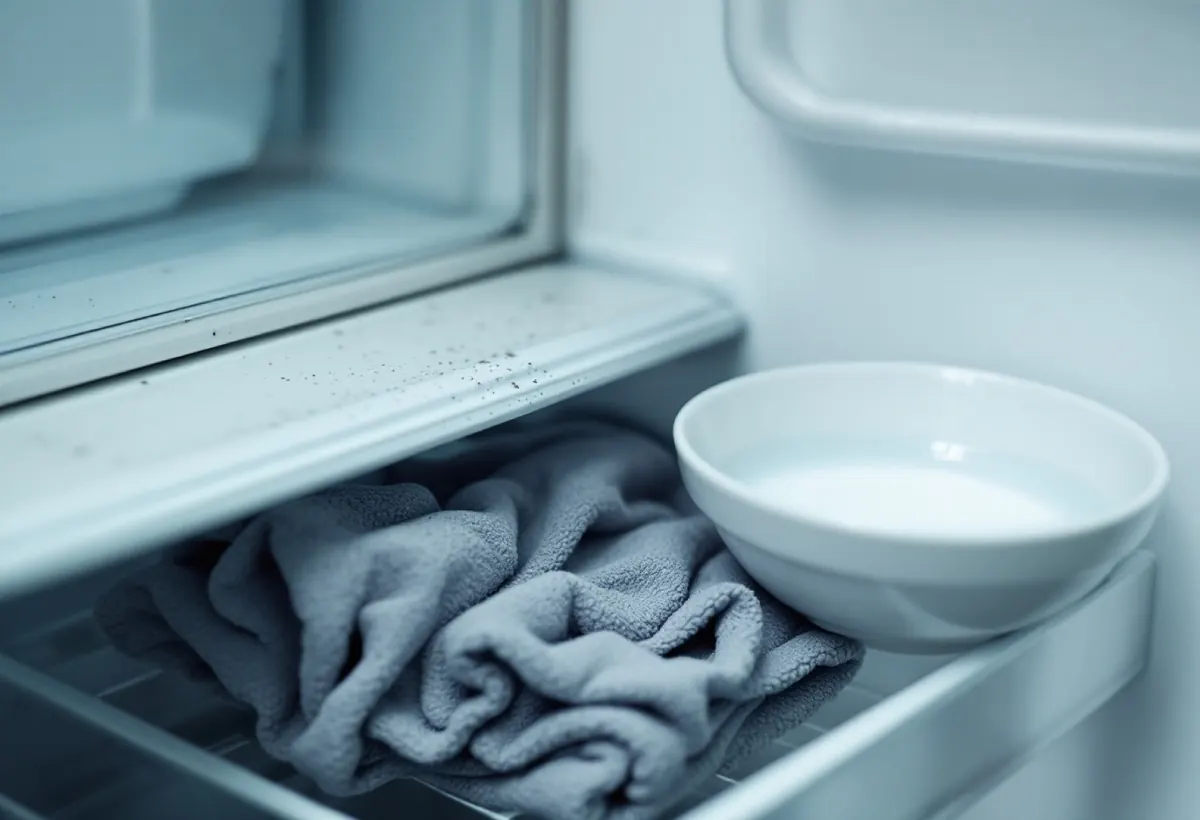
The dish, yes, if it is glass, glazed ceramic or metal, the kind of nonporous hard surface EPA 402-K-01-001 lists with plastics and metals, where a detergent wash and drying is the listed method. The food goes. The USDA Molds on Food text, as reproduced by WSU Extension lists soft cheese, yogurt and sour cream, jams and jellies, bread and baked goods, soft fruits and vegetables, leftovers and peanut butter as discard items when moldy, because moist or porous foods can be contaminated below the surface.
Then clean where the food sat. The same USDA text says to clean the refrigerator or pantry at the spot where the food was stored, check nearby items it touched, wash the fridge inside every few months with 1 tablespoon of baking soda per quart of water, and scrub visible mold on rubber casings with 3 teaspoons of bleach per quart. Gaskets and shelves are covered on our mold in refrigerator page, and a machine that smells after a cycle is covered on our mold in dishwasher page.
Does dish soap work better mixed with vinegar or bleach?
Mixing adds hazard faster than it adds results. With bleach, the risk is ammonia: EPA 402-K-01-001 says never mix chlorine bleach solution with cleaning solutions or detergents that contain ammonia, because toxic fumes could be produced. Wash with detergent, rinse, and only then use a bleach step on hard surfaces if one is wanted. Which acids and cleaners turn bleach into chlorine gas is set out on our bleach and vinegar page.
Vinegar with dish soap is the popular home recipe, and neither ingredient carries a registered mold claim as sold for the kitchen under 40 CFR 152.15. What vinegar does on its own, and where it damages stone, is on our does vinegar kill mold page. Bleach on porous materials is covered on our does bleach kill mold page.
Out of scope: this page covers cleaning methods and surfaces. For mold and health questions, start with CDC's mold clean-up page or EPA.
Questions people actually ask
Does Dawn dish soap kill fungus?
Not by any label claim. Under 40 CFR 152.15, a product sold with a claim to kill a pest such as mold must carry an EPA registration number, so check the back panel: without one, there is no reviewed kill claim. It works on mold the way EPA asks: as a detergent that lifts growth off hard surfaces during scrubbing so it can be rinsed away and the surface dried.
What is the best household item to kill mold?
EPA’s answer is detergent and water on hard surfaces, followed by fast drying, because removal matters more than killing. Its 2008 guide says a biocide such as bleach is not routine practice. If a kill step is wanted on a hard, nonporous surface, use a product with an EPA registration number and follow its contact time; CDC caps household bleach at 1 cup per gallon.
Will mold come back after washing it off with soap?
It will if the surface stays wet. EPA says the spores that remain after cleanup will not grow once the moisture problem is resolved, and its Brief Guide sets a 24 to 48 hour window to dry water-damaged areas. USDA’s food-safety text adds a target of indoor humidity below 40 percent where practical. Soap removes the growth; drying stops the next round.
Can you use dish soap on mold on a wood surface?
On finished wood, yes. EPA Table 1 says treated or finished wood may be cleaned with mild detergent and clean water and allowed to dry, though the Table 2 Method 2 note says to use a wood floor cleaner on wood. Table 2 adds discard as an option for wood only above 100 square feet of growth.
Does laundry detergent remove mold from fabric?
EPA treats drapes as launderable and says to follow the maker’s laundering or cleaning instructions in Table 1 of its 2008 guide. Moldy upholstery is different: Table 2 lists only a wet vacuum and a HEPA vacuum under 10 square feet, with discard as an option from 10 square feet upward. USDA’s text says to discard any cleaning cloth you cannot launder.
Sources
- EPA 402-K-01-001, Mold Remediation in Schools and Commercial Buildings, US EPA, September 2008 PDF, Tables 1 and 2 and Cleanup Methods. Retrieved 9 November 2026.
- chapter 3 of EPA's schools and commercial buildings guide, US EPA web edition, last updated 29 April 2026. Retrieved 9 November 2026.
- EPA's Brief Guide to mold, A Brief Guide to Mold, Moisture and Your Home, US EPA, last updated 18 February 2026. Retrieved 9 November 2026.
- EPA's Mold Cleanup in Your Home page, Mold Cleanup in Your Home, US EPA, last updated 4 June 2026. Retrieved 9 November 2026.
- EPA's bleach and mold page, Should I use bleach to clean up mold?, US EPA, last updated 8 September 2026. Retrieved 9 November 2026.
- CDC's mold clean-up page, Mold Clean Up Guidelines and Recommendations, US CDC, dated 16 February 2024. Retrieved 9 November 2026.
- CDC's handwashing science page, Show Me the Science: How to Wash Your Hands, US CDC. Retrieved 9 November 2026.
- Blango, Kniemeyer and Brakhage, PLOS Pathogens, 2019, Conidial surface proteins at the interface of fungal infections, PLOS Pathogens, 12 September 2019, doi:10.1371/journal.ppat.1007939. Retrieved 9 November 2026.
- USDA Molds on Food text, as reproduced by WSU Extension, Molds on Food, WSU Extension Lewis County handout reproducing USDA FSIS text. The FSIS originals refused automated access. Retrieved 9 November 2026.
- 40 CFR 152.15, Pesticides requiring registration, Legal Information Institute, Cornell Law School. Retrieved 9 November 2026.
- one ranking page, What Kills Mold? A List of Effective Household Cleaners, Green Orchard Group, read as a ranking page. Retrieved 9 November 2026.
- The surface matrix is our transcription of EPA’s published tables. Our methodology sets out the standing rules, and more mold pages are on the mold hub.
Follow the label of any product you use, and treat large or porous growth by EPA’s size guidance.