The short answer
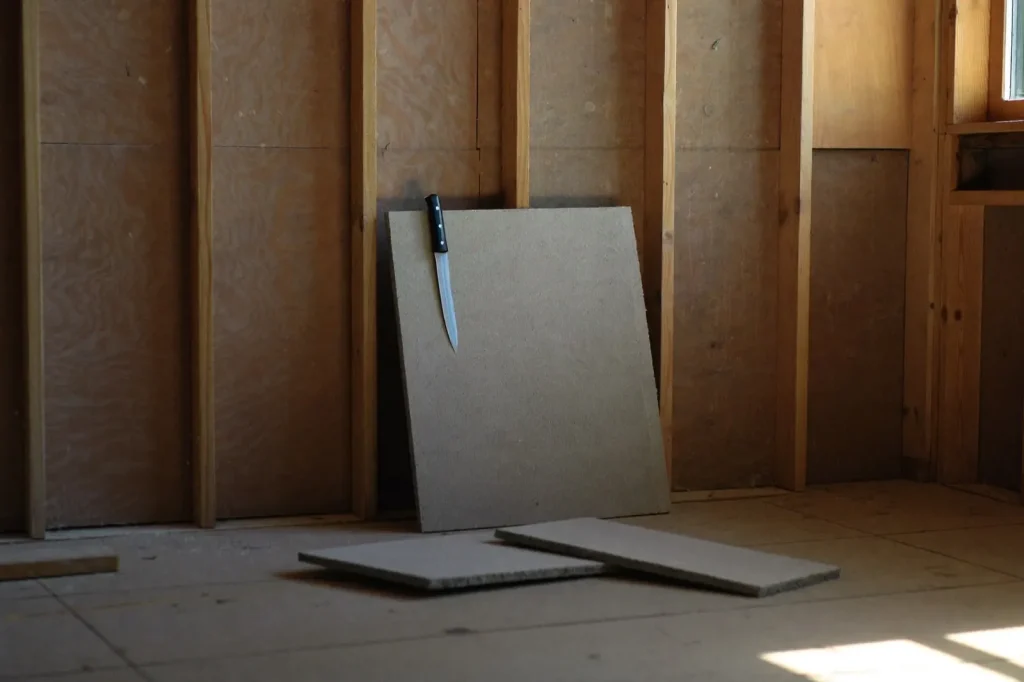
A manufactured without asbestos stamp is the maker’s own statement that no asbestos was added to that product. No federal rule defines the phrase: EPA’s labelling rule at 40 CFR 763.171 covers products that contain asbestos, and the FTC’s free-of guidance is not binding. The stamp supports a decision about the stamped piece, not the material around it.
Does any federal rule define “manufactured without asbestos”?
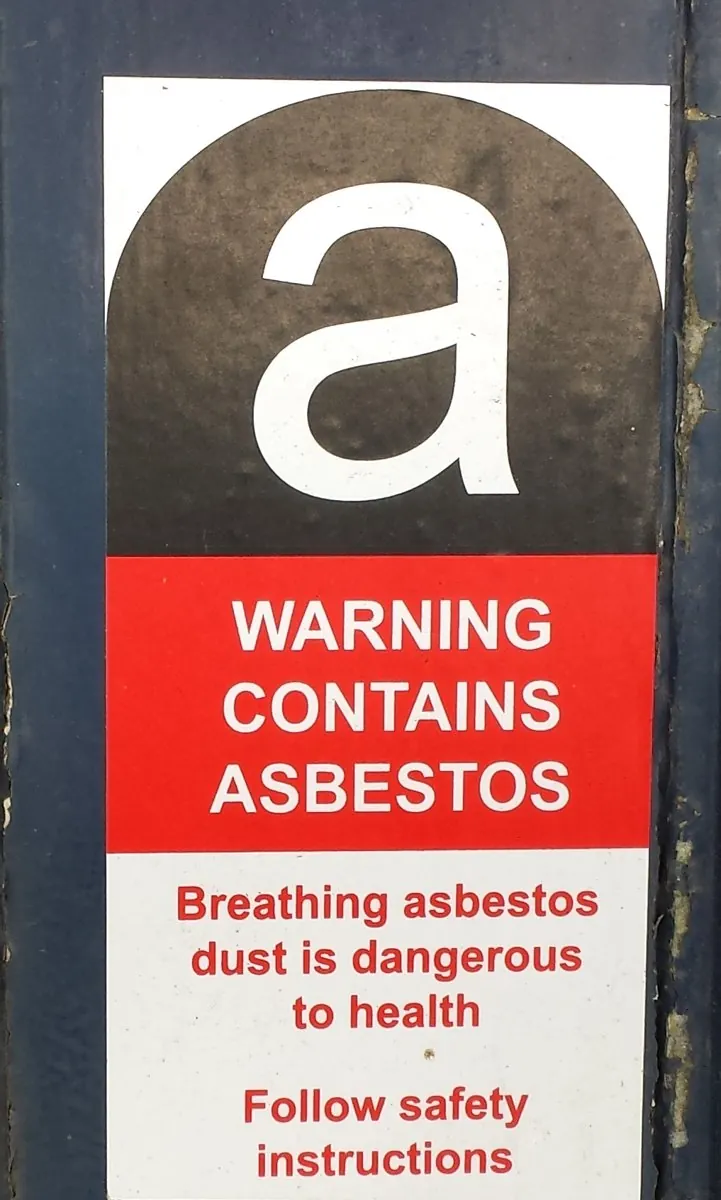
No. Every federal asbestos labelling rule read for this page points the other way. Under {CFR171}, makers of the five banned paper and felt products had to print “NOTICE This product contains ASBESTOS” on a label at least 6 inches on each side, and {OSHA} paragraph (k)(8) requires labels on products and containers that contain asbestos. Neither says what a product must meet to be called asbestos free.
| Agency | Rule | What it governs | Defines an asbestos free claim? |
|---|---|---|---|
| EPA, TSCA | 40 CFR part 763 subpart I | Labels for banned asbestos products: “NOTICE This product contains ASBESTOS” | No |
| OSHA | OSHA 29 CFR 1926.1101 (k)(8) | Labels on products and containers that contain asbestos | No |
| FTC | 16 CFR 260.9 | Free-of claims in environmental marketing, any substance | Indirectly; guidance only |
| CPSC | 16 CFR part 1304 and 16 CFR part 1305 | Bans on patching compounds and fireplace embers with respirable asbestos (1977) | No |
| Washington State | chapter 70A.340 RCW | Brake friction material: 0.1 percent asbestiform fibres, marked proof of certification | Yes, for brakes |
The closest federal text is the FTC’s Green Guides. 16 CFR 260.9 says it is deceptive to misrepresent that a product is free of a substance, and that a free-of claim can stand despite a trace amount only if the substance was not added intentionally and causes no material harm consumers associate with it. But 16 CFR 260.1 says the guides “do not confer any rights on any person and do not operate to bind the FTC or the public”, and they cover environmental claims, not asbestos by name.
CPSC’s asbestos rules are product bans, not labels: 16 CFR part 1304 banned consumer patching compounds with intentionally added respirable free-form asbestos, and 16 CFR part 1305 banned artificial fireplace embers containing it, both published 15 December 1977. The only regime read for this page that ties a marking to a measured asbestos limit is Washington State’s brake law.
Which no-asbestos markings exist, and what does each one prove?
Six markings turn up on products and paperwork, and they carry very different weight. The table reads each one from the rule or maker document behind it, and the last row is the lab report that OSHA 29 CFR 1926.1101 accepts in place of a presumption.
| Marking | Where it appears | Maker or standard behind it | What it proves | What it does not prove |
|---|---|---|---|---|
| “Manufactured without asbestos” or “asbestos free” printed on the product | Boards, panels, tiles, gaskets, packaging | The maker; no federal definition | The maker says it added no asbestos to that product | No threshold; says nothing about mastic, compound, patches or other layers |
| “NT” in a fibre cement product code | Fibre cement flat sheet (EN 12467 family) | Eternit, per DIBt ETA-18/0955 (27 March 2020) | The maker classes the sheet as Non-asbestos Technology | An unmarked offcut, an older sheet beside it, or a repair |
| LeafMark, one to three leaves | Brake pads and their packaging | Brake Manufacturers Council; Washington RCW 70A.340 | Level A: asbestos 0.1 percent or less by weight (pads made from 1 January 2015) | Drums, clutches, or pads made before 2015 |
| “NOTICE This product contains ASBESTOS” | Flooring felt, corrugated, commercial and specialty paper, rollboard | EPA, 40 CFR 763.171 | The product contains asbestos and is banned from distribution | Its absence proves nothing; it applied only to those five products |
| “DANGER CONTAINS ASBESTOS FIBERS” | Asbestos products, waste and debris containers | OSHA, 29 CFR 1926.1101(k)(8) | Asbestos is present | Its absence proves nothing; installed products are labelled only where feasible |
| Lab report: PLM bulk analysis | Any sampled material | AHERA, 40 CFR 763.86 and 763.87 | Percent and fibre type in that homogeneous area | Areas that were not sampled |

The no-threshold problem matters. EPA’s own definition at 40 CFR 763.163 counts a product as asbestos containing if asbestos was deliberately added in any concentration or it holds more than 1.0 percent by weight or area. A free claim with no stated test method could mean either nothing added or under 1 percent, and the stamp does not say which. Our page on asbestos containing material covers the thresholds.
Why does a stamp matter on cement sheet, but not on a 1985 pipe wrap?
A no-asbestos stamp only means something where an asbestos version of the same product existed. Appendix A of the EPA's 1985 Purple Book (EPA 560/5-85-024) lists asbestos cement flat sheet at 40 to 50 percent, corrugated sheet at 20 to 45 percent and siding shingles at 12 to 14 percent, all still in use in June 1985. Those are the boards that later carried no-asbestos markings.
Against the rules, the lowest of those figures, 10 percent for roofing felt, is 10 times EPA’s 1 percent line in 40 CFR 763.163 and 100 times Washington’s 0.1 percent brake limit. That is why a legible stamp on asbestos cement siding is useful: it separates two products that looked the same but differed by double digit percentages. More on the older product is on our asbestos siding page.
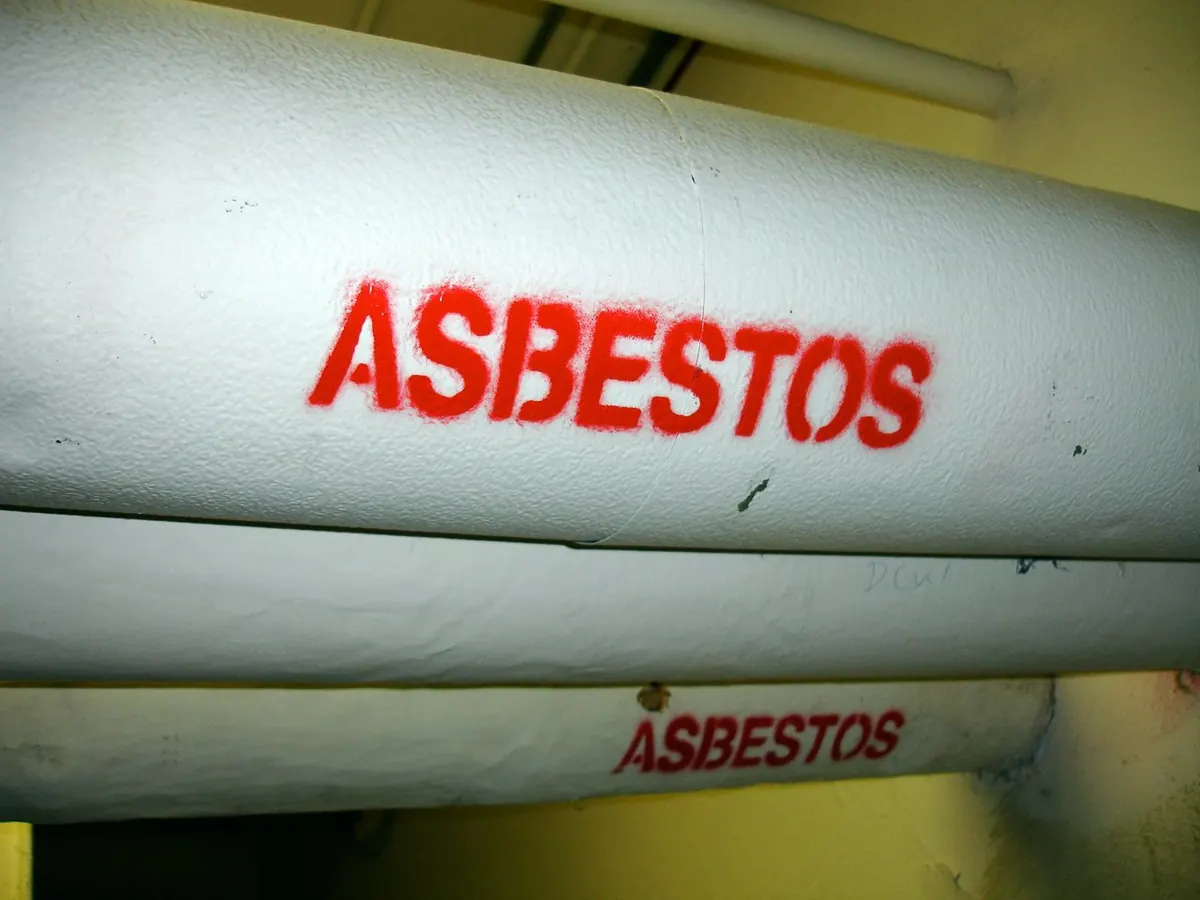
Cement products did not drop out of the US market by law in the 1980s. Per EPA's asbestos actions page, most of EPA’s 1989 ban was overturned in 1991, and the products that stayed banned were five paper and felt products plus new uses; cement products now appear on the list EPA’s April 2019 rule keeps from returning without EPA review. Products made before any marking existed, such as the air cell asbestos pipe wrap banned from manufacture in 1996, never carried a stamp to read.
Can a stamp rebut OSHA’s presumption for insulation from 1980 or earlier?
Not by itself. OSHA 29 CFR 1926.1101 defines presumed asbestos containing material, PACM, as thermal system insulation and surfacing material in buildings constructed no later than 1980, and paragraph (k)(5)(ii) lists two ways to rebut it: a completed AHERA inspection showing the material is not ACM, or bulk samples collected per 40 CFR 763.86 and analysed by a lab in a program such as NVLAP. A printed claim is not on that list.
Flooring has its own rule. Under OSHA 29 CFR 1926.1101 paragraph (g)(8)(i)(I), resilient flooring with its mastic and backing is assumed to be asbestos containing unless an industrial hygienist determines otherwise using recognized analytical techniques. For other materials there is no date-based presumption, but paragraph (k)(1) says owners and employers must treat a material as asbestos containing if they knew, or should have known through due diligence, that it is.

Commercial work adds a second layer. 40 CFR 61.145 paragraph (a) requires the owner or operator of a regulated renovation or demolition to thoroughly inspect the affected part of the facility for asbestos, including Category I and II nonfriable ACM, before work starts. 40 CFR 61.141 excludes residential buildings with four or fewer dwelling units from that facility definition. How a full survey samples each material is on our asbestos survey page.
What does “NT” mean on fibre cement board?
NT is a maker’s classification, documented in at least one official assessment. The DIBt European Technical Assessment ETA-18/0955, issued 27 March 2020 for Eternit GmbH’s EQUITONE and Elementa sheets, places them in the family of fibre cement flat sheet according to EN 12467 and states: “The fibre-cement flat sheets are type NT (Non-asbestos Technology).” That is a maker and assessment body statement about those named products.
Read NT the same way as any stamp. It tells you what the maker classed the sheet as when it left the plant, so it settles the marked sheet, not an adjacent older panel or a patch in a wall built in phases. EPA's homeowner guidance is clear that you generally cannot tell asbestos by looking unless the material is labelled, so a legible NT code on the exact sheet is one of the few cases where the label does the work. Interior boards raise a separate question about joint compound, covered on our asbestos in drywall page.
Do brake pads and gaskets made after November 2024 still need a stamp?
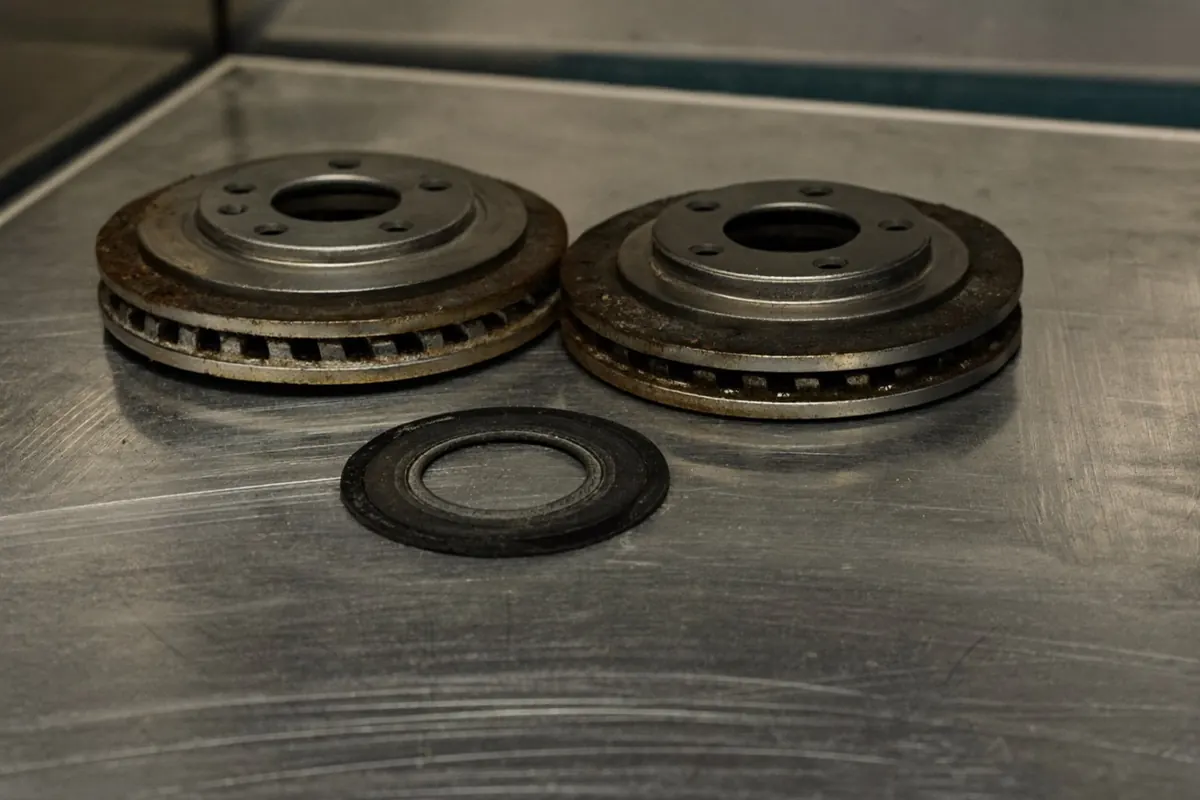
Federal law now does more than any stamp. Under 40 CFR 751.509 paragraphs (d) and (e), after 25 November 2024 no one may manufacture, import, process or distribute chrysotile asbestos for aftermarket automotive brakes and linings, other vehicle friction products, oilfield brake blocks or other gaskets, with sheet gaskets for chemical production following after 27 May 2026 under paragraph (a). Parts already installed on 25 November 2024 are not swept up by the distribution ban.
Washington got there first for brakes. chapter 70A.340 RCW limits brake friction material to 0.1 percent asbestiform fibres by weight, and section 70A.340.080 required marked proof of certification, including the manufacture date, on pads and packaging by 1 January 2015. Per Washington Department of Ecology, the Brake Manufacturers Council adopted the LeafMark: one leaf, Level A, means asbestos, cadmium, chromium, lead and mercury are limited under the 2015 requirements, and pads made after 1 January 2015 must hold 0.1 percent or less of asbestos by weight.
So the useful reading of an old part is the date, not the words. A pad marked with a post 2015 manufacture date and a leaf falls under a measured limit; an unmarked drum shoe or clutch plate from a 1970s vehicle does not, and no stamp on its replacement says anything about the part that came off. Vehicle work itself sits outside this site’s building focus; the rule text is in asbestos regulations.
For contractors: what to keep in the file when you rely on a stamp
Treat a stamp as a record, not a clearance. Where OSHA 29 CFR 1926.1101 lets an owner or employer rebut PACM, paragraph (k)(5)(i) requires that “the information, data and analysis supporting the determination” be retained under paragraph (n). The same habit protects you on materials with no presumption, because (k)(1) turns on what you should have known.
- A dated photo of the stamp on the exact piece, with a scale, before any cutting starts.
- The product name, maker and manufacture date if printed, plus the maker’s written declaration or technical document for that product line, such as an ETA or data sheet.
- A note of every layer the stamp does not cover: mastic, joint compound, backing, older patches. Under 40 CFR 763.86 each homogeneous area is sampled on its own.
- For any pre-1981 thermal system insulation or surfacing, the AHERA inspection or bulk results that paragraph (k)(5)(ii) requires; no stamp substitutes.
When the stamp is missing, worn or only on the packaging, sample. Under 40 CFR 763.87, one sample over 1 percent makes a homogeneous area ACM, while calling it clean needs every required sample at 1 percent or less. Published lab prices are compared on our asbestos testing cost page, and the wider rule set sits under standards.
Questions people actually ask
Does asbestos free mean zero asbestos?
Not necessarily. No federal rule sets a threshold for the words. The FTC’s 16 CFR 260.9 allows a free-of claim despite a trace amount if the substance was not added intentionally, EPA’s 40 CFR 763.163 draws its line at deliberate addition or more than 1.0 percent, and Washington’s brake law uses 0.1 percent. Ask the maker which test method and limit stand behind the claim.
Does an asbestos free stamp on drywall cover the joint compound?
No. The stamp speaks for the board it is printed on. Joint and patching compound was a separate product: CPSC’s 16 CFR part 1304 banned consumer patching compounds with intentionally added respirable asbestos from December 1977, and did not reach products labelled and sold solely for industrial use. Under 40 CFR 763.86 an inspector samples each homogeneous material separately.
What does EPA’s asbestos NOTICE label look like?
Under 40 CFR 763.171, it is block letters in a contrasting colour, at least 6 inches on each side where packaging allows, reading “NOTICE This product contains ASBESTOS” followed by the date its distribution became illegal. It applied to flooring felt from 27 August 1990 and to commercial, corrugated and specialty paper and rollboard from 25 August 1995, and may not be removed or defaced.
Can an asbestos survey clear a material on its stamp alone?
Under AHERA, no. 40 CFR 763.86 has the accredited inspector either assume a suspect material is ACM or collect bulk samples from each homogeneous area, and 40 CFR 763.87 clears an area only when every required sample reads 1 percent or less. The one visual exception is insulation the inspector determines is fiberglass, foam glass or rubber.
Is a 1980s product without any stamp likely to contain asbestos?
It cannot be assumed either way. EPA’s 1985 guide still listed asbestos cement sheet, shingles and roofing felt as in use, and most of EPA’s 1989 ban was overturned in 1991. EPA’s homeowner guidance says that if in doubt, treat the material as asbestos and leave it alone, and have a trained and accredited professional take any sample.
Sources
- US EPA, 40 CFR part 763 subpart I, including 40 CFR 763.163 and 40 CFR 763.171, eCFR.
- US Department of Labor, OSHA 29 CFR 1926.1101, asbestos in construction, paragraphs (b), (g)(8), (k)(1), (k)(5) and (k)(8), eCFR.
- Federal Trade Commission, 16 CFR 260.1 and 16 CFR 260.9, Guides for the Use of Environmental Marketing Claims, eCFR.
- US Consumer Product Safety Commission, 16 CFR part 1304 and 16 CFR part 1305, 42 FR 63362 and 63364 (15 December 1977), eCFR.
- US EPA, 40 CFR 751.509, chrysotile asbestos risk management rule, 89 FR 22005 (28 March 2024), eCFR.
- Washington State Legislature, chapter 70A.340 RCW, brake friction material.
- Washington Department of Ecology, Better Brakes Law page.
- Deutsches Institut fur Bautechnik, DIBt European Technical Assessment ETA-18/0955, 27 March 2020, English translation.
- US EPA, EPA's 1985 Purple Book (EPA 560/5-85-024), June 1985, Appendix A.
- US EPA, EPA's asbestos actions page (last updated 21 January 2026) and EPA's homeowner guidance (last updated 25 June 2026).
- US EPA, 40 CFR 61.141 and 40 CFR 61.145, asbestos NESHAP, eCFR.
- US EPA, 40 CFR 763.86 and 40 CFR 763.87, AHERA sampling and analysis, eCFR.
- All retrieved 8 November 2026. See our methodology for how we read regulations and maker documents.
This page summarises published rules and maker documents and is not legal advice. State and local asbestos rules can be stricter; check them before relying on any marking.