The short answer
Mold in coffee maker reservoirs is common: according to NSF International, yeast or mold was found in the reservoir in 50% of the 22 homes it swabbed in 2011. Wash the removable parts with soapy water, run the descaler or vinegar mix printed in your machine’s manual, and replace the brewer if growth sits in a sealed tank or tube you cannot reach.
Where does mold grow in a drip maker, a pod brewer and a capsule espresso machine?
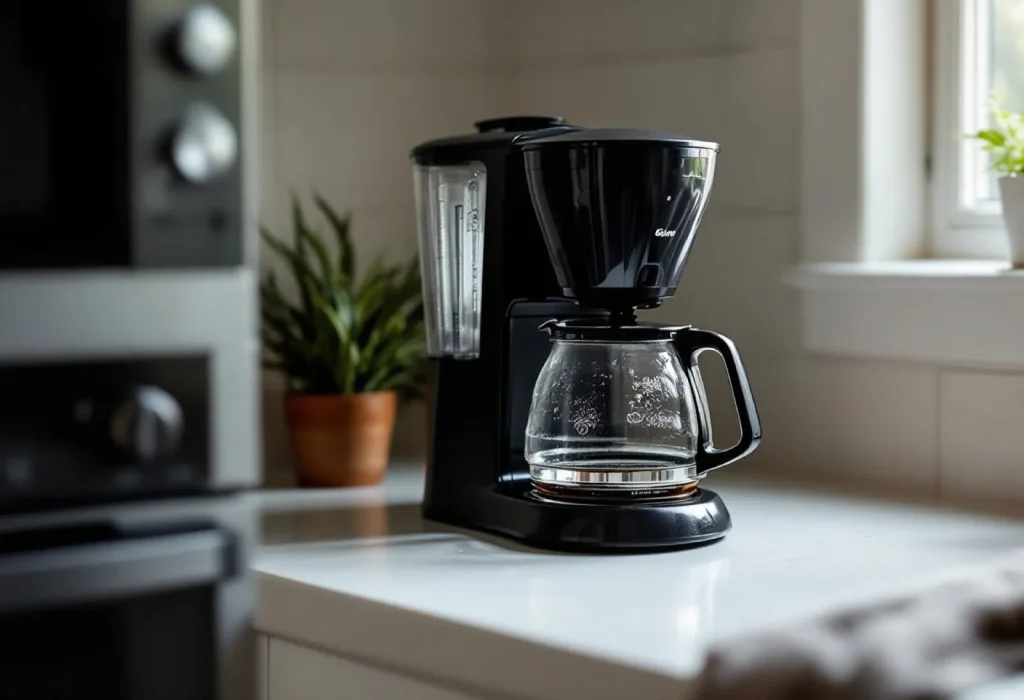
Every zone that grows mold in a coffee maker has the same profile: water or wet grounds that sit for hours in a closed, dark part. The diagram marks eight of them, and the table below maps ten parts to what the maker’s own manual says to do, drawn from the Keurig K90 use and care guide, the Cuisinart DCC-3200 instruction booklet, the Mr. Coffee ESX20 manual and Nespresso’s guides.
| Part | Why it molds | What the maker prints | How often | Source |
|---|---|---|---|---|
| Water reservoir, drip maker | Holds water between brews in a dark, closed column | Mr. Coffee: 32 fl oz undiluted white vinegar or its own cleaner; Cuisinart: fill with 1/3 white vinegar and 2/3 water | Every 80 brew cycles (soft water) or 40 (hard water); Cuisinart: when the CLEAN light shows | Mr. Coffee ESX20 manual; Cuisinart DCC-3200 instruction booklet |
| Water tank and lid, pod brewer | Removable but often refilled without emptying | Keurig: damp, soapy, non abrasive cloth, rinse well; not in the dishwasher; do not dry the inside with a cloth because lint stays | Keurig: periodically | Keurig K90 use and care guide |
| Tank filter screen, pod brewer | Fine mesh at the tank outlet traps residue | Keurig: rinse under the faucet, or add about 2 inches of water and shake, then empty | Keurig: when cleaning the tank | Keurig K90 use and care guide |
| Charcoal water filter | Wet carbon pod sits in the reservoir | Cuisinart: remove before decalcifying | Cuisinart: change every 60 days or 60 uses, sooner with hard water | Cuisinart DCC-3200 instruction booklet |
| Filter basket and shower head | Wet grounds and warm steam after every brew | Cuisinart: warm soapy water or the dishwasher upper rack; dry all parts after use | After use | Cuisinart DCC-3200 instruction booklet |
| Carafe and lid | Coffee film and hard water stain | Cuisinart: soapy water or upper rack; Mr. Coffee: equal parts water and vinegar for about 20 minutes for stains | After use; stains as needed | Cuisinart DCC-3200 instruction booklet; Mr. Coffee ESX20 manual |
| Pod holder, entrance and exit needles | Grounds pack into the needle holes | Keurig: remove the holder and push a straightened paper clip through the exit needle and both entrance needle holes | Keurig: when brewing slows or grounds appear | Keurig K90 use and care guide |
| Inner hot water tank | Stays full and is not user serviceable | Keurig: descaling solution, stand at least 30 minutes, then rinse brews | Keurig: every 3 to 6 months | Keurig K90 use and care guide |
| Drip tray | Collects up to 8 oz of overflow | Keurig: dishwasher top rack or soapy cloth | Keurig: occasionally | Keurig K90 use and care guide |
| Capsule container and drip tray, capsule espresso | Coffee leach pools below the capsule bin | Nespresso: empty and rinse during each descale; the Vertuo Next manual says never put any part in the dishwasher | Nespresso: descale every 3 months or 300 capsules | Nespresso VertuoPlus descaling guide; Nespresso Vertuo Next user manual |
Two zones on the map cannot be reached with a brush. The Keurig K90 use and care guide describes an inner tank that holds water and warns that the brewer is not user serviceable beyond the listed procedures, and the drip makers’ maintenance sections give no way to open the internal water path. Those parts are cleaned only by what flows through them, which is why the descaling step matters more than any scrubbing.
How common is it? NSF swabbed 30 items in 22 homes
The NSF 2011 household germ study summary names the coffee reservoir directly. Microbiologists had 22 volunteer families swab 30 common items. According to the summary, the coffee reservoir tested positive for yeast or mold in 50% of homes, second in the kitchen only to the dish sponge or rag.
Per the NSF table, as a count, 50% of 22 homes is 11 reservoirs, and the 9% coliform figure in the same NSF 2011 household germ study summary is about 2 homes (our arithmetic on the printed percentages). Per the same table, Staph aureus was found in 0% of reservoirs. The sample is small and from 2011, so treat it as proof the reservoir is a habitat, not as a national rate. The current NSF germiest items page still lists sponges and coffee reservoirs among the top 10 germiest household items.
Capsule machines have their own peer reviewed data. A 2015 Scientific Reports study of Nespresso drip trays from the University of Valencia sequenced the coffee leach in the drip tray of 10 Nespresso machines, nine of them used for at least a year, and found 35 to 67 bacterial genera per machine. In a brand new Krups Inissia run in the lab, bacteria colonised the tray within days; species richness dropped 14 days in, and the community kept shifting across the 2 month test. That study counted bacteria, not mold, but it shows the mechanism the diagram marks: a tray of wet coffee left between emptyings is colonised from the first days of use.
What vinegar ratio does each maker print, and which forbid it?
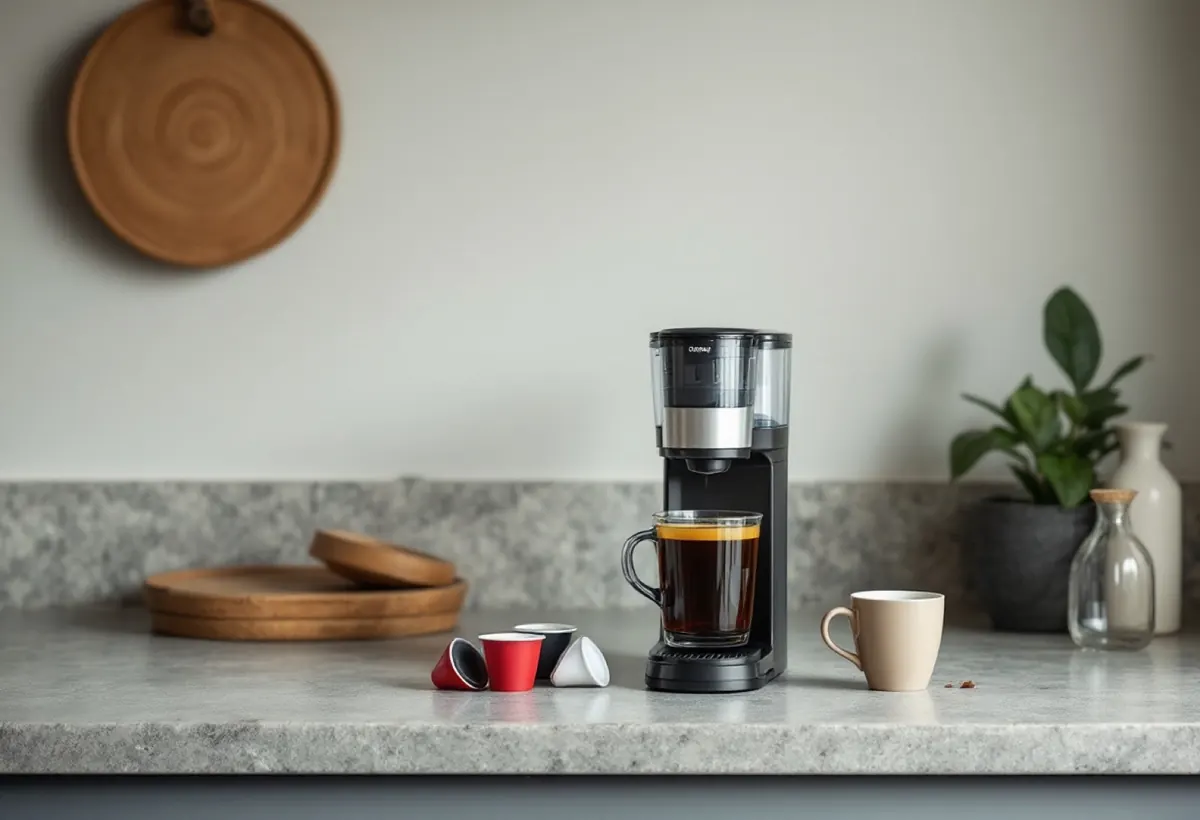
Guides online give one vinegar ratio for every machine. The manuals do not agree. Mr. Coffee prints undiluted vinegar, Cuisinart prints a one third dilution, Keurig’s K90 guide names only its own solution, and Nespresso’s Nespresso VertuoPlus descaling guide says vinegar may damage the machine.
| Machine | What goes in the tank | Cycle as printed | How often | Source |
|---|---|---|---|---|
| Mr. Coffee ESX20 (drip) | Mr. Coffee cleaner, or 32 fl oz undiluted white household vinegar | Brew 3 cups, switch off, stand 30 minutes, run the rest, then fresh water | 80 brew cycles soft water, 40 hard | Mr. Coffee ESX20 manual |
| Cuisinart DCC-3200 (drip) | Full reservoir of 1/3 white vinegar and 2/3 water | CLEAN cycle, repeat if the light returns, then one full reservoir of cold water | When the CLEAN light comes on | Cuisinart DCC-3200 instruction booklet |
| Keurig K90 (pod) | Whole bottle of Keurig Descaling Solution plus one bottle of water | Rinsing brews until ADD WATER, stand at least 30 minutes, then fresh water rinse brews | Every 3 to 6 months | Keurig K90 use and care guide |
| Nespresso Vertuo Pop (capsule) | 17 oz water plus 1 packet of Nespresso descaling solution | Descaling mode, about 20 minutes, then rinse with a full tank | When the button blinks orange 3 times | Nespresso Vertuo Pop descaling guide |
| Nespresso VertuoPlus (capsule) | Nespresso Descaling Kit only; vinegar or store bought descalers may cause damage | Per model guide | Every 3 months or 300 capsules | Nespresso VertuoPlus descaling guide |
| NSF general advice | Up to 4 cups undiluted vinegar | Stand 30 minutes, run through, then 2 to 3 fresh water cycles | Every 40 to 80 brew cycles or at least monthly | NSF cleaning guidance |
The 32 fl oz in the Mr. Coffee manual equals 4 US cups at 8 fl oz per cup, which matches the ‘up to 4 cups’ in the NSF cleaning guidance (our conversion). If your manual is lost, the model number on the base is what to search for on the maker’s support site; using a drip maker ratio in a capsule machine is exactly what the Nespresso guide warns against.
Does running vinegar through it kill the mold, or only remove scale?
Every maker in the table calls the vinegar cycle descaling or decalcification: the Cuisinart DCC-3200 booklet defines it as removing calcium deposits from metal parts, and the Keurig K90 guide says scale is non toxic but hinders performance. None of the six maker documents read for this page describes the cycle as killing mold or bacteria.
The disinfection question sits with EPA. Its EPA answer on household substances states that EPA does not review the effectiveness of common household ingredients like vinegar, and that what it reviews and registers are antimicrobial pesticides, including surface disinfectants. So a vinegar cycle is not an EPA reviewed kill step. What it does do is strip the mineral crust that rough surfaces and biofilm hold onto, and the hot rinse cycles that follow flush loosened material out of the tube.
For a removable part, EPA’s household guidance is mechanical: the EPA brief guide to mold and moisture says to scrub mold off hard surfaces with detergent and water and dry completely. That is the same soapy cloth Keurig prints for its tank. The general question of what vinegar does to mold on other surfaces has its own page: does vinegar kill mold.
Heat is the other lever, but it does not reach every zone. The Keurig K90 use and care guide describes an inner tank that stays filled, while the removable tank, its lid and its filter screen sit outside the brewer’s heating parts. How hot water has to be to matter is covered in does hot water kill mold.
Can you keep using a coffee maker that had mold in it?
It turns on where the growth is, because the manuals only give you access to some parts. A decision path built from the Keurig K90, Cuisinart DCC-3200 and Mr. Coffee ESX20 manuals (our reading of what each part allows):
- Growth only on the carafe, lid, filter basket or drip tray. These parts are removable and the Cuisinart booklet allows the dishwasher upper rack for the basket and carafe. Wash, dry, run one descale cycle and keep the machine.
- Growth on the walls of a removable tank. Scrub with a soapy non abrasive cloth as Keurig prints, rinse the filter screen, then run the descaler and 3 rinsing brews, the number Keurig gives after storage.
- Growth in a fixed reservoir, down the inlet hole, or flakes coming out in the coffee after a full descale. That growth is in the tube or the inner tank, which Keurig calls not user serviceable. No manual read for this page gives a way to reach it: replacing the brewer is the reliable fix.
Food safety questions about coffee or water that sat in a moldy machine belong to USDA: the USDA FSIS guidance on molds explains how molds behave on food and notes that spores build up in cleaning utensils such as dishcloths. Health effects of exposure are outside this page’s scope; the EPA mold guide linked above is the starting point, and a physician answers individual questions.
White flakes in the water tank: scale or mold?
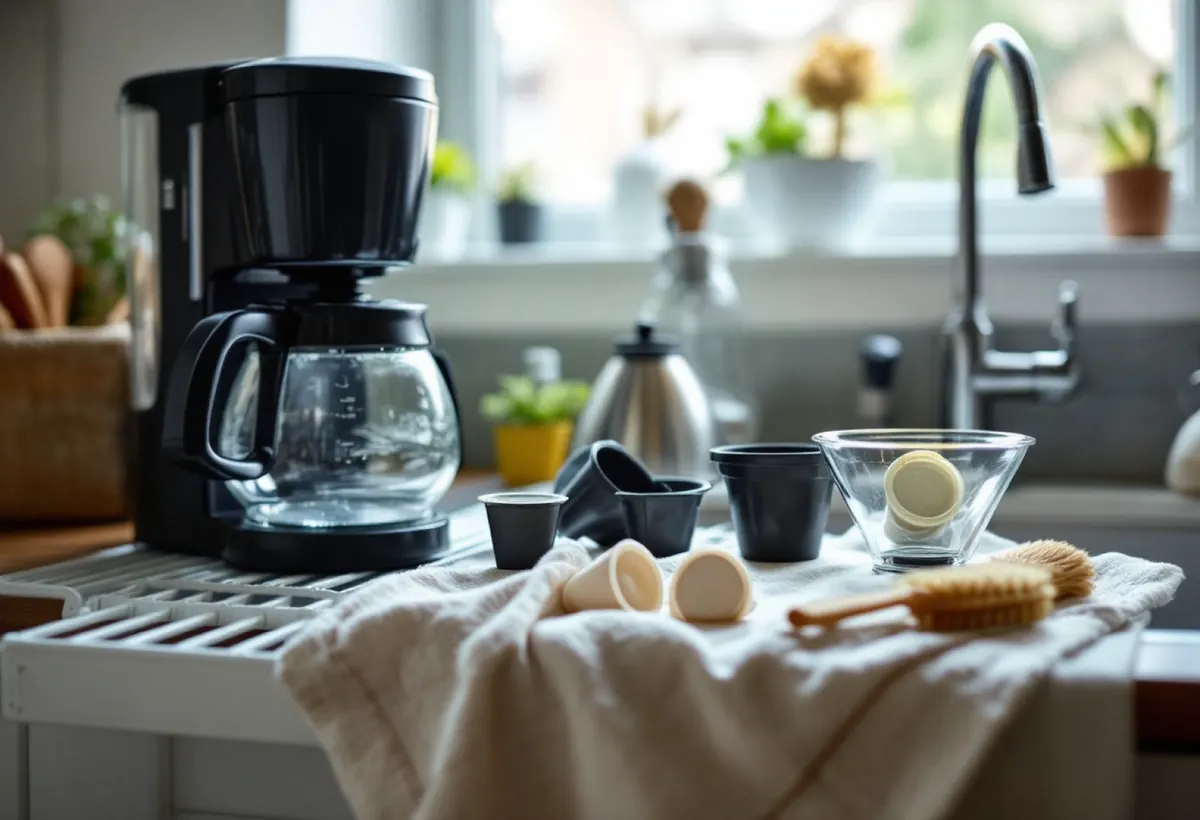
Most white residue in a reservoir is mineral. The Mr. Coffee ESX20 manual says hard water leaves a whitish stain that coffee can turn brown, and the Keurig K90 guide says calcium deposits build up faster with mineral rich water. Scale is hard, flat and dissolves in the vinegar or descaler cycle in the table above.
Mold looks different: fuzzy or slimy, raised, and often in colours. The EPA mold guide notes that molds come in many colours and pictures both white and black molds, so colour alone does not identify it, and no colour changes the cleanup. If the white patch wipes off as a soft film and smells musty, treat it as growth and use the decision path above. More on fuzzy white growth is in white mold.
What stops it coming back between brews?
The manuals’ own rules, applied every week, cover most of it. Each line below quotes a maker or agency instruction:
- Empty the tank before the machine sits. The Nespresso Vertuo Next manual says to replace the water when the machine is not used for a weekend and to empty the tank before holidays.
- Dry what you wash. Cuisinart: dry all parts after use. Keurig: do not dry the inside of the tank with a cloth, so air dry it.
- Change the charcoal filter every 60 days or 60 uses (Cuisinart), sooner with hard water.
- Empty the drip tray before it reaches its 8 oz limit (Keurig) and rinse the capsule bin each time it is emptied, the zone the Valencia study found colonised within days.
- Descale on the printed schedule: 40 to 80 brew cycles (Mr. Coffee), 3 to 6 months (Keurig), 3 months or 300 capsules (Nespresso).
The logic matches EPA’s building rule: the EPA brief guide to mold and moisture says that if damp materials are dried within 24 to 48 hours, in most cases mold will not grow. A reservoir topped up every morning and never emptied never gets that dry window, much like mold in a water bottle. The same standing water pattern drives mold in a humidifier.
Other kitchen appliances follow the same map. Door gaskets and filters are covered in mold in a dishwasher, and the FSIS 1 tablespoon of baking soda per quart routine for refrigerator interiors is in mold in a refrigerator. Every mold page is indexed in the mold hub.
Questions people actually ask
What kills mold in a coffee maker?
No manual read for this page names a mold killing product. EPA’s household guidance is to scrub mold off hard surfaces with detergent and water and dry completely, which covers the carafe, basket, lid and removable tank. The vinegar or descaler cycle reaches the inner tube and tank, and EPA says it does not review vinegar’s effectiveness as a disinfectant.
Can I put bleach in my coffee maker?
None of the six maker documents reviewed for this page tells owners to run bleach through the machine. The Cuisinart DCC-3200 booklet says not to use scouring agents or harsh cleansers on any part, and the Keurig K90 guide limits tank cleaning to a damp, soapy, non abrasive cloth. Use the descaler or vinegar mix your model’s manual prints instead.
Can a Keurig water reservoir go in the dishwasher?
Not according to Keurig. The K90 use and care guide says the water reservoir and its lid should not be put into the dishwasher; clean them with a damp, soapy, non abrasive cloth and rinse thoroughly. The drip tray, which holds up to 8 ounces, may go on the dishwasher top rack.
How long should vinegar sit in a coffee maker?
The Mr. Coffee ESX20 manual says to brew 3 cups of the solution, switch off and let it stand 30 minutes before running the rest through. NSF’s general advice is also 30 minutes, followed by 2 to 3 fresh water cycles until the vinegar smell is gone. Cuisinart’s CLEAN cycle runs on its own timer.
Can I use vinegar in a Nespresso machine?
Nespresso says no. Its VertuoPlus descaling guide states that machines should be descaled with a Nespresso Descaling Kit and that other solutions, such as vinegar or store bought descalers, may damage the machine. It recommends descaling every 3 months or 300 capsules, whichever comes first.
Why does my coffee maker have pink or black slime in the tank?
A film in standing water is biofilm, the same habitat NSF swabbed; according to its 2011 summary it found yeast or mold in 50% of 22 household reservoirs. Colour does not identify the organism; EPA notes molds come in many colours. Empty, scrub and air dry the tank, descale, and replace the brewer if the film returns from a part you cannot reach.
Sources
- NSF 2011 household germ study summary, NSF International, 2011 Household Germ Study executive summary, data from its tables: 22 homes, 30 items, coffee reservoir yeast and mold 50%, coliform 9%, Staph aureus 0%. Retrieved 20 November 2026.
- NSF germiest items page, NSF International, Germiest Items in the Home; read via the Internet Archive snapshot of 25 May 2026 because the live page blocks automated requests. Retrieved 20 November 2026.
- NSF cleaning guidance, NSF International, coffee reservoir cleaning advice; read via the Internet Archive snapshot of 9 March 2021. Retrieved 20 November 2026.
- Scientific Reports study of Nespresso drip trays: Vilanova C, Iglesias A, Porcar M, The coffee machine bacteriome: biodiversity and colonisation of the wasted coffee tray leach, Scientific Reports 5, 2015, via PubMed Central. Retrieved 20 November 2026.
- Mr. Coffee ESX20 manual, Mr. Coffee ESX20 owner’s manual, maintenance pages, hosted copy. Retrieved 20 November 2026.
- Keurig K90 use and care guide, Keurig Green Mountain, K90 use and care guide. Retrieved 20 November 2026.
- Cuisinart DCC-3200 instruction booklet, Cuisinart, PerfecTemp 14 cup programmable coffeemaker DCC-3200 instruction booklet, retailer hosted copy. Retrieved 20 November 2026.
- Nespresso VertuoPlus descaling guide, Nespresso. Retrieved 20 November 2026.
- Nespresso Vertuo Pop descaling guide, Nespresso. Retrieved 20 November 2026.
- Nespresso Vertuo Next user manual, Nespresso, Vertuo, Vertuo Next and VertuoPlus user manual, safety section. Retrieved 20 November 2026.
- EPA answer on household substances, United States Environmental Protection Agency. Retrieved 20 November 2026.
- EPA brief guide to mold and moisture, United States Environmental Protection Agency. Retrieved 20 November 2026.
- USDA FSIS guidance on molds, USDA Food Safety and Inspection Service, Molds on Food: Are They Dangerous?; read via the Internet Archive snapshot of 19 November 2026. Retrieved 20 November 2026.
- Counts of homes and the fluid ounce to cup conversion are arithmetic on the printed figures, computed when this page was built. The wet zone diagram and the keep or replace path are our reading of the manuals above, labelled as such. Our methodology sets out the standing rules.
Cleaning instructions are model specific and makers revise them. Check the manual for your model number before running any solution through the machine; Nespresso’s guide warns that vinegar or store bought descalers may damage its machines.