The short answer
Does hot water kill mold? Only when it is hot enough for long enough. According to lab studies, 90% of common Aspergillus spores die in 8 to 59 seconds at 60 C (140 F) but need 16 to 987 minutes at 50 C. Tap water at the 120 F CPSC recommends cools within seconds on a wall, so it cleans rather than kills.
What water temperature kills mold, and how many minutes does it take at 50, 55 and 60 C?
Mold spores die on a temperature and time curve, not at a single number. Food microbiologists report it as a D value: the time at one steady temperature that kills 90% of the spores. Doyle and Marth (Journal of Milk and Food Technology, 1975) heated spores of two common Aspergillus species in a buffered liquid and found D values of 14 hours to more than 161 hours at 45 C, 16 to 987 minutes at 50 C, 3 to 29 minutes at 55 C, and 8 to 59 seconds at 60 C. Strain mattered more than species: the slowest strain at 50 C took about 60 times longer than the fastest.
Other molds are tougher at 60 C (140 F). van den Brule and colleagues (Environmental Microbiology, 2020) report a D value of 2.2 minutes for Aspergillus niger, estimate about 13 minutes for Aspergillus fumigatus (roughly 7% of its spores survived 15 minutes), and measured 3.7, 5.5 and 22.9 minutes for three strains of Paecilomyces variotii, which they describe as the highest D value for this spore type at 60 C ever measured.
Everything a hand can touch sits on the lower rungs of the ladder. The rungs where spores die in seconds to minutes belong to appliances with heaters and timers, or to a pot on the stove.
Can tap water from a 120 F heater kill mold on a surface?
No, not in the time it is on the surface. CPSC Publication 5098, Avoiding Tap Water Scalds urges households to set water heaters to 120 F (49 C) to cut scald injuries, and water cools further on a cold wall or tub. That sits just below the 50 C rung, where Doyle and Marth measured D values of 16 to 987 minutes. Turning the heater up fails because skin gives out first; CPSC lists the times for third degree burns in adults:
| Water temperature | Exposure for third degree burns (CPSC) |
|---|---|
| 150 F (66 C) | 2 seconds |
| 140 F (60 C) | 6 seconds |
| 130 F (54 C) | 30 seconds |
| 120 F (49 C) | 5 minutes |
At 140 F, CPSC’s burn time is 6 seconds, while the fastest Aspergillus D value at 60 C in Doyle and Marth‘s data is 8 seconds and the slowest P. variotii value is 22.9 minutes (Brule). Hot tap water helps detergent lift mold; the heat is not the killer.
How long would hot water need to hold for a 5 log spore kill?
One D value leaves one spore in ten alive. The residential dishwasher standard NSF/ANSI 184 asks for a 5 log (99.999%) bacterial reduction, according to a Public Health Ontario study in Food Protection Trends (2015), so the table applies that yardstick to mold: five D values in a row, computed, not tested.
| Temperature | Mold tested | Published D value | Time for 5 log (5 x D, computed) | Source |
|---|---|---|---|---|
| 45 C / 113 F | A. flavus, A. parasiticus | 14 h to >161 h | 70 h to >805 h | Doyle and Marth |
| 50 C / 122 F | A. flavus, A. parasiticus | 16 to 987 min | 80 min to 82.2 h | Doyle and Marth |
| 55 C / 131 F | A. flavus, A. parasiticus | 3 to 29 min | 15 to 145 min | Doyle and Marth |
| 60 C / 140 F | A. flavus, A. parasiticus | 8 to 59 s | 40 s to 4.9 min | Doyle and Marth |
| 60 C / 140 F | Aspergillus niger | 2.2 min | 11 min | van den Brule and colleagues |
| 60 C / 140 F | Paecilomyces variotii, 3 strains | 3.7 to 22.9 min | 18.5 to 114.5 min | van den Brule and colleagues |
Two things follow. At 50 C, close to the water a heater set to 120 F delivers, the slowest Aspergillus strain needs about 82.2 hours of continuous contact. At 60 C the computed range runs from 40 seconds for the easiest A. flavus strain to 114.5 minutes for the hardest P. variotii strain.
Does boiling water at 212 F kill mold, including black mold?
Boiling water (100 C, 212 F at sea level) is far above every conidia D value in the Doyle and Marth and van den Brule and colleagues data, so glass jars, metal utensils and silicone parts held in a rolling boil get heat no conidia in those studies survived for long. The weak spot is the sexual spore: van den Brule and colleagues cite Paecilomyces variotii ascospores surviving 85 C for more than an hour.
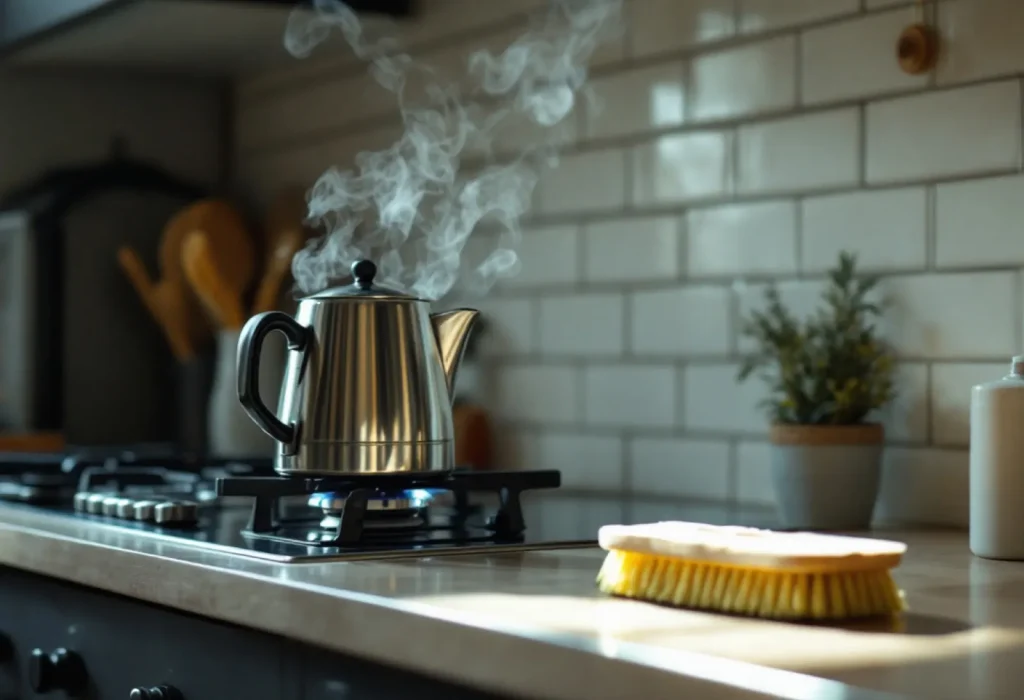
Pouring a kettle onto tile, grout or a wall is not boiling an object: the water leaves the spout near 100 C and cools on contact within seconds. No published D value for Stachybotrys, the mold usually sold as “black mold”, turned up in the sources checked for this page, so a claim that boiling water kills black mold on a wall in a set time has no study behind it.
Steam cleaners are sold on nozzle temperature: Dreame product listings quote 212 F for some models and 392 F for one. That heat touches the surface for a second and adds water that EPA's homeowner guide says to dry within 24 to 48 hours to stop new growth.
Do NSF/ANSI 184 dishwasher and P172 washer sanitize cycles reach mold killing heat?
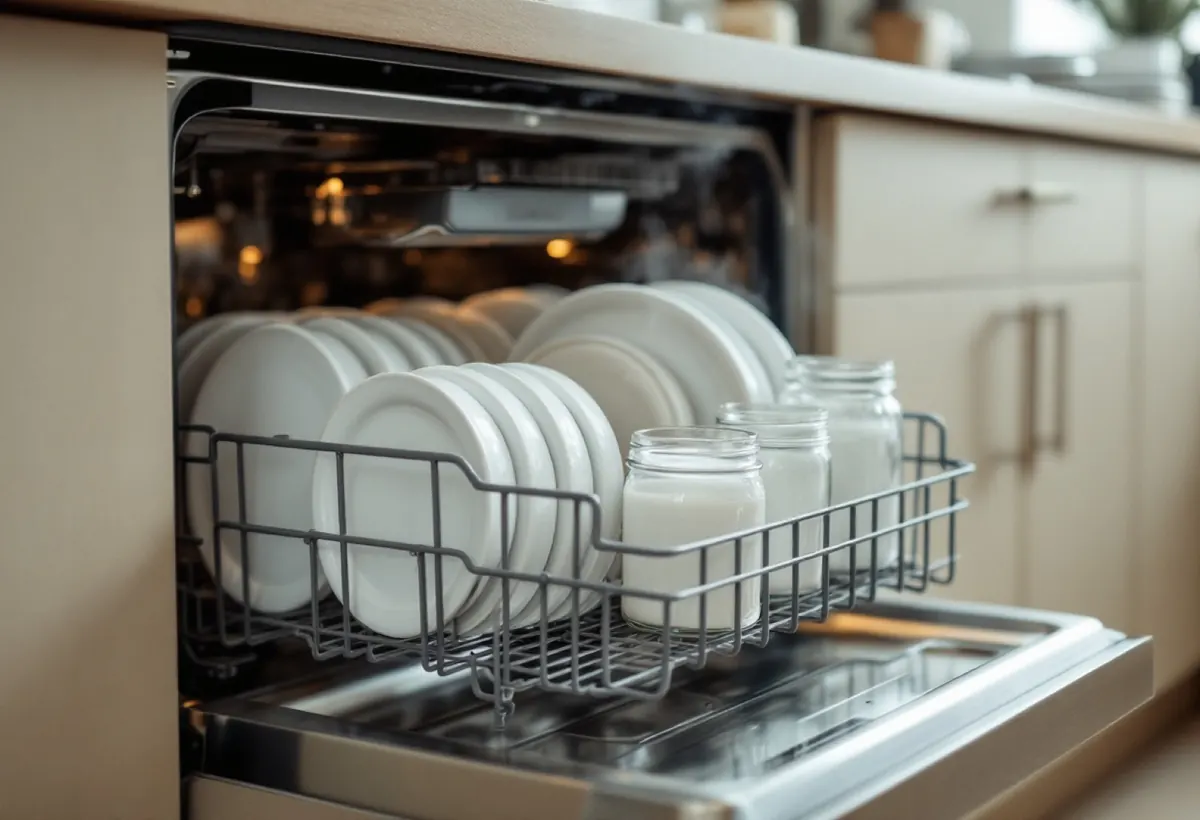
They reach the right rungs, but they are certified against bacteria, not mold. Per the Food Protection Trends study, NSF/ANSI 184 requires a residential dishwasher’s sanitizing rinse to reach 62 C (143.6 F) or more and to accumulate at least 3,600 heat unit equivalents, and certified machines were shown in the lab to reach a 5 log bacterial reduction on the sanitize option only.
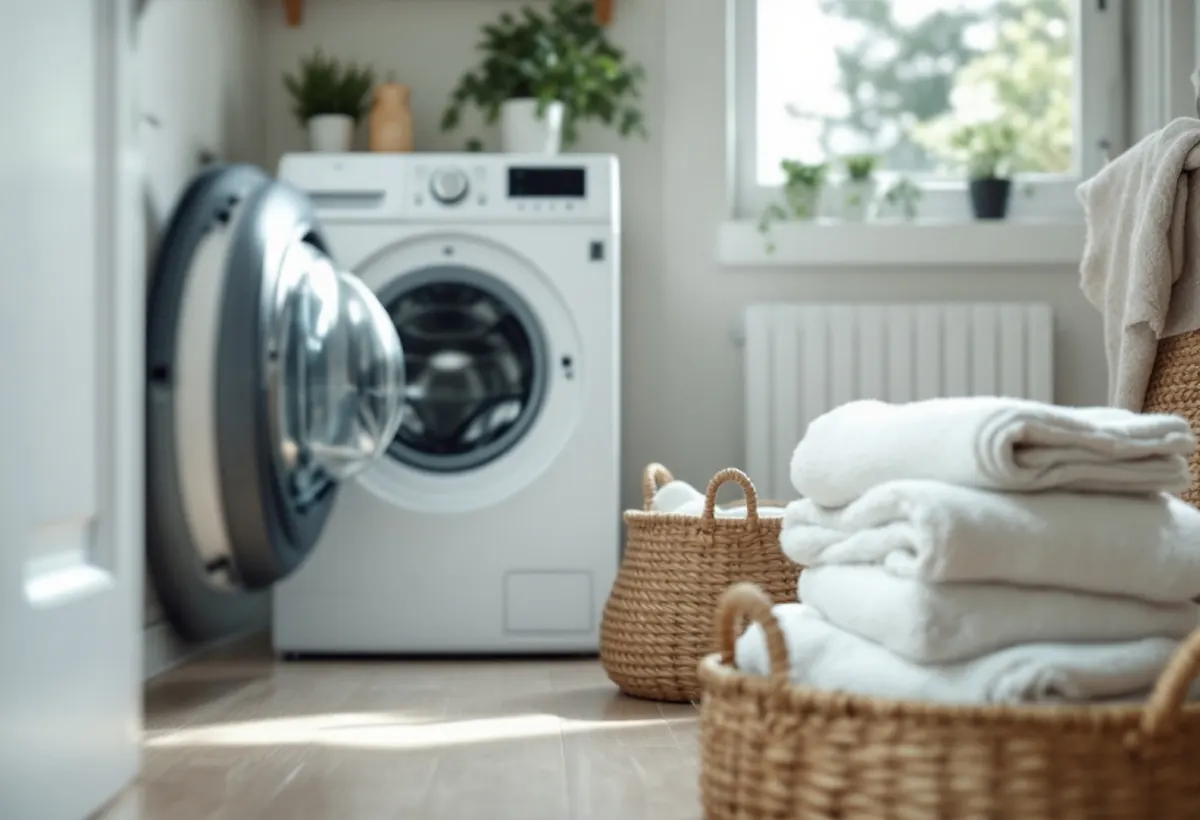
The Frigidaire washer manual 137168300B reports that its Deep Clean Sanitize cycle heats wash water with an internal boost heater to a maximum of 152 F (66.7 C) while the load tumbles for up to 90 minutes, and claims a 99.9% bacteria kill under NSF Protocol P172. Against the 60 C rows of the 5 log table, 90 minutes is longer than every Aspergillus figure but shorter than the 114.5 minutes computed for the slowest P. variotii strain, and the manual gives 152 F as a maximum, not a held temperature.
The nearest laundering evidence for a fungus is the Hohenstein Institutes laundering study (Mycopathologia, 2011): Trichophyton rubrum survived a 30 C domestic wash but not a 60 C one. No comparable study of household mold on laundry turned up. Stained garments are covered on our mold on clothes page; for a musty machine, see mold in the washing machine.
A dishwasher’s own filter and door gasket stay damp after the 62 C rinse ends; cleaning those parts is covered on the mold in dishwasher page.
Which surfaces can hot water treat, and which need the moldy material removed?
Only items that go into a pot or a heated appliance reach the upper rungs. Everything fixed to the house stays near tap temperature, where EPA's Mold Cleanup in Your Home page gives the method: scrub hard surfaces with detergent and water and dry them completely.
| Surface | Realistic temperature | What the cited data shows | What to do |
|---|---|---|---|
| Glass, metal or silicone small items | 100 C in a pot | Above all conidia D values cited here (Doyle; Brule) | Wash, then boil if the item tolerates it; dry fully |
| Dishes and jars | 62 C sanitize rinse (NSF/ANSI 184) | Certified for 5 log bacteria, not tested on mold (Sahai) | Run the sanitize option; discard moldy food, never reheat it |
| Towels, cottons, bedding | Up to 152 F on a boost heater washer (Frigidaire) | 60 C wash cleared a fungus that survived 30 C (Hohenstein) | Hottest cycle the care label allows, then dry fully |
| Tile, tub, sealed counters | About 120 F at the tap (CPSC) | Contact too brief for any D value in the data | EPA: scrub with detergent and water, dry completely |
| Grout and caulk | About 120 F at the tap (CPSC) | Growth inside porous grout is beyond surface heat | Scrub; replace caulk with growth under the surface |
| Drywall, ceiling tile, carpet | Any | Hot water adds moisture to porous material | EPA: porous materials may have to be thrown away; over 10 sq ft see EPA guidance |
| Wood framing | Any | Heat reaches surface fibres only | Dry and clean; remove growth, keep humidity under 60% (EPA) |
Swapping hot water for a chemical, or for UV light against mold, does not change the rule. EPA's Brief Guide to Mold, Moisture and Your Home says a biocide such as chlorine bleach is not recommended as routine practice; see our does bleach kill mold and does vinegar kill mold pages.
If heat kills the spores, why does EPA still say to remove the mold?
Because EPA's Brief Guide to Mold, Moisture and Your Home states it plainly: it is not enough to simply kill the mold, it must also be removed. EPA’s targets are to dry wet areas within 24 to 48 hours and keep indoor humidity below 60%.
Heat also leaves the chemicals some molds make. Sakuma and colleagues (Toxins, 2013) found aflatoxin retained at 83% to 89% after steaming rice and more than 60% of ochratoxin A retained in boiled pasta, and the Tokyo Metropolitan Government food safety centre reports that 50 to 80% of mycotoxins remain after boiling and that normal cooking at 100 to 210 C for under 60 minutes cannot completely destroy them. Boiling or reheating moldy food does not make it safe to eat; the Tokyo centre’s advice is to avoid eating food that is moldy.
For a patch on a wall, EPA's Mold Cleanup in Your Home page says a homeowner can usually handle under about 10 square feet; above that, EPA points to its commercial remediation guide. The mold hub lists cleanup pages by room.
Out of scope: this page covers heat and cleaning, not health. For health questions, EPA advises consulting a health professional before cleanup, and CDC and NIH publish mold health guidance.
Questions people actually ask
How long does hot water take to kill mold?
Minutes to days, set by temperature. According to Doyle and Marth, a 90% kill of Aspergillus spores took 16 to 987 minutes at 50 C, 3 to 29 minutes at 55 C and 8 to 59 seconds at 60 C. A tough Paecilomyces strain needed 22.9 minutes at 60 C. A splash of tap water on a wall lasts seconds.
What kills mold immediately?
Nothing a homeowner applies kills every spore instantly. Even at 60 C, the cited D values run from 8 seconds to 22.9 minutes for a 90% kill, according to the studies above. EPA’s method for hard surfaces is physical: scrub with detergent and water, then dry completely.
What does mold hate?
Dry conditions. EPA says to dry water damaged areas within 24 to 48 hours and to keep indoor relative humidity below 60%, ideally 30 to 50%. Heat near 60 C kills many spores only while it lasts; moisture control stops regrowth after the surface cools.
Does Dawn dish soap kill mold spores?
Detergent’s job is removal. EPA’s instruction for hard surfaces is to scrub mold off with detergent and water and dry completely, so the soap lifts growth to be rinsed away. Whether soap kills spores is covered on our does dish soap kill mold page.
Does heat kill mold on walls?
Not in a way that fixes the wall. Tap water at the 120 F setting CPSC recommends sits below the 50 C rung, where Aspergillus D values run 16 to 987 minutes. Drywall is porous, and EPA says moldy porous materials may have to be thrown away.
Does washing clothes in hot water kill mold?
A long hot cycle helps. A 2011 Hohenstein study reports a fungus that survived a 30 C wash was eliminated at 60 C, and a boost heater washer’s sanitize cycle reaches 152 F (66.7 C) for up to 90 minutes. No equivalent study on household mold was found; check the care label.
Sources
- Doyle and Marth (Journal of Milk and Food Technology, 1975): Doyle and Marth, Thermal Inactivation of Conidia from Aspergillus flavus and Aspergillus parasiticus, 38(11):678; abstract via Crossref. Retrieved 9 November 2026.
- van den Brule and colleagues (Environmental Microbiology, 2020): van den Brule et al., 22(3):986. Retrieved 9 November 2026.
- CPSC Publication 5098, Avoiding Tap Water Scalds, U.S. Consumer Product Safety Commission. Retrieved 9 November 2026.
- a Public Health Ontario study in Food Protection Trends (2015): Sahai, Peterson and Li, 35(3):185, describing NSF/ANSI Standard 184. Retrieved 9 November 2026.
- Frigidaire washer manual 137168300B, Deep Clean Sanitize cycle, via ManualsOnline. Retrieved 9 November 2026.
- Hohenstein Institutes laundering study (Mycopathologia, 2011): Hammer, Mucha and Hoefer, 171(1):43, PubMed 20652833. Retrieved 9 November 2026.
- Sakuma and colleagues (Toxins, 2013): 5(5):1032. Retrieved 9 November 2026.
- Tokyo Metropolitan Government food safety centre, Mycotoxin Q and A. Retrieved 9 November 2026.
- EPA's Brief Guide to Mold, Moisture and Your Home, U.S. EPA, updated 18 February 2026. Retrieved 9 November 2026.
- EPA's Mold Cleanup in Your Home page, U.S. EPA, updated 4 June 2026. Retrieved 9 November 2026.
- Dreame product listings, maker listed steam temperatures. Retrieved 9 November 2026.
- Unit conversions and 5 log times are arithmetic on the published values. Our methodology sets out the standing rules.
Lab D values describe spores in liquid held at a steady temperature. Real surfaces cool and shelter spores, so treat the times as a lower bound.