The short answer
What temperature kills mold? Moist heat of 140 to 160 F (60 to 71 C) destroys most molds, according to a USDA Agricultural Research Service food safety chapter, but it has to be held for minutes, not touched for a second: lab spores need 2.2 to 22.9 minutes at 60 C for each 90% kill. Freezing does not kill mold; it only makes it dormant.
Which temperatures from minus 20 C to 120 C kill mold, and which only pause it?
The ladder puts every threshold cited on this page on one scale. The green band is the 60 to 71 C (140 to 160 F) range where a USDA Agricultural Research Service food safety chapter says most yeasts and molds are destroyed. The grey band is 0 to 40 C, where most fungi grow best according to the NAPPO review of heat treatment of wood. Grey points are measured household temperatures that never reach the green band, and the freezer point pauses mold rather than killing it.
Read the 60 C line as a minutes line, not a switch. In the screening in van den Brule and colleagues, Environmental Microbiology 2020, per the authors, 31 of 108 strains of Paecilomyces variotii (about 29%) still had more than 10% of their spores alive after 10 minutes at 59 C. A surface that touches 60 C for a moment has not been pasteurised.
How many minutes at 60 C (140 F) does mold need before it dies?
Heat kills spores at a rate, not all at once. Microbiologists express it as a D value: the minutes at a set temperature that kill 90% of a population, per the definition used in van den Brule and colleagues, Environmental Microbiology 2020. Per the same arithmetic, each further D removes another 90% of the survivors, so 99.99% (a 4 log kill) takes four D values and 99.9999% takes six.
| Spores | D60, minutes per 90% | Minutes for 99.99% | Minutes for 99.9999% | Basis |
|---|---|---|---|---|
| Aspergillus niger conidia | 2.2 | 8.8 | 13.2 | cited from Baggerman 1984 |
| Paecilomyces variotii DTO 212-C5 | 3.7 | 14.8 | 22.2 | measured |
| Paecilomyces variotii DTO 032-I3 | 5.5 | 22 | 33 | measured |
| Aspergillus fumigatus conidia | 13 | 52 | 78 | authors’ rough estimate |
| Paecilomyces variotii DTO 217-A2 | 22.9 | 91.6 | 137.4 | measured |
The spread is about 10 fold between the fastest and slowest spores in the table, and it is not only between species. The same 2020 paper reports D60 values of 3.7, 5.5 and 22.9 minutes for three strains of one species, Paecilomyces variotii, and calls the slowest the most heat resistant conidia reported so far.
Growing conditions shift the numbers too. The authors cite work in which about 7% of Aspergillus fumigatus spores survived 15 minutes at 60 C when grown at 25 C, while spores grown at 37 and 45 C showed hardly any reduction after the same treatment; Aspergillus ruber kept 3% alive after 10 minutes at 60 C, per the same review. Mold that grew on a hot attic deck is not the mold in a lab dish.
Do a clothes dryer, a summer attic or boiling water reach the 60 C kill band?
The table lines up measured household temperatures against the 60 to 71 C band from a USDA Agricultural Research Service food safety chapter. Reaching 60 C is only the first test; holding it for the D value minutes, at the core, is the second.
| Heat source | Measured temperature | Reaches 60 C? | Source |
|---|---|---|---|
| Clothes dryer drum, warmup set point with a damp load | 120 to 130 F (50 to 55 C) | No | Heidner and Heidner, ACEEE 2016, 120 runs |
| Attic air, dark shingle roof, peak of 24 summer days | 135.6 F (57.6 C) | No | FSEC CR 1220, Fort Myers, July 2000 |
| Attic air, same 24 days, average | 90.8 F (32.7 C) | No | FSEC CR 1220, Table 3 |
| Attic air under a white barrel tile roof, peak | 95.6 F (35.3 C) | No | FSEC CR 1220, Table 3 |
| Top of attic insulation at summer peak | about 130 F (54 C) | No | FSEC CR 1220, text |
| Roof covering at summer peak | about 170 F (77 C) | Yes, if held | FSEC CR 1220, text |
| Boiling water at sea level | 212 F (100 C) | Yes, if held | USDA ARS chapter |
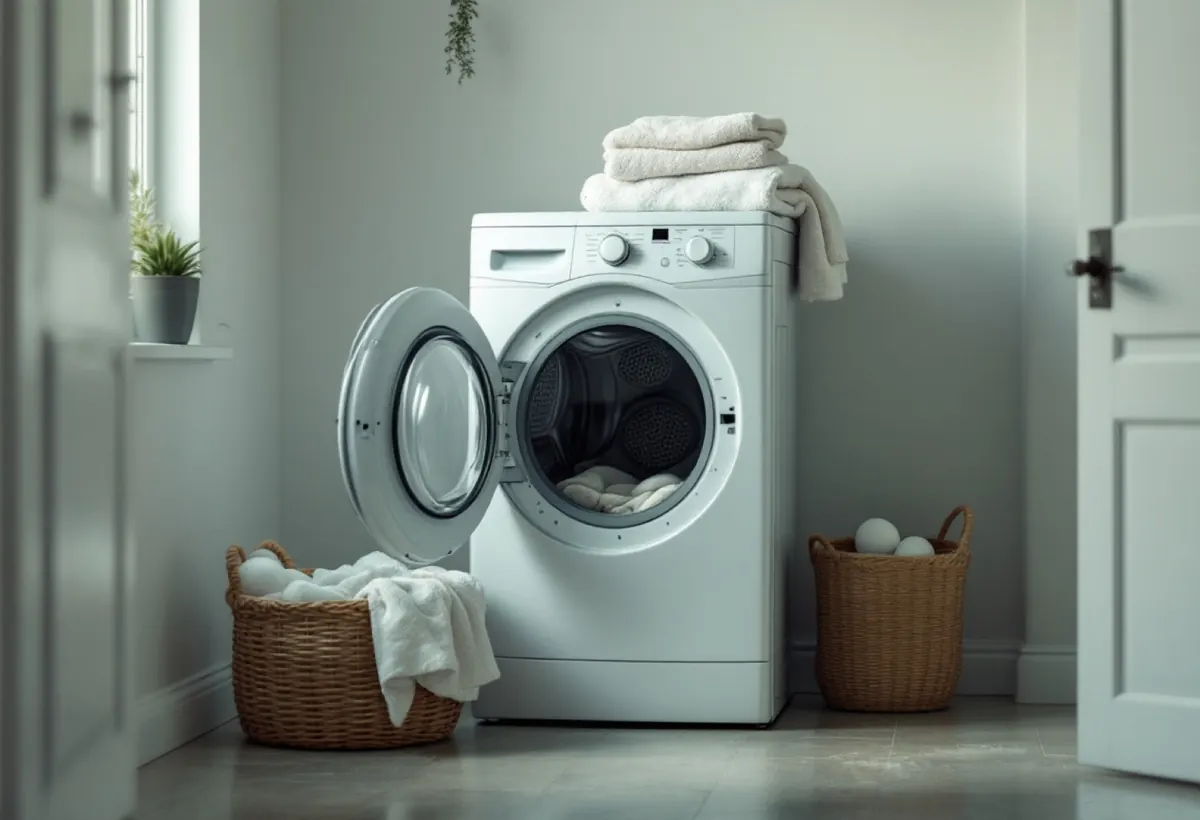
Dryers stay under the band while there is water to evaporate. In a 2016 ACEEE field study of 120 dryer runs, the drum and load warmed to a set temperature that was typically 120 to 130 F (50 to 55 C), and the air only climbed further in the “fry period” after the towels were already dry, a stretch the authors say well designed controllers end within a few minutes. Fabric handling, including what to wash and what to discard, is on mold on clothes.
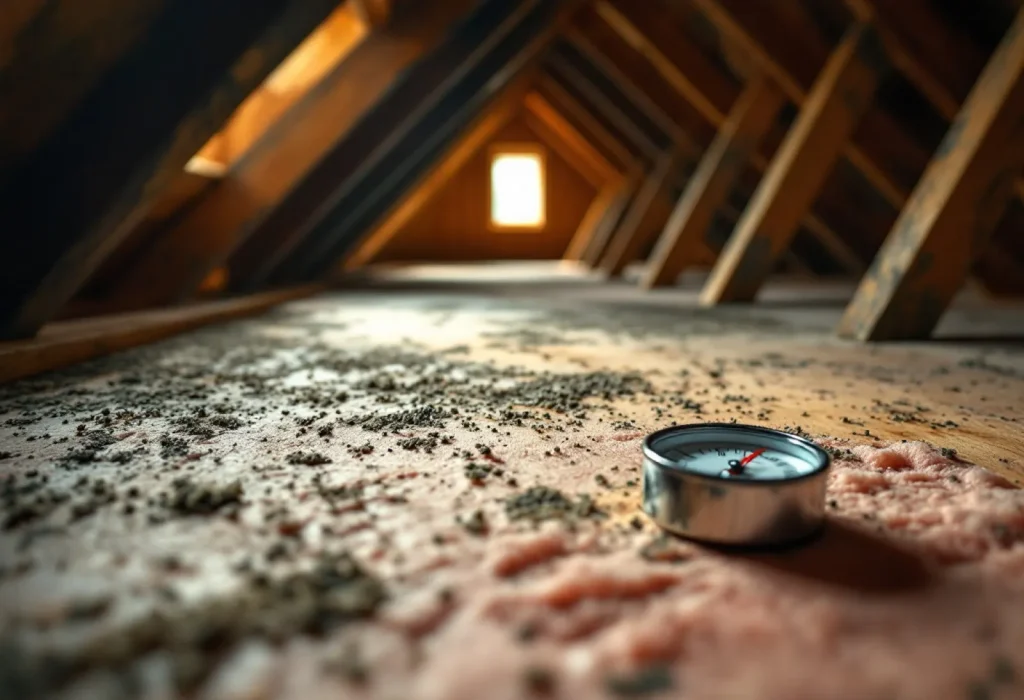
Attics get hot, but not hot enough for long enough. The Florida Solar Energy Center attic measurements compared identical Fort Myers homes from 8 to 31 July 2000: the dark shingle control attic ran 40 F above outdoor air at the peak hour and still topped out at 135.6 F, with a 90.8 F average. Mold on roof sheathing survives summer and needs removal, set out in attic mold removal; roof colour and ventilation choices are covered by The Roofing Brief.
Which mold spores survive 85 C (185 F) and a minute of boiling?
Sexual spores (ascospores) are a different class. According to van den Brule and colleagues, Environmental Microbiology 2020, ascospores of Paecilomyces fulvus and Paecilomyces niveus survive 85 C for several minutes, and Paecilomyces variotii ascospores survive 85 C for more than an hour, although their D values were not measured precisely.
Boiling is not a guarantee either. a USDA Agricultural Research Service food safety chapter names Byssochlamys fulva, a mold that has spoiled heat processed canned fruit, as needing about 1 minute at boiling temperature to kill, and its summary list states that thermal processes for acidified foods can be relied on to kill vegetative bacteria “but not bacterial or mold spores”.
These are food spoilage molds; the 2020 paper lists margarine, fruit juices, canned fruit and sodas. They mark the ceiling of what heat can fail to kill. For buildings, EPA's A Brief Guide to Mold, Moisture and Your Home sets no temperature at all: it says to dry wet materials within 24 to 48 hours and that “it is not enough to simply kill the mold, it must also be removed”.
Why does a 100 C oven kill less mold than 100 C water?
Water carries heat into a cell; dry air does not. a USDA Agricultural Research Service food safety chapter states that “moist heat is much more effective than dry heat in killing microbes” and that cells “killed almost instantly in boiling water may survive for hours on dry surfaces in an oven at the same or higher temperatures”. Wood shows the same gap: the NAPPO review of heat treatment of wood cites a decay fungus, Lenzites trabea, killed by 3 hours at 70 C in wet conditions but needing 96 to 120 hours at the same temperature dry, roughly 32 to 40 times longer.
The same USDA chapter sets the rule that decides every heat claim: the required time and temperature must be met “at the slowest heating point”, which in a solid is the coldest spot or geometric centre. For a stud, a sheet of drywall or a folded towel, the surface reading on an infrared thermometer says nothing about the middle.
Wash water is the moist heat case most people can use, and its settings and limits are worked through in does hot water kill mold.
Does ISPM 15 heat treatment at 56 C for 30 minutes leave wood mold free?
No, and it was never written to. ISPM 15, the international wood packaging standard, sets a minimum core temperature of 56 C (133 F) for 30 minutes, chosen, per the footnote quoted in the NAPPO review of heat treatment of wood, because the combination is documented as lethal to many wood pests and is commercially feasible. The HT stamp on a pallet is a pest quarantine mark, not a mold rating.
The same review records that a 1994 USDA proposal used 56 C for 30 minutes and that the final US rule moved to 71.1 C for 75 minutes after APHIS concluded that “various fungi in wood can survive 1 to several hours” at 56 to 70 C. Ramsfield and colleagues (2010), per the NAPPO review, found isolates, in a set that included Cladosporium herbarum, survived 56 C for 30 minutes, and modelled 61.7 C for 99% and 69.6 C for 99.99% mortality of all isolates in 30 minutes.
Treated wood also gets recolonised. The NAPPO review cites laboratory tests in which Trichoderma, Penicillium and Aspergillus colonised heat treated wood very quickly, notes that kiln drying is not the same as heat treatment, and reports fungi surviving up to 10 years in wood stored at 30 to 40% relative humidity. Cleaning and sanding framing and furniture is covered on mold on wood.
Does freezing at 0 F (minus 18 C) kill mold on books, food or fabric?
No. Washington State University Extension says home freezers at 0 F (minus 18 C) “temporarily inactivate” microbes, including bacteria, yeast and mold, and that thawed food is again a place where they can grow.
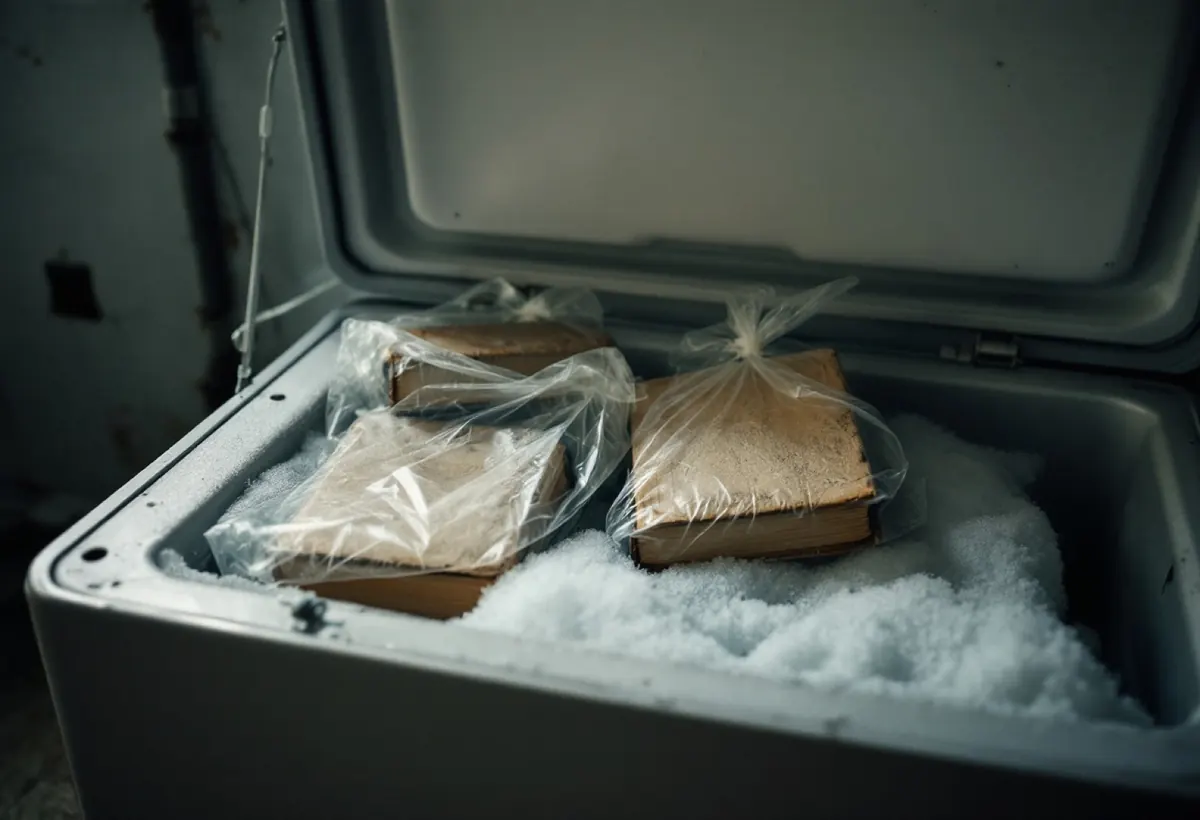
Conservators freeze moldy paper to stop it, not to sterilise it. NEDCC Preservation Leaflet 3.8 says the goal of deactivation is to make the mold go dormant, that wet items which cannot be treated within 48 hours are best frozen, and that inactive mold “is simply dormant and may become active again” when conditions return.
NEDCC also limits what goes in the freezer: it says not to freeze photographs, audio visual materials, leather bound books or vellum and parchment, and to wrap items in freezer paper, waxed paper or a plastic bag so they do not stick together. Salvage order for soaked collections is set out in water damaged books.
At 70 F, how many days of damp air before dormant mold grows again?
Temperature sets the speed; moisture decides whether growth happens at all. According to NEDCC Preservation Leaflet 3.8, these are the exposure times at 70 F before growth is likely, and some species grow at lower humidity:
| Relative humidity | Time before growth is likely | Temperature |
|---|---|---|
| 75% | 1 month | 70 F (21 C) |
| 80% | 2 weeks | 70 F (21 C) |
| 90% | 4 days | 70 F (21 C) |
Per the NEDCC leaflet, the target after cleanup is relative humidity below 55% and temperature below 70 F (21 C), and it warns that warmth and high humidity together can restart germination in as little as 24 hours. The clock for building materials after a leak is laid out in how long it takes mold to grow after water damage.
Out of scope: this page covers temperatures, times and the sources behind them only. For how mold exposure affects people, see the health section of EPA's A Brief Guide to Mold, Moisture and Your Home.
Questions people actually ask
What temperature kills mold in Celsius?
60 to 71 C, held for minutes. A USDA Agricultural Research Service chapter puts most yeasts and molds at 60 to 71 C (140 to 160 F) in moist heat. Published D values at 60 C, per the 2020 paper by van den Brule and colleagues, run from 2.2 minutes for Aspergillus niger spores to 22.9 minutes for the toughest Paecilomyces variotii strain per 90% kill, so a 99.99% kill can take 9 to 92 minutes.
Can mold be killed with heat inside a wall?
Not reliably. The USDA ARS chapter says the time and temperature must be met at the slowest heating point, the core, and that dry heat kills far less than moist heat at the same temperature. A wall cavity heated from the room side reaches the stud centre last, and dead spores left in place still have to be cleaned out.
What kills mold immediately?
No household temperature works in a second. The USDA ARS chapter says molds are killed quickly at boiling water temperature (100 C, 212 F) but some spores survive, and Byssochlamys fulva needs about 1 minute at boiling. UV light has its own dose arithmetic, set out in does UV light kill mold.
Does a hot summer attic kill mold on the roof deck?
No. Florida Solar Energy Center measurements in Fort Myers homes in July 2000 found a peak attic air temperature of 135.6 F (57.6 C) under dark shingles and an average of 90.8 F. That peak is below the 60 C band and lasts only the hottest hours, so attic mold survives summer and has to be removed.
Sources
- Processing and Safety, Breidt Jr., F. and Costilow, R. N., chapter 5 of Acidified Foods: Principles of Handling and Preservation, Pickle Packers International, 2004, hosted by the USDA Agricultural Research Service. Retrieved 16 November 2026.
- The most heat resistant conidia observed to date are formed by distinct strains of Paecilomyces variotii, van den Brule, T. and colleagues, Environmental Microbiology 22(3), pp. 986 to 999, 2020, via PubMed Central. Retrieved 16 November 2026.
- Comparative Evaluation of the Impact of Roofing Systems on Residential Cooling Energy Demand in Florida, Parker, D., Sonne, J. and Sherwin, J., Florida Solar Energy Center report FSEC CR 1220 00, ACEEE Summer Study 2002. Retrieved 16 November 2026.
- My world is spinning, stop the drum, I want out! A field study of residential dryers in situ, Heidner, D. and Heidner, A., ACEEE Summer Study 2016. Retrieved 16 November 2026.
- Emergency Salvage of Moldy Books and Paper, Preservation Leaflet 3.8, Northeast Document Conservation Center. Retrieved 16 November 2026.
- EPA's A Brief Guide to Mold, Moisture and Your Home, US EPA, last updated 18 February 2026. Retrieved 16 November 2026.
- ST 05: Review of heat treatment of wood and wood packaging, NAPPO Forestry Panel (lead author Eric Allen, Canadian Forest Service), March 2014, hosted by the IPPC. Retrieved 16 November 2026.
- FSM 268: Separating Truth from Myth: Does Freezing Kill Harmful Bacteria in Food?, Food Safety in a Minute, Washington State University CAHNRS. Retrieved 16 November 2026.
- How this page was built is described in our methodology, and more mold pages are on the mold hub.
Temperatures and D values are laboratory or field measurements from the cited sources, not a rating of any appliance or treatment. Before paying for a heat treatment, ask the contractor what core temperature the material reaches (60 C or more), for how many minutes, and how the core is measured.