The short answer
When is mold remediation required? Under EPA guidance, mold covering more than about 10 square feet, any growth after sewage or other contaminated water, and mold in an HVAC system call for remediation beyond routine cleaning. Licensing laws add legal lines for contractors: above 10 square feet in New York and Florida, 25 contiguous square feet in Texas.
Key takeaways
- EPA treats about 10 square feet as the line between a homeowner cleanup and a job for its remediation guidance, and 100 square feet as the line for full containment.
- Legal size triggers mostly bind contractors: New York and Florida above 10 square feet, Texas at 25 contiguous square feet, where owners of homes with fewer than 10 units are exempt.
- Landlords carry the duty to fix: New York City’s Local Law 55 and California’s substandard building list both name mold.
- Sewage water and mold in the HVAC system are triggers at any size.
What size of mold makes remediation the right call? EPA’s 10 and 100 square foot lines
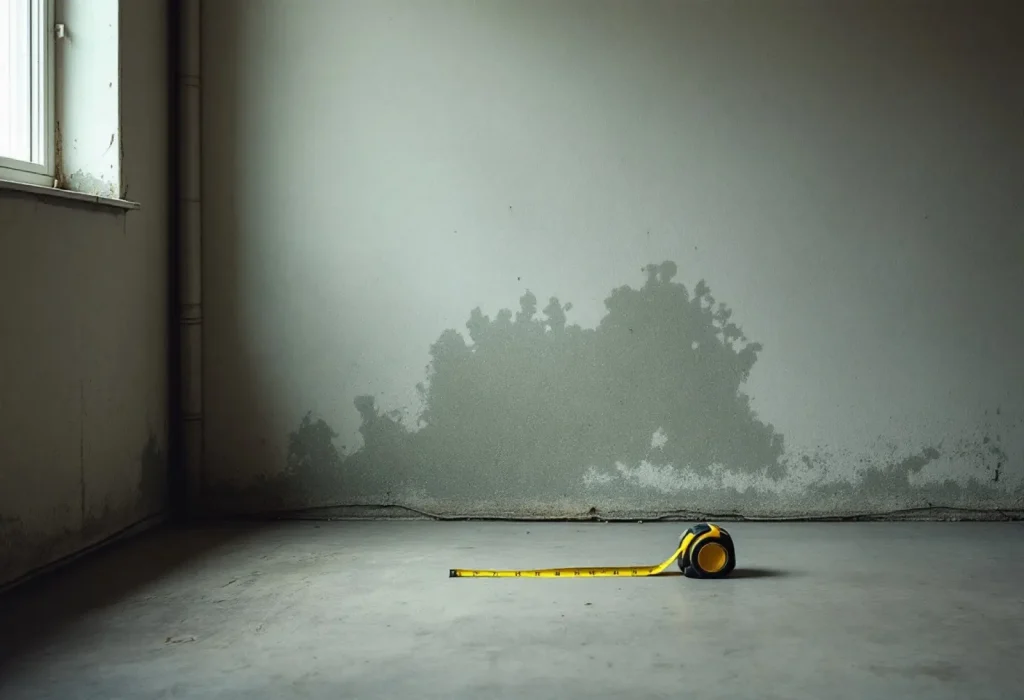
EPA's Mold Cleanup in Your Home page draws the first line: if the moldy area is less than about 10 square feet, in most cases you can handle the job yourself. If there has been a lot of water damage, or mold covers more than 10 square feet, EPA sends readers to its guide Mold Remediation in Schools and Commercial Buildings, which it says applies to other building types too.
That guide’s Table 2 of EPA's Mold Remediation in Schools and Commercial Buildings splits jobs by total surface area affected. Measure every patch from the same moisture source and add them up; the categories are about total area, not the largest spot.
| Total area affected | EPA category | Protective equipment | Containment | What it means |
|---|---|---|---|---|
| Under about 10 sq ft | Small | Minimum N95 respirator, gloves and goggles | None required | Usually a homeowner job (EPA home page) |
| 10 to 100 sq ft | Medium | Limited or full, by professional judgment | Limited | EPA remediation guidance applies |
| Over 100 sq ft | Large | Full | Full | Remediation with full containment |
EPA labels all of this guidance and says professional judgment should always play a part. It is not a federal rule, and nothing on EPA’s pages makes remediation compulsory for an owner occupant. The legal lines come from states and cities, below. The cleanup method for a patch under the line is on our DIY mold remediation page.
Do I need mold remediation? Five questions in the order that decides it
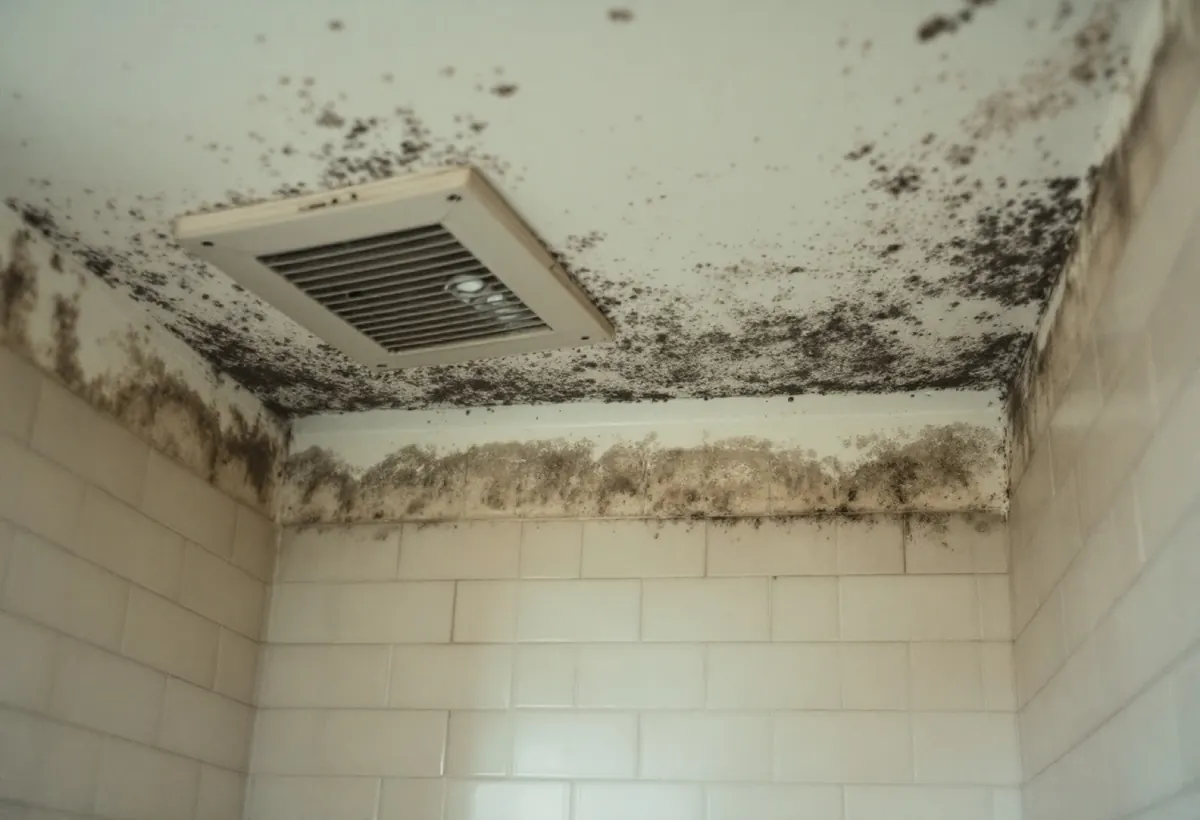
Size is the question most pages stop at, but two triggers come before it. EPA's Mold Cleanup in Your Home page says to call in a professional with experience for damage caused by sewage or other contaminated water, and not to run an HVAC system you know or suspect is contaminated with mold. Both apply to a patch the size of a hand.
Is mold remediation required by law? The state by state trigger matrix
Mostly, the law regulates who may do the work above a size line, not whether an owner occupant must do it. Each row below was read in the statute, the agency guidance or the official code. Texas’s threshold, from Texas Occupations Code chapter 1958, is the outlier: 25 contiguous square feet, two and a half times the 10 square foot line in New York and Florida.
| Jurisdiction | Size trigger | Who it binds | What it requires | Source |
|---|---|---|---|---|
| Federal (EPA guidance) | Over about 10 sq ft | Advisory only | Follow EPA remediation guidance; full containment over 100 sq ft | EPA's home cleanup page; EPA Table 2 |
| New York State | Areas greater than 10 sq ft | Businesses doing mold work | Separate licenses for assessment and remediation contractors | New York Labor Law section 930 (6), section 931 |
| New York City | 10 sq ft or more in a building of 10+ units | Building owners | Independent licensed assessor and remediator; filings with DEP; annual unit inspections | NYC HPD's Local Law 55 guidance (Local Laws 55 and 61 of 2018) |
| Texas | 25 contiguous sq ft or more | Anyone remediating, with owner exemptions | License; notice 5 days before work; certificate within 10 days | section 1958.102, section 1958.153, section 1958.154 |
| Florida | Greater than 10 sq ft | Mold assessors and remediators | License; assessor may not remediate a structure it assessed within 12 months | Florida Statutes section 468.8411, section 468.8419 |
| California | No size: visible mold growth | Owners of rented and other buildings | Mold found by a health or code enforcement officer is a substandard condition | California Health and Safety Code section 17920.3 (a)(13) |
The Texas exemptions are specific. section 1958.102 lets an owner or tenant work on property they own or lease without a license, unless the contamination covers 25 contiguous square feet or more; lets anyone do a project under that size; and lets an owner of residential property with fewer than 10 dwelling units do the work themselves. The owner exemptions end for anyone who does mold work for the public.
New York’s New York Labor Law section 930 defines mold remediation as work conducted by a business enterprise and limits a licensed project to areas greater than 10 square feet, excluding routine cleaning. Florida Statutes section 468.8411 writes the same 10 square foot line into its definitions of both assessment and remediation. License classes, training hours and lookup links for every state are on our state mold licensing page.
Does a landlord have to remediate mold? New York City Local Law 55 and California section 17920.3
In New York City, NYC HPD's Local Law 55 guidance lists the owner duties: inspect units for mold every year and when a tenant complains, remediate all visible mold and the underlying defects such as leaks before a unit is reoccupied, and use the law’s safe work practices. In buildings under 10 units, or for mold under 10 square feet, the owner’s own staff may do it. At 10 units or more with 10 square feet or more, Local Law 61 of 2018 requires an independent licensed mold assessor and remediator, whether or not a violation was issued.
HPD gives mold violations these correction periods, and per the NYC HPD's Local Law 55 guidance uncorrected Class A violations are upgraded to Class B, and Class B to Class C:
| HPD violation class | Correction period |
|---|---|
| Class A | 90 days |
| Class B | 30 days |
| Class C | 21 days |
California has no square foot rule. California Health and Safety Code section 17920.3 lists visible mold growth, as determined by a health officer or a code enforcement officer, among the conditions that make a building substandard when present to an extent that endangers occupants or the public. It excludes mold that is minor and found on surfaces that can accumulate moisture as part of their properly functioning and intended use, an exclusion written for places such as shower walls rather than dry rooms.
For a tenant elsewhere, the questions to put to the local code enforcement office are whether its housing code names mold, who determines it, and what correction period applies. Whether an insurer pays is a separate question, covered on our homeowners insurance and mold remediation page.
When does mold under 10 square feet still need remediation?
Four situations in EPA’s guidance override the 10 square foot line:
- Sewage or other contaminated water. EPA's home cleanup page says to call in an experienced professional, and EPA’s commercial guide notes that OSHA requires PPE and containment for workers when sewage is known or suspected.
- The HVAC system. EPA says do not run a system you know or suspect is contaminated, and lists the HVAC system among places where extensive hidden mold calls for a more cautious approach.
- Hidden growth. The same Chapter 5 list names mold expected behind vinyl wallpaper; a visible spot can sit on a larger hidden area.
- Sensitive occupants. EPA lists people with severe allergies or asthma among reasons to take a more cautious approach.
Water damage is a clock as well as a size. EPA's Brief Guide to Mold, Moisture and Your Home says to dry water damaged areas and items within 24 to 48 hours to prevent growth, and EPA Table 1 sends anything wet for more than 48 hours, or already growing mold, to the EPA Table 2 remediation categories. Table 1 says to discard and replace wet ceiling tiles and cellulose or fiberglass insulation, while wallboard may be dried in place if there is no obvious swelling and the seams are intact.
Out of scope: this page covers when remediation is triggered, not health effects. EPA, CDC and NIH publish mold health information, and EPA advises consulting a health professional before cleanup if you have health concerns.
What proves the remediation was done? Texas certificates and New York City DEP filings
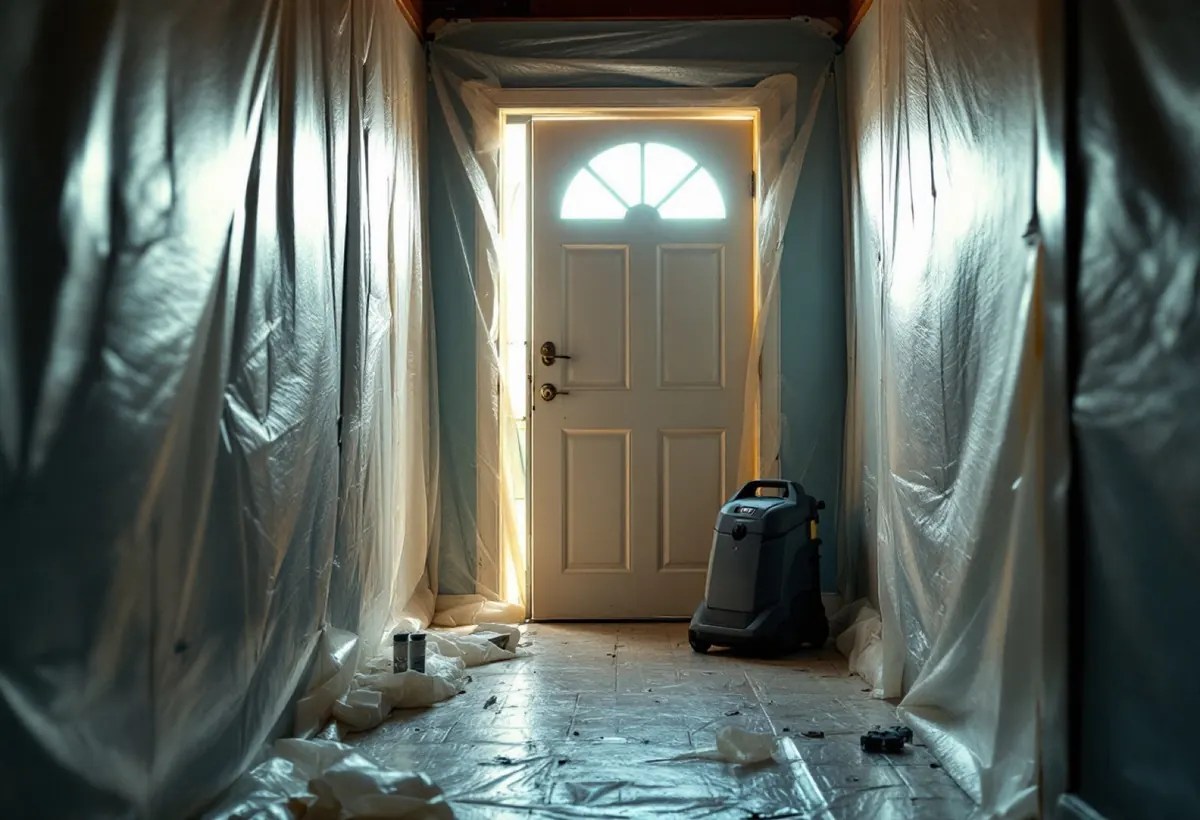
Texas builds proof into the statute. Under section 1958.154, within 10 days of finishing, the licensed remediator must give the owner a certificate of mold remediation in which a licensed mold assessor states the contamination was remediated as the plan required, and notes whether the underlying cause was fixed. A seller must hand the buyer every certificate issued in the 5 years before the sale, a duty that falls under mold disclosure laws. section 1958.155 bars one license holder from doing both assessment and remediation on the same project.
In New York City, NYC HPD's Local Law 55 guidance says the assessor files a Post Remediation Assessment Form and Mold Post Remediation Certification with the Department of Environmental Protection, and the remediator files the work plan. Florida’s section 468.8419 reaches the same independence another way: an assessor may not remediate a structure its company assessed in the past 12 months, with an exception for Division I contractors.
Testing alone does not set a trigger. EPA's mold testing page says no EPA or other federal limits exist for mold or mold spores and that, if visible growth is present, sampling is unnecessary in most cases; surface sampling can still help confirm an area was adequately cleaned. What a full job involves step by step is on our mold remediation process page, and what it costs is on the mold remediation cost page. The mold hub lists the rest.
Questions people actually ask
How urgent is mold remediation?
The clock starts with the water. EPA says to dry water damaged areas within 24 to 48 hours to prevent growth. Texas treats it as an emergency when delay after water damage would increase contamination, letting a contractor notify the state by the next business day instead of 5 days ahead. NYC gives landlords 21 to 90 days by violation class.
Do I need mold remediation after water damage?
Not if materials dry fast. EPA Table 1 covers water damage handled within 24 to 48 hours: wallboard may dry in place without swelling, but wet ceiling tiles and insulation should be discarded. Anything wet longer than 48 hours or already moldy moves to EPA’s Table 2 remediation categories.
What level of mold spores is acceptable indoors?
No legal number exists. EPA says standards or threshold limit values for airborne mold spores have not been set and there are no EPA or other federal limits, so an air test cannot show compliance. EPA adds that sampling is usually unnecessary when mold is visible.
Can the company that tested my home also remove the mold?
Not in Texas, Florida or large New York City buildings. Texas section 1958.155 bars one license holder from both roles on a project, Florida section 468.8419 bars an assessor from remediating a structure it assessed within 12 months, and NYC requires an independent assessor and remediator in buildings of 10 or more units.
When should you walk away from a house with mold?
No statute sets that line. Measure it against EPA’s categories: over 100 square feet is a large job needing full containment. In Texas, ask the seller for every certificate of mold remediation from the past 5 years, which section 1958.154 requires them to provide, and ask whether the underlying cause was certified as fixed.
Sources
- EPA's Mold Cleanup in Your Home page, U.S. EPA, updated 4 June 2026. Retrieved 9 November 2026.
- EPA's Brief Guide to Mold, Moisture and Your Home, U.S. EPA, updated 18 February 2026. Retrieved 9 November 2026.
- EPA Table 1, Mold Remediation in Schools and Commercial Buildings, Chapter 4, U.S. EPA, updated 8 September 2026. Retrieved 9 November 2026.
- Table 2 of EPA's Mold Remediation in Schools and Commercial Buildings, Chapter 5, U.S. EPA, updated 14 April 2026. Retrieved 9 November 2026.
- EPA's mold testing page, U.S. EPA, updated 14 January 2026. Retrieved 9 November 2026.
- New York Labor Law section 930 and section 931, Labor Law Article 32, New York State Senate. Retrieved 9 November 2026.
- NYC HPD's Local Law 55 guidance: Indoor Allergen Hazards, Requirements for Multiple Dwellings, Local Law 55 of 2018, NYC Department of Housing Preservation and Development. Retrieved 9 November 2026.
- Texas Occupations Code chapter 1958, sections 1958.102, 1958.153, 1958.154 and 1958.155, text read via the Public.Law reproduction of the official code. Retrieved 9 November 2026.
- Florida Statutes section 468.8411 and section 468.8419, Florida Statutes Chapter 468 Part XVI, Online Sunshine. Retrieved 9 November 2026.
- California Health and Safety Code section 17920.3, subdivision (a)(13), text read via the Public.Law reproduction. Retrieved 9 November 2026.
- This page describes statute and agency text; it is not legal advice. Local codes change. Our methodology sets out the standing rules.
For a specific property, ask the state licensing agency or local code office which threshold applies and whether your building’s unit count changes it.