
The short answer
Yes, a fish smell in house rooms where no fish was cooked can mean an overheating outlet, switch, cord or appliance. CPSC lists an odor of overheated plastic as an electrical hazard sign. Check the dangerous sources first: hot or discolored wiring devices, then a rotten egg gas odor, then tap water and drains. Only then treat it as trimethylamine from cooked fish.
On this page
Is a fishy smell with no fish an electrical warning?
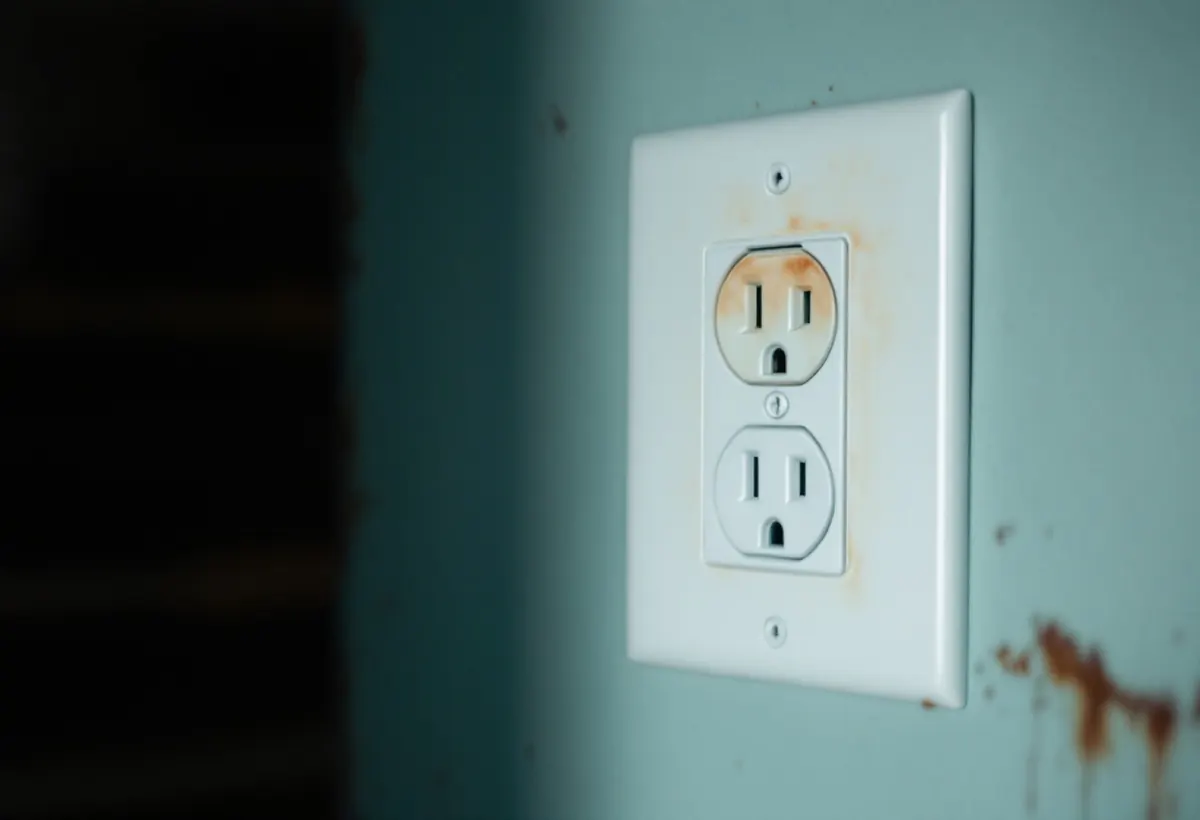
It can be, and it is the first thing to rule out because it is the only common source that can start a fire. The CPSC electrical safety notice NSN 06 3 lists “Odor of Overheated Plastic” and “Hot Switch Plates and Outlet Covers” among seven electrical system hazard warning signs, alongside flickering lights, buzzing sounds and breakers that need resetting often.
The older CPSC Guide to Home Wiring Hazards puts the same idea in plainer words: burned or overheated wires “often give off an odor of hot insulation”, and switch plates, outlet covers, cords and plugs “may be warm but should never be hot, painful to touch or discolored from heat”. Neither CPSC document uses the word fishy. That description comes from electricians and guides online, so the practical test is location: an odor that is strongest at one device, panel or appliance is treated as an electrical smell whatever word fits it.
Guides online often blame urea formaldehyde or melamine parts for the fish note. No primary source found for this page confirms which compound a hot wiring device releases. A pyrolysis study by Feng and colleagues, BioResources 2012 found urea formaldehyde resin releasing ammonia and isocyanic acid mainly between 180 and 320 °C, and the PubChem trimethylamine record describes trimethylamine as fishy at low concentration and ammonia-like at higher concentration. A fishy, ammonia-like or hot plastic odor at a device all point to the same first action.
The stakes are measured. The U.S. Fire Administration reports an estimated 24,200 residential building electrical fires in 2021, causing 295 deaths, 900 injuries and over $1.2 billion in property loss, from National Fire Incident Reporting System data.
What to do in the first five minutes
- Stop using the outlet, switch or appliance and leave it alone; do not open the cover plate.
- If the plate is hot, discolored, buzzing or sparking and you can reach the panel without passing the device, switch that circuit’s breaker off.
- Any smoke, visible heat or flame: get everyone out and call 911 from outside.
- No heat or smoke: book an electrician before the circuit is used again. The CPSC electrical safety notice NSN 06 3 also advises an electrician’s check if more than 10 years have passed since the last one.
Shock hazard guidance is in the CPSC Guide to Home Wiring Hazards; electrical repair is an electrician’s work. Wet wiring devices follow different rules, set out on the page about water in an electrical outlet. A smell that reads as burning rather than fishy is sorted on the burnt smell in house page.
Seven sources of a fishy smell, checked in order of danger
The table ranks every documented source by what it can do to the house, so the fire and gas checks come before the kitchen. Each row names the agency or study the row rests on. The flowchart after it runs the same six checks as yes or no questions.
| Source | What it smells like | Where it is strongest | What it means | First action | Basis |
|---|---|---|---|---|---|
| 1. Overheating outlet, switch, cord or appliance | Hot insulation or overheated plastic in CPSC wording; called fishy in guides online | At one device or panel; plate warm, hot or discolored | A listed electrical system hazard warning sign | Stop using it; breaker off if safe; 911 for heat, smoke or sparks; then an electrician | CPSC electrical safety notice NSN 06 3; CPSC Guide to Home Wiring Hazards |
| 2. Natural gas | Rotten eggs, sulfur or garlic | Near a gas appliance, meter or pipe; a hiss | Odorant is required to be detectable at one-fifth of the lower explosive limit | Leave; call the gas utility or 911 from outdoors; no switches, phones or flames | Public Service Commission of Wisconsin; 49 CFR 192.625 |
| 3. Tap water | Fishy, earthy, musty or grassy | Only in water from the tap; the glass test smells | Organic matter or algae in the source water | Call the water utility or local health agency | Washington State Department of Health fact sheet 331-286; San Francisco Public Utilities Commission |
| 4. Sink drain | Fishy, earthy, musty or grassy | Over one drain; the glass test is odorless | Bacteria growing in the sink drain | Drain cleaning is plumbing work, covered by The Plumbing Brief | Washington State Department of Health fact sheet 331-286 |
| 5. Dead animal in a wall, attic or crawl space | Rot that strengthens over days in one area | One room or one wall section | Decomposition, not fish | Pest removal, covered by The Pest Control Brief, then source removal | Decomposition smell removal |
| 6. Cooked or spoiling fish | Fishy at low concentration, ammonia-like at higher | Kitchen, trash, refrigerator, sink | Trimethylamine from bacterial reduction of TMAO | Vent outdoors, acid rinse, remove the trash | FAO fish quality manual; PubChem trimethylamine record |
| 7. Mold and damp | Musty rather than fishy | Damp rooms, basements, behind materials | A moisture problem an air cleaner will not fix | Find and stop the moisture | EPA Guide to Air Cleaners in the Home |
Does a gas leak smell like fish?
No. Utility gas is odorized to smell of sulfur, and the Public Service Commission of Wisconsin says people describe it as “rotten eggs, sulfur, or garlic”. The odorant is a legal requirement: under 49 CFR 192.625(a), gas in a distribution line must be odorized so that at one-fifth of the lower explosive limit it is “readily detectable by a person with a normal sense of smell”.
The Public Service Commission of Wisconsin tells anyone who smells gas to leave the area immediately and call the utility’s emergency number or 911 from a safe distance outdoors, and not to use cell phones, lights, appliances, cars, flames or sparks nearby. If a smell has any sulfur or garlic edge, follow that rule before any fish theory. A gasoline or solvent smell is a different check, covered on the gasoline smell in house page.
Is it the tap water or the drain? The glass swirl test
The Washington State Department of Health fact sheet 331-286 lists “moldy, musty, earthy, grassy, or fishy” water odor and gives a test that separates the two causes: put a small amount of water in a narrow glass, step away from the sink, swirl it and smell it. No odor in the glass means the likely source is bacteria in the sink drain. Odor in the glass points to organic matter in the water itself.
Surface water systems see this seasonally. The San Francisco Public Utilities Commission says an increase in naturally occurring algae in source water can cause “a fishy or earthy/musty odor” in drinking water, and that warmer water favors algae growth. The same Washington sheet, revised February 2018, says a sudden change in color, taste or odor of tap water could indicate a public health concern and advises against drinking water that smells objectionable; the call goes to the water utility, or the local health agency for a private well.
A drain that fails the test is plumbing work, which The Plumbing Brief covers. A smell that sits in one room and strengthens over days is more often a dead animal than fish; trapping is for The Pest Control Brief, and removing what it leaves behind is set out on the decomposition smell removal page.
Why does cooked fish smell linger for hours?
The odor compound is trimethylamine. The FAO fish quality manual explains that it forms when bacteria reduce trimethylamine oxide (TMAO), which is “naturally present in the living tissue of many marine fish species”. The American Society for Nutrition adds that freshwater fish generally do not accumulate TMAO, so freshwater species start with far less of the raw material than marine ones.
The nose is extremely sensitive to it. The PubChem trimethylamine record gives an AIHA odor threshold of 0.0002 to 0.00087 ppm, a fraction of a part per billion at the low end, so a trace left on a cutting board, a sponge or a trash bag liner is enough to smell across a room. The same record lists its water solubility as very high, which is why washing works.
The reason lemon and vinegar help is acid chemistry, not masking. Trimethylamine is a weak base with a pKa of 9.8 for its conjugate acid, per the PubChem trimethylamine record. Below that pH most of it is held as a charged salt that stays in water and does not evaporate. Using the Henderson Hasselbalch equation, the share left in the volatile form is 0.16 percent at pH 7, 1.6 percent at pH 8, 14 percent at pH 9, 61 percent at pH 10 and 94 percent at pH 11. Each pH unit lower cuts the volatile share roughly tenfold. The American Society for Nutrition reaches the same conclusion in kitchen terms: lemon, vinegar or tomato make TMA bind to water and become less volatile.
The calculation also explains a common mistake. A strongly alkaline cleaner at pH 11 leaves about 94 percent of any trimethylamine in its volatile form by the same PubChem trimethylamine record pKa, so a degreaser alone can leave a counter smelling fishy. An acidic rinse after the degreaser removes what the soap moved around.

Fastest way to get rid of fish smell in house after cooking
Order matters: remove the source, then the trace on surfaces, then the air. Each step below rests on a named source.
- Exhaust outdoors while cooking and for a while after. The EPA indoor air guidance says kitchen fans that exhaust outdoors remove contaminants directly from the room and raise the outdoor air rate, and names cooking as a short burst activity when ventilation matters most. A recirculating hood that vents back into the kitchen does not do this.
- Bag and remove the skin, bones and packaging. The FAO fish quality manual account ties the odor to bacteria working on fish tissue, so scraps left in a kitchen bin keep producing trimethylamine after the pan is clean.
- Wash, then rinse with an acid. Trimethylamine is very soluble in water per the PubChem trimethylamine record, so hot soapy water lifts it from the pan, stovetop, sink and cutting board; a wipe with diluted vinegar or lemon then holds what remains as a non-volatile salt, by the pKa chart above. Wash or replace the sponge and dish towel used on the fish.
- Carbon, not a particle filter, for the air. The EPA indoor air guidance states that air cleaners are generally not designed to remove gaseous pollutants. The EPA Guide to Air Cleaners in the Home says to choose a unit with an activated carbon or other gas filter, that carbon works “provided that there is a large amount of material”, and that there are no widely used performance ratings for gas filters.
Candles, sprays and simmering spices add a second odor without removing trimethylamine, and the EPA Guide to Air Cleaners in the Home warns that ozone generators sold as air cleaners intentionally produce ozone. The site’s ozone generator page sets out why that is the wrong tool in an occupied home. Smoke from a burnt pan is a separate residue problem handled on how to get smoke smell out of a house, and a musty note that stays after the fish odor clears is sorted on the mold smell page.
What to tell the electrician when the smell has no source
A fishy odor with no visible scorch mark is hard to find on a service call, so arrive with facts the electrician can act on. These questions follow the warning signs in the CPSC electrical safety notice NSN 06 3 and the aluminum wiring guidance in CPSC Publication 516.
- Which room, and which outlet, switch, fixture or appliance the smell is strongest at, and whether its cover plate felt warm.
- Whether the smell comes and goes with one load, such as a space heater, microwave or window unit, and which breaker feeds it.
- Whether that breaker has tripped, or a fuse blown, more than once recently, a sign the CPSC notice lists.
- Flickering or dimming lights, buzzing, or plugs that fall out of a receptacle easily, three more listed signs.
- The year the house was built. CPSC Publication 516 reports that homes built before 1972 and wired with aluminum were 55 times more likely than copper wired homes to have outlet connections reach “Fire Hazard Conditions”.
CPSC Publication 516 defines those conditions as cover plate mounting screws reaching 149 °C (300 °F), sparks from the receptacle, or charred material around it, and lists the smell of burning plastic at outlets or switches among the signs. Ask the electrician whether the house has aluminum branch wiring and, if so, which repair method CPSC recommends for it; the publication names the COPALUM crimp connector repair.
Questions people actually ask
What does a fishy smell mean in a house?
It means one of seven sources, and two of them are emergencies. The CPSC electrical safety notice NSN 06 3 lists an odor of overheated plastic as an electrical hazard sign, and odorized gas smells of rotten eggs or garlic per the Public Service Commission of Wisconsin. Rule those out, then test the tap water with a glass, then the drains, then treat it as trimethylamine from fish.
Why does my house suddenly smell like fish?
A sudden fishy smell with no fish cooking points first to a wiring device or appliance heating up, because that is the source that changes fastest; there were 24,200 residential electrical fires in 2021, according to the U.S. Fire Administration. A sudden change in tap water odor is the other sudden source, which the Washington State Department of Health fact sheet 331-286 says should be reported to the water utility.
Can a regular air purifier remove fish smell?
Only if it has a gas filter. The EPA indoor air guidance says air cleaners are generally not designed to remove gaseous pollutants, and trimethylamine is a gas. The EPA Guide to Air Cleaners in the Home says to choose activated carbon, notes it works only with a large amount of material, and says no widely used rating exists for gas removal.
Why does some fish smell less than others?
The American Society for Nutrition explains that ocean fish fill their cells with trimethylamine oxide to balance seawater salt, and that freshwater fish generally do not accumulate it. The odor compound forms from that TMAO after death, per the FAO fish quality manual, so marine species such as cod have more of the raw material for the odor than freshwater species.
Is a fishy smell from the tap water dangerous?
The Washington State Department of Health fact sheet 331-286 calls the organic matter behind these odors harmless, but says a sudden change in taste or odor could indicate a public health concern and advises not drinking water that smells objectionable. Run the glass swirl test first: if the glass smells, call the water utility or, for a well, the local health agency.
Sources
- CPSC electrical safety notice NSN 06 3, May is National Electrical Safety Month, U.S. Consumer Product Safety Commission. Retrieved 21 November 2026.
- CPSC Guide to Home Wiring Hazards, U.S. Consumer Product Safety Commission. Retrieved 21 November 2026.
- CPSC Publication 516, Repairing Aluminum Wiring, U.S. Consumer Product Safety Commission. Retrieved 21 November 2026.
- U.S. Fire Administration, Appliance and Electrical Fire Safety, page last reviewed 4 May 2023. Retrieved 21 November 2026.
- 49 CFR 192.625, Odorization of gas, Pipeline and Hazardous Materials Safety Administration rule, via eCFR. Retrieved 21 November 2026.
- Public Service Commission of Wisconsin, Natural Gas Consumer Safety. Retrieved 21 November 2026.
- Washington State Department of Health fact sheet 331-286, Color, taste and odor problems in drinking water, revised February 2018. Retrieved 21 November 2026.
- San Francisco Public Utilities Commission, Taste and Odor in Drinking Water. Retrieved 21 November 2026.
- FAO fish quality manual, Food and Agriculture Organization, Quality and quality changes in fresh fish, section 8.2 Biochemical and chemical methods. Retrieved 21 November 2026.
- American Society for Nutrition, Is Fish Smelly?, American Society for Nutrition. Retrieved 21 November 2026.
- PubChem trimethylamine record, Trimethylamine, CID 1146, National Library of Medicine: odor, odor threshold (AIHA), dissociation constant and solubility. Retrieved 21 November 2026.
- Feng and colleagues, BioResources 2012, The influence of urea formaldehyde resins on pyrolysis characteristics and products of wood-based panels, BioResources 7(4), 4600 to 4613. Retrieved 21 November 2026.
- EPA indoor air guidance, Improving Indoor Air Quality, United States Environmental Protection Agency. Retrieved 21 November 2026.
- EPA Guide to Air Cleaners in the Home, United States Environmental Protection Agency. Retrieved 21 November 2026.
This page reads published standards, agency guidance and research; it describes no inspection of any home. An odor at a wiring device, any heat or smoke, or a gas smell is a matter for an electrician, the fire department or the gas utility, not this page. How sources are chosen is set out in our methodology. More fire and odor coverage is in the fire and smoke hub.