The short answer
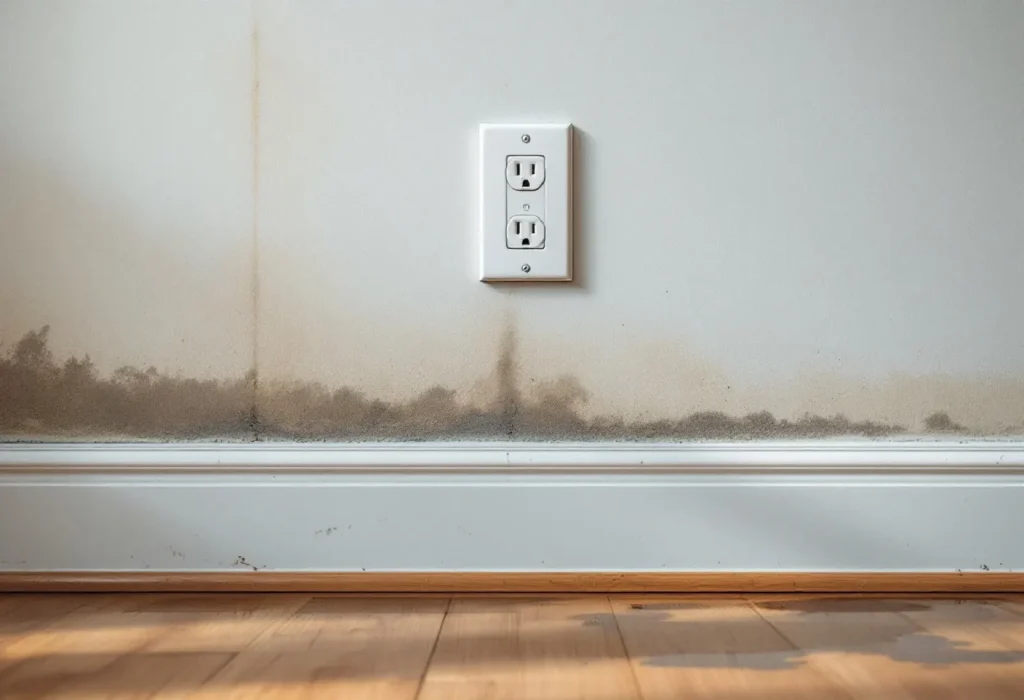
Water in an electrical outlet means the receptacle should be shut off and replaced, not dried and reused. Do not touch it or anything plugged into it; switch off its breaker while standing on a dry floor, then have an electrician inspect the circuit. NEMA CS 70006-2026 lists receptacles, GFCIs and AFCIs as replace items because sediment stays inside after drying.
Is water in an electrical outlet dangerous if nothing sparked?
Yes, and the absence of a spark is not evidence either way. NEMA CS 70006-2026, Evaluating Water-Damaged Electrical Equipment says electrical equipment exposed to water can be extremely hazardous if re-energized without a proper evaluation, because moisture reduces the integrity of the equipment and its ability to perform its function. The guide was published by the National Electrical Manufacturers Association and replaces the older NEMA GD 1.
The U.S. Consumer Product Safety Commission made the same point about protective devices in CPSC release 97-080, dated 6 March 1997: breakers, GFCIs and fuses that have been under water are unfit for continued use even if they appear to function, because water and silt inside them stop them performing as safety devices. The release adds that flood water and silt trapped inside breakers or switches can cause electrical shorting or mechanical malfunctions.
For the shock hazard itself, read the CPSC flood guidance and the OSHA electrical safety page, which lists electric shock, electrocution, fires and explosions as the dangers its standards address.
Signs an outlet took on water
Section 1.1 of NEMA CS 70006-2026 lists what evaluators look for. Visual cues: discoloration, rust or oxidation, water marks and deposits of debris, chemicals or minerals. Operational cues: abnormal operation by sound and feel, and contact devices such as receptacles that grip a plug abnormally tightly or loosely. A tripped breaker or GFCI on that circuit after a leak belongs on the same list.
What do you shut off first, and from where?
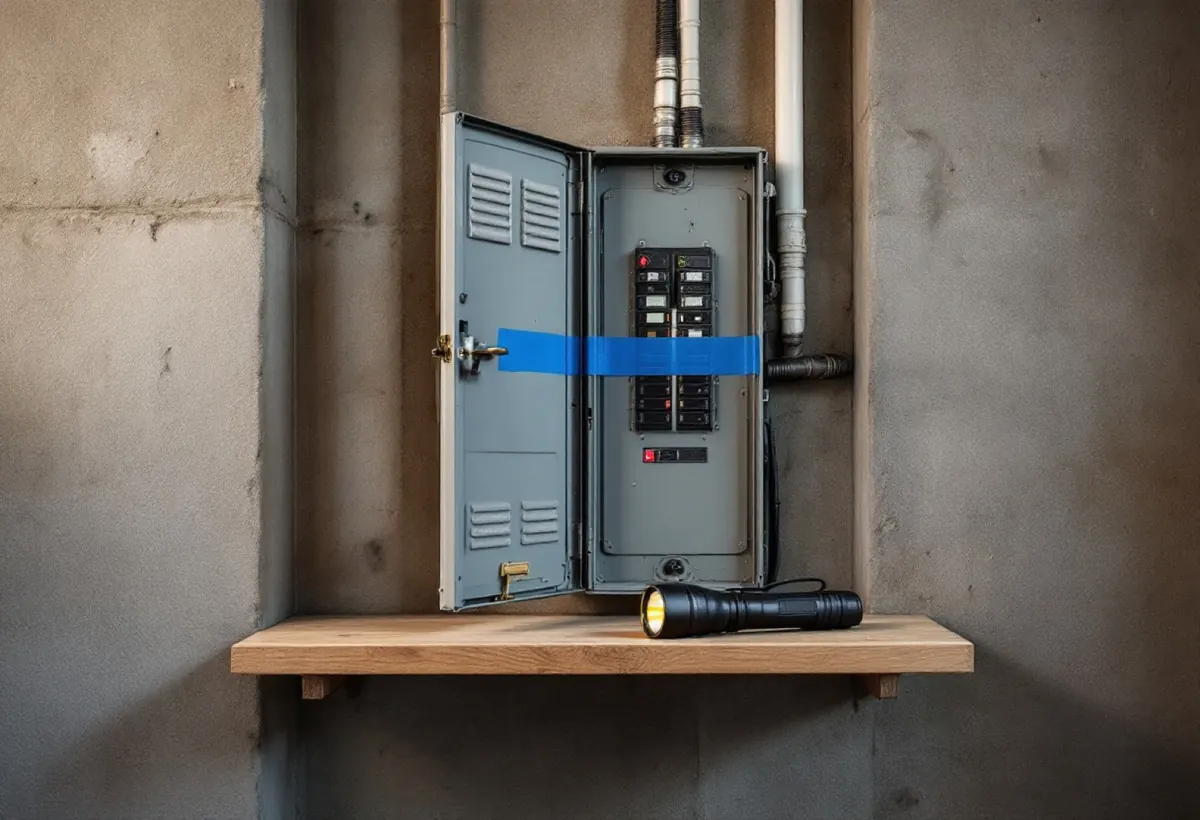
The Electrical Safety Foundation International (ESFI) flood guidance gives the sequence when a whole house is involved: flip each breaker, then turn off the main breaker, and never touch a breaker or replace a fuse with wet hands or while standing on a wet surface. For one wet outlet the same rule applies to its branch breaker. If the panel sits in the same wet basement, or reaching it means standing in water, leave it and call the electric utility or an electrician; ESFI also says to keep power off after flooding until an electrician has inspected the system.
Unplug nothing while the circuit may be live. The 2023 CPSC release 23-245, issued 11 July 2023 after the New England and New York floods, says not to touch wet appliances that are still plugged into an electrical source.
Step 2 is where homeowner advice usually stops short. Switching a breaker off is not proof the outlet is dead: a mislabelled panel or a second circuit in the same box can leave it live. For workplaces, 29 CFR 1910.333(b)(2)(iv)(B) requires a qualified person to use test equipment to verify that circuit parts are de-energized before anyone treats them as dead, and the electrician who opens your box will follow the same habit.
Can a wet outlet be dried out and reused? NEMA’s call, part by part
No for the receptacle, and no for any GFCI or AFCI on the circuit. Section 3.7 of NEMA CS 70006-2026 puts wiring devices (switches, receptacles, dimmers) and AFCIs, GFCIs and GFPEs in the replace column, and explains why: sediments and contaminants migrate into internal components and remain there even after the products have been dried or washed. For the electronic devices it is blunter: air drying and washing should not be attempted.
| Part of the outlet circuit | Where it sits | NEMA row as printed | NEMA call | Section | Reason given |
|---|---|---|---|---|---|
| Standard receptacle | The outlet itself | Wiring devices (switches, receptacles, dimmers, etc.) | Replace | 3.7 | Sediment can stay inside after drying or washing |
| GFCI receptacle or GFCI breaker | Kitchen, bath, laundry, outdoors | AFCIs, GFCIs and GFPEs | Replace | 3.7 | Electronic circuitry; do not air dry or wash |
| AFCI breaker | Panel, feeding the circuit | AFCIs, GFCIs and GFPEs | Replace | 3.7 | Device can become non-functional or a hazard |
| Standard breaker, if the panel got wet | Panel | Molded-case circuit breakers | Replace | 3.1 | Corrosion, foreign particles, loss of lubrication |
| Panelboard enclosure and bus | Panel | Panelboards | May be reconditioned, contact maker | 3.1 | Corrosion and insulation damage |
| Outlet box | In the wall behind the device | Outlet and junction boxes | Reuse possible, contact maker | 3.5 | 3.5.1 recommends replacing boxes not listed for wet locations |
| Cable listed for dry locations, such as NM-B | In the wall cavity | Wire or cable listed for dry locations | Replace | 3.6 | May become a shock hazard when energized |
| Cable suitable for wet locations | Less common indoors | Wire or cable suitable for wet locations | May be reconditioned | 3.6 | Only if the cable ends stayed dry and undamaged |
| Wall switch or dimmer on the same wet wall | Next to the outlet | Wiring devices | Replace | 3.7 | Same row as receptacles |
| Plug-in or panel surge protector | Strip or panel | Surge-protective devices | Replace | 3.7 | Electronic components affected by water |
| Hardwired smoke alarm on the circuit | Ceiling or wall | Signaling, protection and communications systems | Replace | 3.8 | Life safety reliability (3.8.4) |
Two rows are judgment calls, and both point to the maker. NEMA says outlet boxes, fittings and conduit may be reused under certain circumstances, but section 3.5.1 adds that boxes not listed for wet locations have not been evaluated for this exposure and recommends replacing them. Cable is the costly row: section 3.6 says wire or cable listed only for dry locations, naming NM-B, may become a shock hazard when energized after exposure to water.
Does a small spill count, or only floods?
Section 1 scopes NEMA CS 70006-2026 to flooding, firefighting, hurricanes and other events involving large quantities of water. A glass of water splashed on a cover plate is not literally in that list. The reasoning in section 3.7, sediment left behind after drying, is about the device, not the size of the event, which is why the safe default is a new receptacle and an electrician’s look at whether the water reached the box and cable. Flood or sewage water is different again: section 1 says contaminated water and salt water residue are particularly damaging. Sorting flood-soaked materials is covered in what to throw away after a flood.
How long does an outlet take to dry out, and is it safe after?
No published standard gives a drying time that makes a wet receptacle safe to reuse. NEMA CS 70006-2026 section 3.7 rules out drying as the fix for wiring devices and GFCIs, and the CPSC 1997 release says submerged breakers and GFCIs cannot be repaired. Neither document offers a waiting period after which a wet device becomes reusable.
What does need a drying time is the wall around the box, and that is set by moisture readings, not a clock. NEMA section 3.5.2 also asks evaluators to check that conduit and boxes are clear of debris before new conductors go in. The method is in the guide to structural drying, and the instruments and target readings are in moisture meters for water damage.
If a plug gets wet, will it still work?
It may, which is the trap. The CPSC 1997 release says submerged safety devices can appear to function and still be unfit for use. For appliances, Electrical Safety Foundation International (ESFI) flood guidance says to have an electrician inspect anything that has been wet and not to turn it on or plug it in until told it is safe, adding that some devices can be reconditioned by a trained professional and others must be replaced.
Water coming out of an electrical outlet: where is it coming from?
An outlet box is a cut opening in the wall, so water that appears at a receptacle is usually travelling down the cavity from above or wicking from a wet floor. Supply lines to sinks, dishwashers and refrigerators, a toilet or tub on the floor above, and a roof or window leak are the usual sources, and the plumbing side of each repair belongs to theplumbingbrief.com. The wall itself, with what to open and what to measure, is covered in water damage in walls. A leak from a kitchen appliance is traced in dishwasher leak water damage.
A flush-mounted box is not built to keep water out. IRC Section E4002.12 (NEC 406.9(E)) asks for a weatherproof faceplate with a water-tight connection to the finished surface only in damp or wet locations, so a receptacle in a dry interior wall carries no such requirement and nothing in the code expects it to shed water running down the cavity. The ceiling version of this route is drawn in water in a light fixture.
Which outlets should have been GFCI protected, and does a GFCI make a wet outlet safe?
IRC Section E3902 of the 2018 International Residential Code, which mirrors NEC 210.8, lists the residential locations where 125 V, 15 and 20 A receptacles need ground-fault circuit-interrupter protection. The locations line up closely with where water reaches outlets.
| Location | What the code covers | IRC 2018 section | NEC cross reference |
|---|---|---|---|
| Bathrooms | All 125 V, 15 and 20 A receptacles | E3902.1 | 210.8(A)(1) |
| Garages, grade level accessory storage | All 125 V, 15 and 20 A | E3902.2 | 210.8(A)(2) |
| Outdoors | All 125 V, 15 and 20 A | E3902.3 | 210.8(A)(3) |
| Crawl spaces at or below grade | Receptacles and lighting outlets | E3902.4 | 210.8(A)(4) |
| Unfinished basements | All 125 V, 15 and 20 A | E3902.5 | 210.8(A)(5) |
| Kitchen countertops | Receptacles serving the counter | E3902.6 | 210.8(A)(6) |
| Near any sink | Within 6 feet of the bowl’s inside edge | E3902.7 | 210.8(A)(7) |
| Near a tub or shower | Within 6 feet of the outside edge | E3902.8 | 210.8(A)(8) |
| Laundry areas | All 125 V, 15 and 20 A | E3902.9 | 210.8(A)(9) |
| Dishwasher outlet | The outlet supplying the dishwasher | E3902.10 | 210.8(D) |
A GFCI that trips during a leak did its job, but that does not clear it for reuse. NEMA CS 70006-2026 section 3.7 puts GFCIs in the replace column after water exposure, because their electronic circuitry can leave the device non-functional or a hazard, and the CPSC release 97-080 names GFCIs among the devices that must be replaced. Pressing reset on a GFCI that has had water inside it tests nothing except whether it latches.
Outdoor outlet full of rainwater: was the cover wrong?
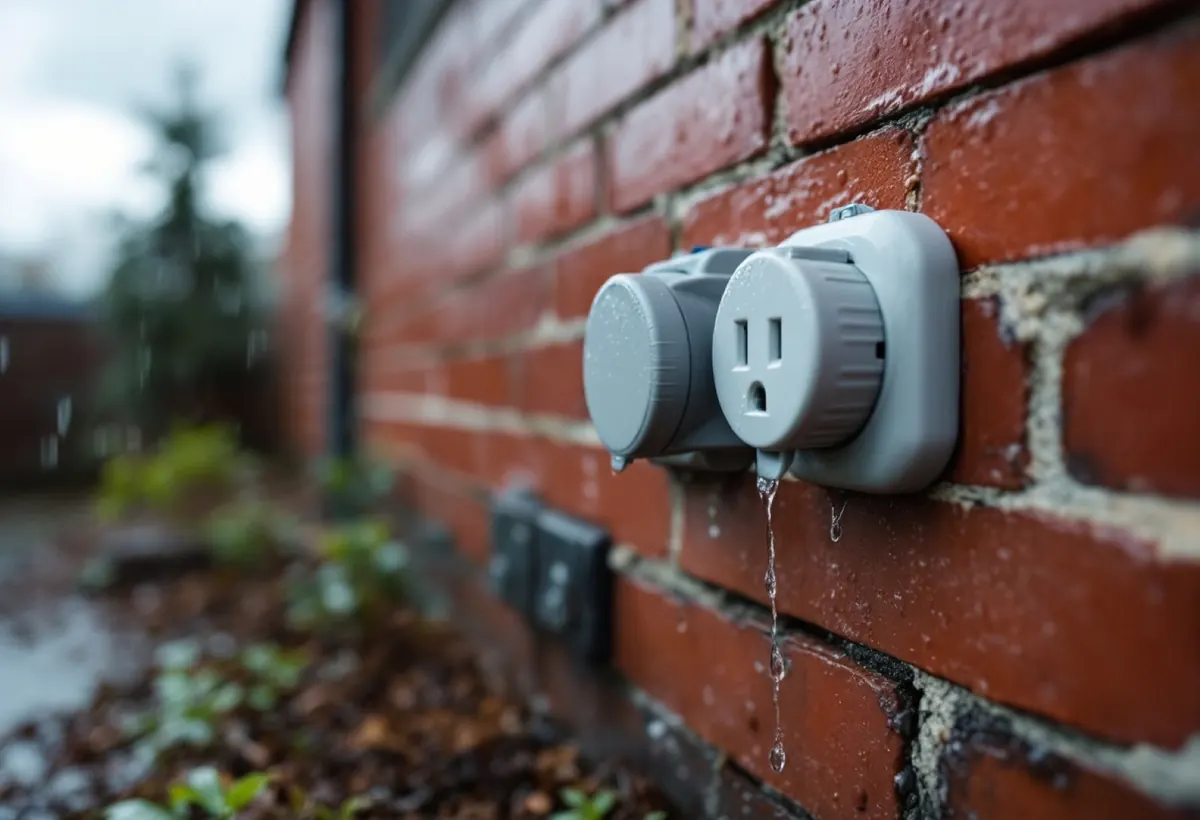
Often, yes. IRC Section E4002.9 (NEC 406.9(B)(1)) says a 15 or 20 A, 125 or 250 V receptacle in a wet location must have an enclosure that is weatherproof whether or not a plug is inserted, and an outlet box hood used for that purpose must be listed and identified as extra-duty. That is the in-use or bubble cover. A flat flip lid that only seals with nothing plugged in meets the damp location rule in E4002.8, for receptacles under a roofed porch not subject to rain or runoff, but not the wet location rule.
| Location | Cover must be weatherproof | Receptacle type | Section |
|---|---|---|---|
| Damp: roofed porch, canopy, no rain or runoff | When the cover is closed and no plug is in | Listed weather-resistant | E4002.8, NEC 406.9(A) |
| Wet: exposed to weather | Whether or not a plug is in; hood listed extra-duty | Listed weather-resistant | E4002.9, NEC 406.9(B)(1) |
| Tub or shower space | No receptacle allowed | Not applicable | E4002.11, NEC 406.9(C) |
| Flush box in damp or wet location | Weatherproof faceplate, water-tight to the surface | As above | E4002.12, NEC 406.9(E) |
The fix after an outdoor receptacle fills is the same as indoors: breaker off, replace the device per NEMA section 3.7, and fit a listed extra-duty in-use cover and a weather-resistant receptacle so the next storm does not repeat it. All 125 V, 15 and 20 A outdoor receptacles also need GFCI protection under E3902.3.
What should you ask the electrician before power goes back on?
Electrical repair is an electrician’s work, and NEMA says evaluation of water-damaged equipment should be done by qualified personnel. These questions come straight from the sections of NEMA CS 70006-2026 quoted above, so the answers can be checked against the guide:
- Did water reach the box and the cable, or only the cover plate? If the cable is NM-B and got wet, section 3.6 calls for replacement.
- Are you replacing the receptacle and any GFCI or AFCI on this circuit rather than drying them? Section 3.7 says not to air dry or wash them.
- Is the box listed for wet locations? If not, section 3.5.1 recommends replacing it.
- Will you run an insulation resistance test on the circuit before re-energizing? Section 1.1 names it among the performance tests.
- Does this need a permit or inspection here? Section 2.1 says to consult the authority having jurisdiction, which may be the building official or electrical inspector.
- Was the water clean, gray or sewage? Section 1 says contaminated and salt water are more damaging, and that changes what can stay.
For restoration contractors
Do not set air movers or dehumidifiers on a wet wall with a live receptacle in it, and do not plug equipment into the wet circuit. Under 29 CFR 1910.333(b)(2)(iv)(B) the circuit is not dead until a qualified person has tested it. Write the outlet into the moisture map and leave the device decision to the electrician, citing NEMA CS 70006-2026 section 3.7 in the scope so the replacement line item has its basis. The rest of the water section is on the water hub.
Questions people actually ask
Will a little bit of water in an outlet start a fire?
Not necessarily at once, and that is why it gets ignored. The CPSC 1997 release says water and silt trapped inside breakers or switches can cause electrical shorting or mechanical malfunctions, and that wet safety devices may eventually fail. NEMA CS 70006-2026 section 3.7 adds that sediment stays inside a receptacle after it dries. Switch the breaker off and replace the device rather than waiting.
Can I reset a GFCI outlet after it got wet?
Resetting only shows the latch works, not that the ground-fault sensing does. NEMA CS 70006-2026 section 3.7 lists GFCIs as replace items after water exposure and says air drying and washing should not be attempted, and CPSC release 97-080 names GFCIs among devices that must be replaced after being under water. Leave the breaker off and have the GFCI swapped.
What if the outlet is buzzing or crackling after water got in?
Do not touch the outlet or the plug. Switch off that circuit’s breaker, or the main, from a dry floor with dry hands, as ESFI’s flood guidance instructs, and keep it off until an electrician has inspected it. NEMA CS 70006-2026 section 1.1 lists abnormal sound among the operational cues evaluators use, so mention the noise when you call.
Who decides whether water-damaged wiring can stay?
Three parties, under NEMA CS 70006-2026. Section 1.1 says qualified personnel should evaluate the equipment, section 2 says the original manufacturer should be contacted before any reconditioning, and section 2.1 says the authority having jurisdiction, such as the building official or electrical inspector, may set permit and inspection rules. During declared emergencies, FEMA may take that role.
Does a wet outlet mean the wire in the wall is ruined?
Only if the water reached it. NEMA CS 70006-2026 section 3.6 calls for replacing wire or cable listed for dry locations, such as NM-B, after exposure, and allows cable suitable for wet locations to be reconditioned only if its ends stayed dry and it is undamaged. An electrician pulling the receptacle can see whether the box and cable jacket are wet.
Sources
- NEMA CS 70006-2026, Evaluating Water-Damaged Electrical Equipment, National Electrical Manufacturers Association, formerly NEMA GD 1: sections 1, 1.1, 2.1, 3.1, 3.5, 3.6, 3.7, 3.8 and Annex A. Retrieved 17 November 2026.
- CPSC release 97-080, U.S. Consumer Product Safety Commission, 6 March 1997, on replacing breakers, GFCIs and fuses that have been under water. Retrieved 17 November 2026.
- CPSC release 23-245, U.S. Consumer Product Safety Commission, 11 July 2023, flood safety. Retrieved 17 November 2026.
- Electrical Safety Foundation International (ESFI) flood guidance, Electrical Safety Foundation International, Flood Electrical Safety: High Water, High Stakes (Internet Archive copy of 21 October 2026). Retrieved 17 November 2026.
- 29 CFR 1910.333(b)(2)(iv)(B), Occupational Safety and Health Administration, verification of de-energized condition, via the eCFR. Retrieved 17 November 2026.
- OSHA electrical safety page, Occupational Safety and Health Administration, Electrical overview (Internet Archive copy of 17 September 2026). Retrieved 17 November 2026.
- IRC Section E3902 and IRC Sections E4002.8 to E4002.12, International Residential Code 2018 as adopted in Pennsylvania, Chapters 39 and 40 with NEC 210.8 and 406.9 cross references, via UpCodes. Retrieved 17 November 2026.
- The component table maps NEMA rows onto a household receptacle circuit; the mapping is ours, the calls are NEMA’s. Our methodology sets out the standing rules.
This page describes published standards and agency guidance. It is not electrical advice for a specific installation; an electrician and the local authority having jurisdiction decide what is replaced.