The short answer
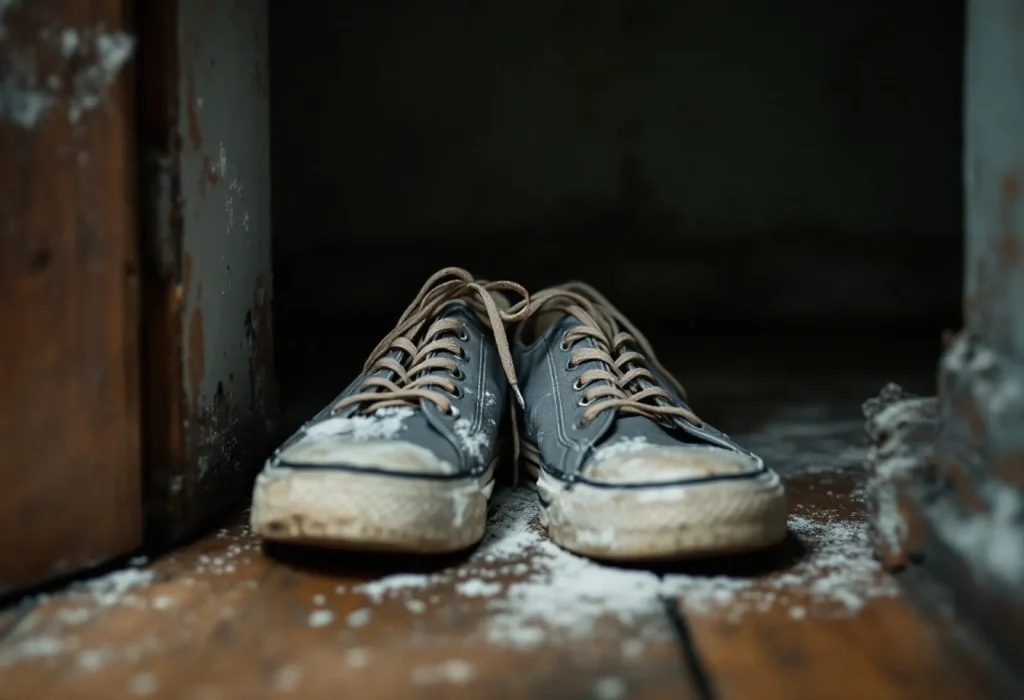
Mold on shoes can usually be cleaned off rubber soles, EVA foam and canvas, but moldy foam insoles should be replaced, because EPA says porous materials can be hard or impossible to clean completely. Brush the pair outdoors, wash with mild detergent, air dry at room temperature for at least 8 hours per the Nike guide, then store shoes where humidity stays at or below 50%, the CDC ceiling.
Which shoe materials can you wash, wipe with alcohol, or must you bin?
The table below sets each part of a shoe against what its maker or a public agency says it tolerates. Maker rules come from the Nike shoe cleaning guide, the Allbirds shoe care page and the Crocs cleaning page; the keep or discard column applies EPA’s porous and nonporous split from EPA 402-K-01-001. Where a maker is silent, the cell says so instead of guessing.
| Material | Machine wash? | Alcohol wipe? | Heat limit | Keep or discard | Source |
|---|---|---|---|---|---|
| Canvas uppers | Check the label: Nike advises against the machine for its shoes | Not covered by makers; test a hidden spot first | Air dry at room temperature, no dryer (Nike) | Keep if growth brushes off and fabric is sound | Nike; EPA |
| Knit and mesh (Flyknit type) | No, hand wash with mild soap (Nike) | Not covered by makers | Avoid the dryer: heat can damage knit (Nike) | Keep if surface only | Nike |
| Wool and tree fibre knit | Yes: gentle cold cycle, delicates bag, no softener or bleach (Allbirds) | Not covered by makers | Air dry, no machine drying (Allbirds) | Keep; replace insoles if moldy | Allbirds |
| Suede and nubuck | No (Nike, all shoes) | NDSU leather recipe: 1 cup denatured alcohol to 1 cup water, dyes are sensitive, so spot test | Air dry in circulating air (NDSU) | Keep if surface only; nap may stay marked | NDSU; Nike |
| Rubber outsoles, EVA midsoles | Brush with mild detergent solution (Nike) | Not needed: EPA lists water and detergent for plastics | Room temperature (Nike) | Keep: nonporous under EPA Table 1 | EPA; Nike |
| Croslite foam clogs | Yes, delicate cycle, gentle detergent (Crocs) | Not covered by maker | Keep away from direct sun and forced air heaters: shrink or warp (Crocs) | Keep | Crocs |
| Foam and fabric insoles | Hand wash out of the shoe (Nike, Allbirds) | Not covered by makers | Air dry fully before refitting (Nike) | Replace if moldy: porous material under EPA Method 4 logic | EPA; Nike |
| Laces | Hand wash in mild soapy water (Nike, Allbirds) | Not needed | Dab dry with a soft cloth (Nike) | Keep | Nike; Allbirds |
Smooth leather dress shoes and boots follow different rules for conditioning after cleaning, and they are covered on our mold on leather page.
Canvas and knit sneakers: does the washing machine help or hurt?
The two makers disagree, and both are right for their own products. The Nike shoe cleaning guide says Nike does not recommend washing shoes in a washing machine, because delicate materials can be damaged in the washer and the heat from the dryer can deform a pair. It sends knit owners to a mild soapy solution, a soft brush worked in the direction of the knit, and no bleach.
The Allbirds shoe care page says its shoes, with a few exceptions, can go in the machine: insoles and laces out, shoes in a delicates bag or pillowcase, a gentle cycle with cold water and a small amount of mild detergent, no fabric softener and no bleach. Both makers end at the same step, which is air drying with no machine dryer.
For mold, the wash method matters less than what happens first and last. The UF/IFAS Extension FCS5232, Keeping It Clean: Controlling Mildew advises brushing and airing mildewed textiles outdoors, and the NDSU Extension AE1179, Molds in Your Home gives the same order for clothing: brush, shake, sun and air outdoors, then launder washable items. Brushing indoors moves spores into the closet you are trying to clear. Garments from the same closet are covered on our mold on clothes page.
Suede and nubuck: why a wet wash is the wrong first move
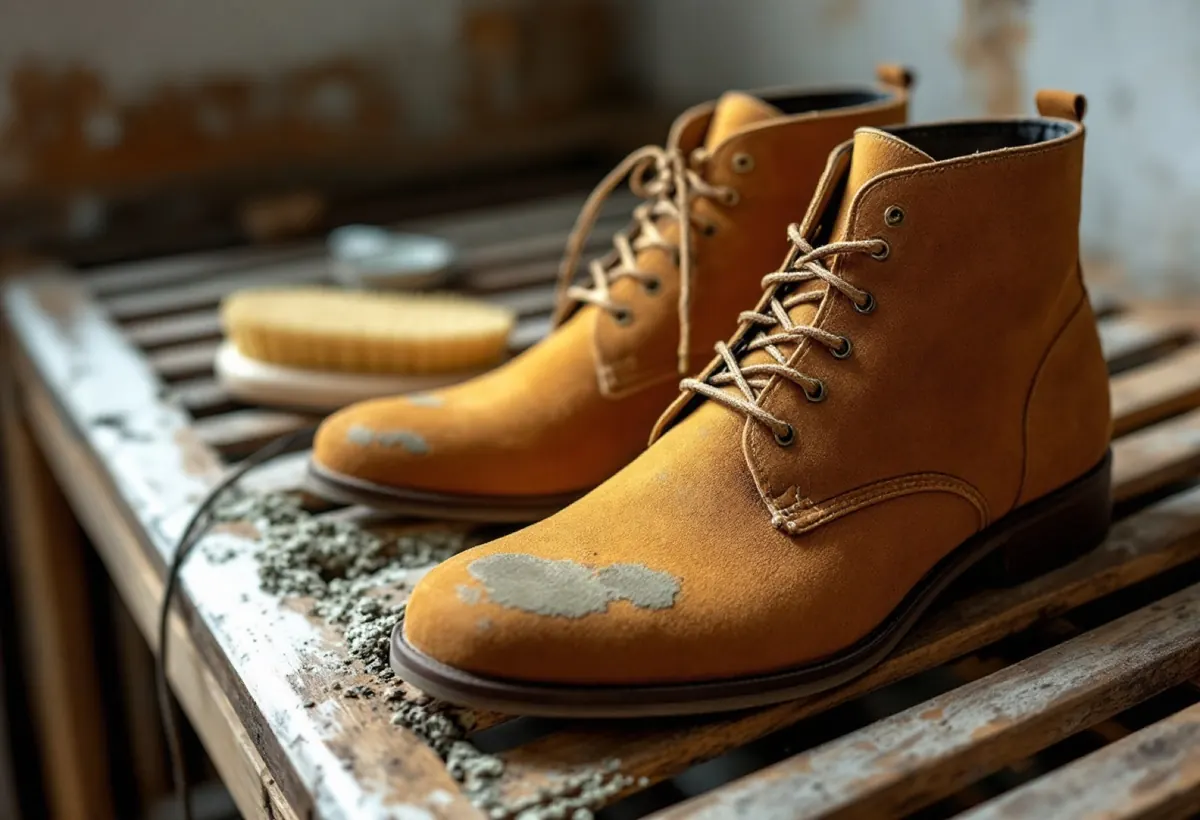
Suede and nubuck are leather with a raised nap, and the Nike shoe cleaning guide handles them dry first: a suede brush or towel worked with the grain, then a suede rubber or pencil eraser on marks, and only for stubborn stains a cloth dipped in white vinegar, scrubbed in alternating directions. Nothing in that sequence soaks the hide.
For visible mold on leather goods, the NDSU Extension AE1179, Molds in Your Home publishes one household recipe: moisten a cloth with 1 cup of denatured alcohol to 1 cup of water, wipe away the mold, and dry in circulating air. The same page warns that leather dyes are very sensitive to numerous substances, so test the mix on the tongue or heel counter before the toe box. How alcohol strength affects mold is covered on our rubbing alcohol page.
Two limits apply to any rescue. Under EPA Table 2 footnotes in EPA 402-K-01-001, molds gradually destroy the things they grow on, so cleaning may not restore the original appearance, so a stain can outlast the mold that made it. If growth is inside the lining as well as on the nap, the lining is a porous textile and falls under the same discard logic as an insole.
Rubber outsoles, EVA midsoles and Croslite clogs: the easiest parts to save
EPA Table 1 in EPA 402-K-01-001 groups plastics and metals as nonporous hard surfaces and gives one method: vacuum or damp wipe with water and mild detergent, allow to dry, scrub if necessary. Solid rubber outsoles and sealed EVA midsoles sit closest to that row of any shoe part, and the Nike shoe cleaning guide uses the same tools: a soft brush or toothbrush with the mild solution over the outsole and midsole, then a dry soft cloth.
The Crocs cleaning page allows Croslite clogs and slides on a delicate washing machine cycle with gentle laundry detergent, or a sink wash with a damp cloth, mild soap and cold water. Its warning is about heat, not water: extreme heat can cause the shoes to shrink or warp, so keep them away from direct sunlight and forced air heaters while they dry. That rules out drying a rinsed pair on a car dashboard or a heating vent.
Bleach is not required for any of these. The A Brief Guide to Mold, Moisture and Your Home says a biocide such as chlorine bleach is not recommended as a routine practice during mold cleanup, and the Nike guide warns that bleach can damage knit material. Where soles have a fabric or foam footbed glued on, treat that layer as an insole, not as rubber.
Moldy foam insoles: why EPA logic says replace, not rescue
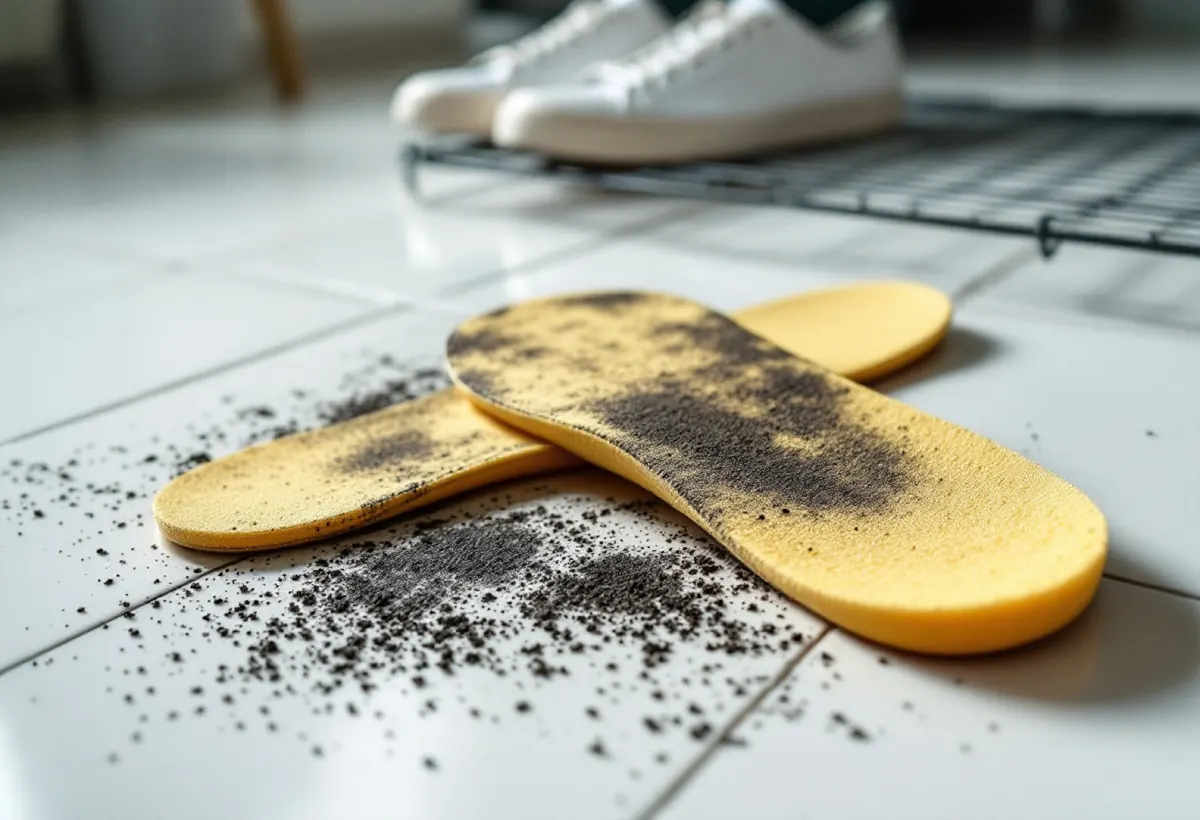
EPA’s Mold Remediation in Schools and Commercial Buildings guide explains the rule in one line: molds infiltrate porous substances and grow on or fill in empty spaces or crevices, so the mold can be difficult or impossible to remove completely. The EPA home guide gives the same reasoning for ceiling tiles and carpet, which may have to be thrown away once moldy. Open cell insole foam and the felt or fabric topcloth bonded to it are porous in exactly that sense.
Makers point the same way without using the word mold. The Nike shoe cleaning guide says that if odour persists after cleaning, you may want to replace the insoles, and the Allbirds shoe care page calls absorbent insoles the main culprit for smell and sells replacements. Kansas State Extension adds that mold grows on materials contaminated with soil, which describes the footbed of any worn pair.
EPA Method 4 in EPA 402-K-01-001 is the disposal step: remove the material, seal it in plastic bags, and dispose of it as normal waste. Bag moldy insoles before carrying them through the house, and wipe the empty footbed cavity as a hard surface once the insole is out.
Why do shoes mold in a closet at 50% humidity, inside the EPA target?
Because the shoe is not sitting in the room air. EPA’s A Brief Guide to Mold, Moisture and Your Home sets the room target: below 60% relative humidity, ideally 30 to 50%. Per the CDC mold page, the ceiling is stricter: no higher than 50%. According to Kansas State Extension, in Kansas State University MF-2141, Controlling Mold Growth in the Home, levels above 70% appear optimal for mold growth, and the building science criterion in ANSI/ASHRAE Addendum a to Standard 160-2009 caps the 30 day average at the material surface below 80% between 41°F and 104°F.
The gap between those numbers is the closet wall. Using the NOAA National Weather Service vapor pressure worksheet, air at 70°F and 50% holds the same moisture whether it touches a warm shirt or a cold wall, but relative humidity rises as the surface cools. Per the formula, a shoe resting on a 60°F exterior wall sits in 71% air, past the Kansas State line, and on a 55°F wall it sits in 85%, past the ASHRAE surface limit. Condensation starts near 50.5°F.
The Kansas State University MF-2141, Controlling Mold Growth in the Home names this pattern directly: dark mold patches inside the upper corner of a closet on an outside wall. The NDSU Extension AE1179, Molds in Your Home adds the other two closet causes, clothing stored damp or dirty and a cool outside wall, and lists leather and dirt among the organic materials mold grows on. Worn shoes bring both: sweat moisture from the day and skin and soil residue in the footbed. The closet itself, from shelving to drywall, is covered on our mold in closet page, and the humidity question in full on what humidity does mold grow.
The practical fixes come from the same sources. The UF/IFAS Extension FCS5232, Keeping It Clean: Controlling Mildew says to open closet doors so air circulates, not to hang sweaty garments in the closet, and to keep shoes dry and clean. The NDSU Extension AE1179, Molds in Your Home adds moving furniture away from walls; for shoes that means a rack set away from the exterior wall and off the floor rather than a pile in the back corner. A $10 to $50 humidity meter, the price range the EPA guide quotes, shows whether the closet stays under the CDC line.
How long can wet shoes sit before mold starts, and does a garage or car change it?
The A Brief Guide to Mold, Moisture and Your Home gives the window: dry water damaged areas and items within 24 to 48 hours to prevent mold growth. The NDSU Extension AE1179, Molds in Your Home is blunter, saying mold will grow on damp surfaces within a couple of days at normal temperatures, and Kansas State University MF-2141, Controlling Mold Growth in the Home says some molds can form a new colony in one or two days on damp materials. A pair soaked in a rainstorm and left in a gym bag overnight is already inside that window.
Temperature narrows or widens it. Per the NDSU Extension AE1179, Molds in Your Home, molds grow best between 77 and 86°F but can grow anywhere from 32 to 95°F. A summer garage or car sits near the fast end of that band, and a winter garage slows growth without stopping it. Kansas State notes that at low humidity mold goes dormant and can regenerate when humidity rises again, so a cleaned pair stored back in the same damp spot can grow it again.
Drying is where most damage happens. The Nike shoe cleaning guide says to air dry at room temperature and allow at least 8 hours for many shoes, with insoles out and drying separately. The Crocs cleaning page speeds drying with a circulating fan but keeps pairs away from direct sun and forced air heat. No maker page reviewed for this article publishes a safe temperature in degrees, so room temperature is the only heat limit these sources state.
Cleaning a closet full of moldy shoes: when EPA’s 10 square foot line applies
EPA Table 2 in EPA 402-K-01-001 sorts jobs by total moldy surface. Under 10 square feet is small: no containment and minimum protective equipment of an N95 respirator, gloves and goggles. A closet wall behind the shoes can push a job past that line even when the shoes alone do not. EPA also lists using fans to dry items among actions likely to stir up mold, so run fans only after shoes are cleaned and bagged contents are out of the room.
The EPA home guide asks for long gloves to mid forearm and goggles without vent holes, and says ordinary household rubber gloves are enough with water and mild detergent. Fit and filter choice for the mask are on our N95 mask for mold page. Method 3 in EPA 402-K-01-001, a HEPA vacuum after the material is fully dry, is the closing step for the closet floor and shelf where the shoes stood.
Out of scope: this page covers cleaning and storage only. Health questions about mold exposure belong with the CDC mold page and the EPA mold pages listed in the sources.
Questions people actually ask
Can moldy shoes be saved?
Usually, if the growth is on rubber, EVA, canvas or the surface of suede. EPA treats nonporous plastics as cleanable with water and mild detergent, and Crocs allows a delicate machine cycle for its Croslite foam. Insoles are the exception: EPA says porous materials can be difficult or impossible to clean completely, and Nike and Allbirds both point owners to replacement insoles.
Does white mold on shoes need different treatment from black or green mold?
No. Kansas State Extension publication MF-2141 notes that mold growth shows as discoloration ranging from white to orange and green to brown and black, and the EPA guides set cleanup by material and area, not colour. White fuzz on suede gets the same dry brush and dilute alcohol test as a black spot; a moldy foam insole is replaced whatever the colour.
Can I put moldy sneakers in the dryer?
Not according to the three maker pages checked for this article. Nike says dryer heat can deform shoes, Allbirds says to avoid machine drying and air dry instead, and Crocs says extreme heat can shrink or warp its clogs. Nike’s guide allows at least 8 hours of room temperature air drying, with insoles drying separately out of the shoe.
Should I use bleach on moldy shoes?
EPA’s home guide says chlorine bleach is not recommended as a routine practice during mold cleanup, and Nike warns bleach can damage knit uppers. Allbirds says no bleach in its machine wash. If you choose bleach for white rubber, the CDC caps the mix at 1 cup of household bleach per 1 gallon of water and says never mix it with ammonia.
Why do shoes mold in the garage but not in the house?
Temperature and drying time are the usual difference. NDSU Extension says molds grow best between 77 and 86 degrees Fahrenheit, which a summer garage often reaches, and Kansas State puts optimal growth above 70 percent relative humidity. Shoes dropped there wet after rain or yard work also start inside the 24 to 48 hour drying window EPA sets.
Sources
- A Brief Guide to Mold, Moisture and Your Home, United States Environmental Protection Agency, last updated 18 February 2026. Humidity targets, 24 to 48 hour drying, porous materials, biocides, gloves and goggles. Retrieved 20 November 2026.
- Mold Remediation in Schools and Commercial Buildings, chapter 3, and the full guide EPA 402-K-01-001 (September 2008), United States Environmental Protection Agency. Tables 1 and 2, cleanup methods 1 to 4, PPE. Retrieved 20 November 2026.
- CDC mold page, CDC. Per the CDC page: humidity no higher than 50%, bleach ratio. Retrieved 20 November 2026.
- NDSU Extension AE1179, Molds in Your Home, North Dakota State University Extension, Kenneth Hellevang, reviewed April 2023. Temperature range, closets, leather and textile methods. Retrieved 20 November 2026.
- Kansas State University MF-2141, Controlling Mold Growth in the Home, Kansas State University Agricultural Experiment Station and Cooperative Extension Service, September 1995, as hosted by the Broome County, New York health department. Retrieved 20 November 2026.
- UF/IFAS Extension FCS5232, Keeping It Clean: Controlling Mildew, University of Florida IFAS Extension, revised October 2026. Closet and shoe storage advice, alcohol dilution. Retrieved 20 November 2026.
- ANSI/ASHRAE Addendum a to Standard 160-2009, ASHRAE, surface humidity criterion for minimizing mold growth on building envelope surfaces. Retrieved 20 November 2026.
- National Weather Service vapor pressure worksheet, National Weather Service El Paso office. Vapor pressure and relative humidity formula. Retrieved 20 November 2026.
- Nike shoe cleaning guide, Nike, last updated 18 November 2022. Retrieved 20 November 2026.
- Allbirds shoe care page, Allbirds. Retrieved 20 November 2026.
- Crocs cleaning page, Crocs UK. Retrieved 20 November 2026.
- Surface humidity figures are arithmetic on the NWS formula, computed when this page was built and rounded to whole percent. Our methodology sets out the standing rules. More mold guides sit in our mold hub.
Maker care rules differ by model and change over time. Check the care label inside the tongue before washing, and test any alcohol or vinegar mix on a hidden spot.