The short answer
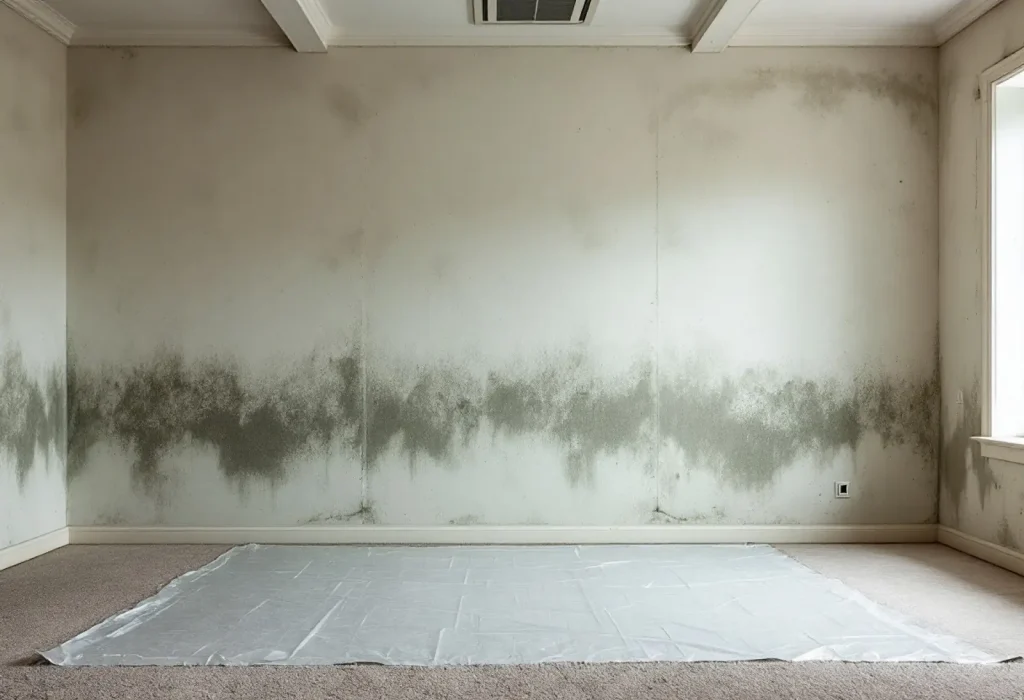
Level 3 mold remediation is the third of five levels in New York City’s 2000 mold guidelines: 30 to 100 square feet, such as several wallboard panels. It calls for oversight by a health and safety professional, N95 respirators, plastic sheeting over the work area and adjacent areas, sealed vents and HEPA vacuuming. EPA and NYC’s 2008 revision merge it into a 10 to 100 square foot medium tier.
On this page
Who wrote the Level 3 definition, and is it still current?
The numbered levels come from one document: the New York City Department of Health’s Guidelines on Assessment and Remediation of Fungi in Indoor Environments, dated April 2000 with edits in January 2002. Section 3 sets out five levels and says the size of the area primarily determines the type of remediation. The text survives in the NYC DOHMH 2000 guidelines (archived copy); nyc.gov no longer hosts it.
Section 3.3 defines Level III as Large Isolated Areas of 30 to 100 square feet, giving several wallboard panels as the example. The department added that its sizing levels were based on professional judgement and practicality, and that there was not adequate data to tie the extent of contamination to health outcomes, per the 2000 NYC guidelines.
In November 2008 the department issued a revision that, in its own preface, supersedes all prior editions. The 2008 NYC revision drops the numbered levels and uses three sizes: small (10 square feet or less), medium (10 to 100) and large (over 100 contiguous square feet), plus a separate HVAC track. So a contractor who quotes Level 3 is citing a superseded city guideline, which is common and not wrong, but it is not a regulation anywhere.
What does a Level 3 job require, line by line?
Section 3.3 of the NYC 2000 guidelines lists eight practices as the minimum for 30 to 100 square feet. The table restates each one in the document’s own terms, in the order the guideline gives them, from the NYC DOHMH 2000 guidelines (archived copy).
| NYC 2000 Level III item | What the guideline says |
|---|---|
| Who does the work | Personnel trained in handling hazardous materials; a health and safety professional with microbial investigation experience consulted first to oversee |
| Respirator | N95 disposable respirator, used under OSHA 29 CFR 1910.134; gloves and eye protection |
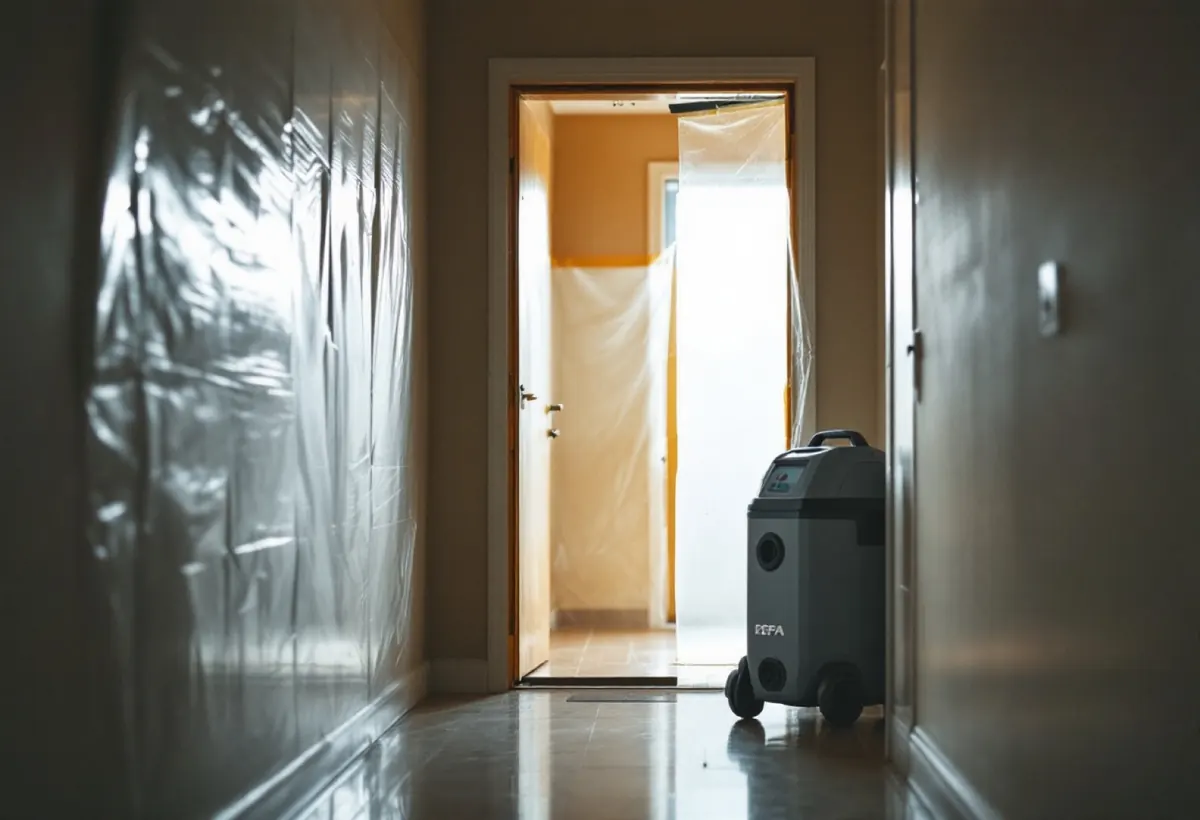
| Containment | Work area and areas directly adjacent covered with plastic sheeting and taped; ventilation ducts and grills sealed |
| Occupancy | Work area and directly adjacent areas unoccupied |
| Dust control | Misting, not soaking, surfaces before removal |
| Waste | Uncleanable material out in sealed plastic bags; no special disposal requirements |
| Final cleaning | HEPA vacuum, then damp cloth or mop with detergent; all areas left dry and visibly free of debris |
| Escalate to Level IV | If work will be very dusty or growth is heavy (blanket rather than patchy coverage) |
Two details separate Level III from Level II. First, Level II (10 to 30 square feet) can be done by regular building maintenance staff, while Level III brings in an outside health and safety professional. Second, Level II covers only the work area with plastic; Level III extends the sheeting and the vent sealing to the areas directly adjacent. What Level III does not require is negative air: the HEPA exhaust fan, airlocks and a decontamination room first appear at Level IV, over 100 contiguous square feet.
The full sequence of a job, from moisture source to rebuild, sits in our mold remediation process guide. This page stays on the size tiers.
How do NYC levels, EPA sizes and IICRC conditions line up?
Four frameworks are quoted as mold remediation levels, and only two of them share break points. The NYC 2008 revision and Table 2 of EPA's Mold Remediation in Schools and Commercial Buildings (EPA 402-K-01-001) both split at 10 and 100 square feet; the NYC 2000 document adds a break at 30; IICRC S520 does not use area at all. The crosswalk puts each framework’s requirement in the row for the same area band.
| Area of growth | NYC 2000 (Levels I to V) | NYC 2008 (sizes) | EPA 402-K-01-001 Table 2 | IICRC S520 |
|---|---|---|---|---|
| Up to 10 sq ft | Level I: maintenance staff, N95, no containment | Small: trained maintenance staff, N95, area unoccupied | Small: N95, gloves, goggles; containment none required | No size tiers |
| 10 to 30 sq ft | Level II: maintenance staff, N95, work area under plastic, HEPA vacuum | Medium: N95, floor and egress covered, vents sealed | Medium: limited or full PPE; limited containment | No size tiers |
| 30 to 100 sq ft | Level III: professional oversight, N95, work and adjacent areas under plastic, vents sealed | Medium (same tier as 10 to 30) | Medium (same tier as 10 to 30) | No size tiers |
| Over 100 sq ft | Level IV (contiguous): full face HEPA respirator, full isolation, negative pressure, airlocks, air monitoring before reoccupancy | Large (contiguous): half face P100 minimum, coveralls, HVAC off, isolation; negative air and airlocks to consider | Large, or significant exposure potential: full PPE (full face PAPR), full containment, double poly, airlock | No size tiers |
| HVAC system | Level V: under 10 sq ft maintenance staff; over 10 adds isolation and HEPA exhaust; over 30 adds full face and decon room | Separate HVAC track: under 10 and over 10 sq ft | Not a separate tier | Not a separate tier |
| Contamination state | Not graded | Not graded | Not graded | Condition 1 normal ecology; 2 settled spores; 3 actual growth |
EPA’s own words on its tiers are worth quoting exactly: the guidelines are based on the size of the affected area to make it easier to select techniques, “not on the basis of health effects or research showing there is a specific method appropriate at a certain number of square feet”, per EPA Table 2. EPA also defines its containment grades in EPA's chapter on remediation: limited containment is a single layer of 6-mil fire retardant polyethylene with a slit entry and covering flap, kept under negative pressure; full containment uses double layers plus a decontamination chamber or airlock.
The IICRC column reads differently because the IICRC S520 page publishes a standard of care, now in its fourth edition (2024) after editions in 2003, 2008 and 2015. Its three Conditions, as described when the first edition launched (ACHR News, 31 October 2003), are Condition 1, normal fungal ecology; Condition 2, settled spores with trace growth; and Condition 3, actual growth, visible or hidden. A 12 square foot patch and a 300 square foot wall are both Condition 3.
Why does one quote say Level 3 and another say medium?
Because the same 50 square foot wall is Level III under NYC 2000, medium under NYC 2008 and EPA, and Condition 3 under IICRC S520. None of the four contradicts the others; they slice the same area differently. The practical gap is in containment: NYC 2000 Level III asks for plastic and sealed vents but no negative air, while EPA medium jobs call for limited containment held under negative pressure, using a HEPA filtered fan unit or, for small areas, an exhaust fan ducted outdoors, per EPA's chapter on remediation.
Several contractor pages that rank for this question run the systems together: one gives Level 3 as “thirty feet or more” instead of square feet, another pairs the 30 to 100 band with EPA’s 10 to 100 band in the same article. When a bid names a level, ask three things: which document the level comes from (NYC 2000, NYC 2008, EPA 402-K-01-001 or IICRC S520), whether the containment will run under negative pressure, and which respirator class the crew will wear. The answers tell you more than the number.
How do you measure the square footage that sets the level?
Measure the visible growth, length times height, on each surface, then decide whether to add the patches together. The frameworks disagree on that step. NYC 2000 Level IV and NYC 2008 Large both specify contiguous area, and Texas uses 25 contiguous square feet; EPA Table 2 headings say total surface area affected, per EPA Table 2. The 2008 NYC revision gives growth on separate walls in a single room as its example of a large, contiguous area, so one room is one count.
Level II’s example in the 2000 NYC guidelines is individual wallboard panels and Level III’s is several panels, so the arithmetic below uses a 4 by 8 foot sheet, 32 square feet, as the unit. On that basis a Level III job is roughly 1 to 3 full sheets of growth.
| Growth area (labelled arithmetic) | Sq ft | NYC 2000 level | EPA Table 2 tier |
|---|---|---|---|
| One 4 x 8 ft drywall sheet | 32 | Level II | Medium |
| Two full sheets | 64 | Level III | Medium |
| Three full sheets | 96 | Level III | Medium |
| Four full sheets, contiguous | 128 | Level IV | Large |
Hidden growth changes the count. EPA lists extensive hidden mold, such as behind vinyl wallpaper or in the HVAC system, as a reason for a more cautious approach, per EPA Table 2. A wall cavity opened mid job can move a 30 square foot Level III estimate past 100, which is why mold remediation timelines and bids often carry a change clause.
When does a 30 to 100 square foot job get Level 4 controls?
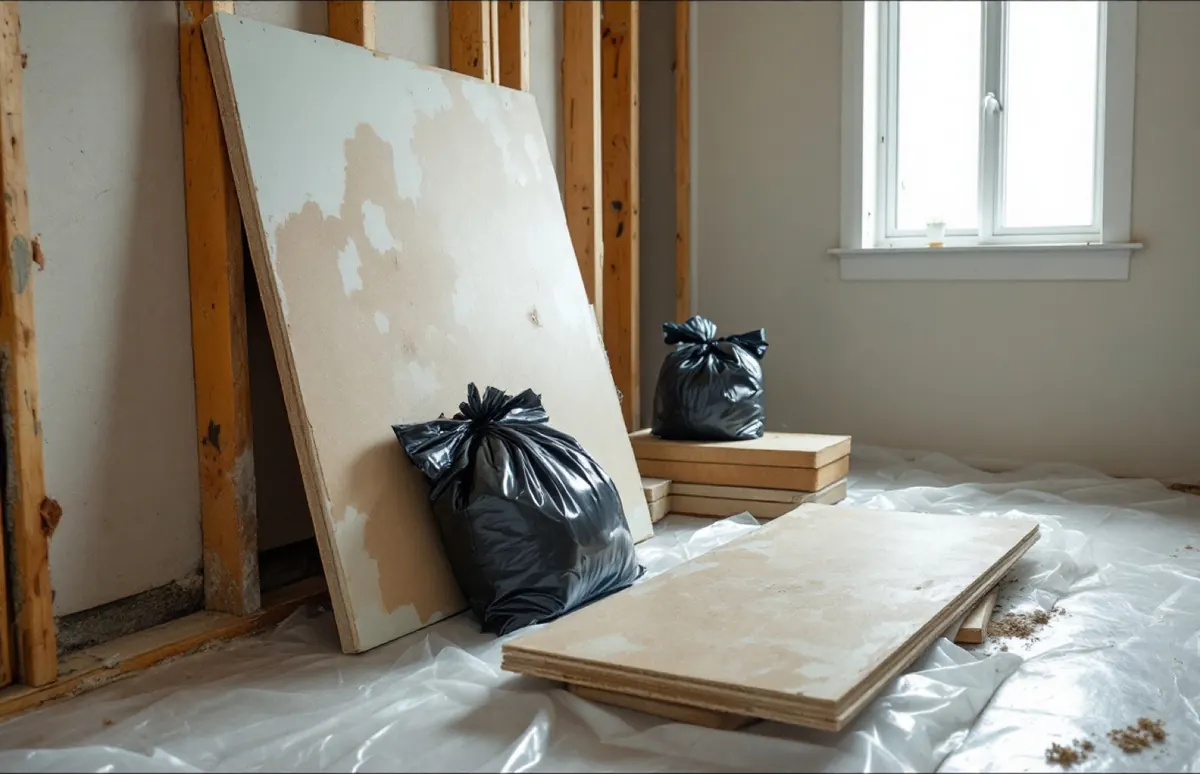
The NYC 2000 guideline builds the trigger into Level III itself: if the work will generate a lot of dust, with abrasive cleaning or demolition of plaster walls as its examples, or if growth is heavy (blanket coverage as opposed to patchy), follow the Level IV procedures, per the 2000 NYC guidelines. That means full face respirators with HEPA cartridges, disposable clothing covering head and shoes, a HEPA exhaust fan for negative pressure, and airlocks with a decontamination room.
EPA reaches the same place from the other direction. Its footnote 10 says a remediator may put full containment on a small area that is extensively contaminated and could spread mold to occupied areas, while a large, lightly contaminated, easily cleaned wall may need only limited containment, per EPA's chapter on remediation. Table 2 also lists four cases for a more conservative approach: a particularly toxic species identified or suspected, extensive hidden mold, a high chance of growth becoming airborne, and sensitive occupants present.
Water source matters too. EPA Table 2 is written for damage caused by clean water; if the water was sewage or carried chemical or biological pollutants, EPA says OSHA requires PPE and containment, per EPA Table 2. The NIH Moisture and Mold Remediation SOP (2023) applies a stricter internal line: its safety division must be contacted for growth over approximately 10 contiguous square feet.
Is Level 3 mold remediation different in Texas or Florida?
Neither state uses the NYC levels in its statute; each draws its own licensing line in square feet. In Texas, Texas Occupations Code 1958.102 exempts work on an area of less than 25 contiguous square feet, and removes the owner or tenant exemption once growth reaches 25 contiguous square feet, except for owners of residential property with fewer than 10 dwelling units. Every NYC Level III job, at 30 square feet or more, sits above the Texas line.
In Florida, Florida Statutes 468.8411(5) defines mold remediation as removal, cleaning, sanitizing, demolition or other treatment of mold covering greater than 10 square feet. That puts NYC Levels II, III and IV inside the statutory definition. Our state mold licensing guide covers who must hold a licence in each state.
What clears a Level 3 job, and is there an acceptable mold level?
For Level III, NYC 2000 sets a visual end point: all areas left dry and visibly free from contamination and debris. Air monitoring before reoccupancy appears only at Level IV and for HVAC jobs over 10 square feet, where the system should be running during the test, per the 2000 NYC guidelines.
There is no federal number to pass. EPA states that no EPA or other federal threshold limits have been set for mold or mold spores, so sampling cannot check compliance with a federal standard, and that after remediation the types and concentrations of mold indoors should be similar to the local outdoor air, per EPA's chapter on remediation. IICRC S520 frames the same goal as a return to Condition 1. What a clearance inspector samples and how results are read is covered in our mold clearance test guide.
For contractors: does an N95 still meet OSHA on a 30 to 100 square foot job?
Under NYC 2000 Level III, the named respirator is an N95, used in accordance with 29 CFR 1910.134. EPA grades medium jobs as limited or full PPE: limited means a half or full face air purifying respirator with HEPA cartridges, and full means a full face powered air purifying respirator, per EPA's chapter on remediation. The NYC 2008 revision sets half face elastomeric respirators with P100 filters as the minimum only for large jobs over 100 square feet.
Whichever mask the plan names, 29 CFR 1910.134 attaches duties to it: the employer must provide a medical evaluation before an employee is fit tested or required to use a respirator, and anyone using a tight fitting facepiece must be fit tested before first use and at least annually after that. EPA adds that half and full face respirator users must be trained, medically cleared and fit tested. Our N95 for mold guide compares the filter classes.
Out of scope: this page covers work practice tiers only. Questions about what mold exposure does to people belong with a clinician; CDC's mold page is the federal starting point.
Questions people actually ask
What is Level 2 mold remediation?
In the NYC 2000 guidelines, Level II covers mid sized isolated areas of 10 to 30 square feet, such as individual wallboard panels. Regular building maintenance staff with training can do it, wearing an N95, gloves and eye protection. The work area is covered with plastic sheeting sealed with tape, and the area is HEPA vacuumed and damp wiped afterwards. EPA and the 2008 NYC revision call this band medium.
What is considered Stage 4 mold contamination?
No federal or NYC document uses the word stage. The closest match is NYC 2000 Level IV, extensive contamination over 100 contiguous square feet, which calls for full face HEPA respirators, complete isolation under negative pressure, airlocks, a decontamination room and air monitoring before reoccupancy. EPA’s equivalent is its large tier, over 100 square feet, with full PPE and full containment.
Can black mold be fully remediated?
Yes, by removal and cleaning rather than by killing it in place. EPA Table 2 says a cautious approach is indicated when a particularly toxic species is identified or suspected, and the NYC 2000 guidelines advise against gaseous or aerosolized biocides. Non porous and structurally sound semi porous materials can be cleaned; porous materials with more than a small area of growth should be removed and bagged.
How long should you stay out of your house after mold remediation?
Neither NYC nor EPA sets a number of hours. NYC 2000 asks for the work area and adjacent areas to be unoccupied during Level III work and for air monitoring before reoccupancy at Level IV. EPA’s benchmark is that indoor mold types and concentrations should be similar to local outdoor air. Re-entry follows a passed visual check or clearance test, not a clock.
Is Level 1 mold remediation something I can do myself?
NYC 2000 Level I, 10 square feet or less, can be handled by regular building maintenance staff with training, wearing an N95, gloves and eye protection, with no containment required. EPA’s small tier uses the same 10 square foot line. Whether a homeowner should do it, and the exceptions, are covered in our guide to when mold remediation is required.
Sources
- NYC DOHMH 2000 guidelines (archived copy), New York City Department of Health and Mental Hygiene, Guidelines on Assessment and Remediation of Fungi in Indoor Environments, April 2000, edited January 2002; Internet Archive capture of 7 February 2004. Retrieved 11 November 2026.
- NYC DOHMH 2008 guidelines (archived copy) and the November 2008 PDF edition, New York City Department of Health and Mental Hygiene, November 2008 revision; Internet Archive captures. Retrieved 11 November 2026.
- Table 2 of EPA's Mold Remediation in Schools and Commercial Buildings, United States Environmental Protection Agency, EPA 402-K-01-001, reprinted September 2008, web page last updated 14 April 2026. Retrieved 11 November 2026.
- EPA's chapter on remediation, United States Environmental Protection Agency, Mold Remediation in Schools and Commercial Buildings, PPE and containment definitions, last updated 29 April 2026. Retrieved 11 November 2026.
- IICRC S520 page, Institute of Inspection, Cleaning and Restoration Certification, edition history of ANSI/IICRC S520. Retrieved 11 November 2026.
- ACHR News, 31 October 2003, “Introducing Fungal Ecology”, report on the first edition of IICRC S520 and its Conditions I to III. Retrieved 11 November 2026.
- NIH Moisture and Mold Remediation SOP (2023), National Institutes of Health, Division of Occupational Health and Safety. Retrieved 11 November 2026.
- Texas Occupations Code 1958.102, Texas Occupations Code chapter 1958, via the public.law mirror of the official statutes. Retrieved 11 November 2026.
- Florida Statutes 468.8411(5), Florida Statutes, 2026 edition, Online Sunshine. Retrieved 11 November 2026.
- 29 CFR 1910.134, Occupational Safety and Health Administration, Respiratory protection, paragraphs (e)(1) and (f)(2). Retrieved 11 November 2026.
- CDC's mold page, Centers for Disease Control and Prevention. Retrieved 11 November 2026.
- Sheet counts in the measuring table are arithmetic on a 4 by 8 foot sheet, computed when this page was built. Our methodology sets out the standing rules.
Mold levels on this page are guidance tiers, not law, except where a state statute is named. For a specific building, ask the assessor which framework the protocol follows and why. More mold coverage sits on our mold hub.